CM-001
CNC Vibration Monitoring Explained in Plain English
Learn what CNC vibration monitoring measures, what it can reveal, and why a baseline matters more than a single alarm number.
Knowledge Base Topic · CM-S01
Plain-English guides to CNC vibration, signal analysis, baselines, and practical machine monitoring.
Open one guide at a time or follow the numbered sequence.
Learn what CNC vibration monitoring measures, what it can reveal, and why a baseline matters more than a single alarm number.
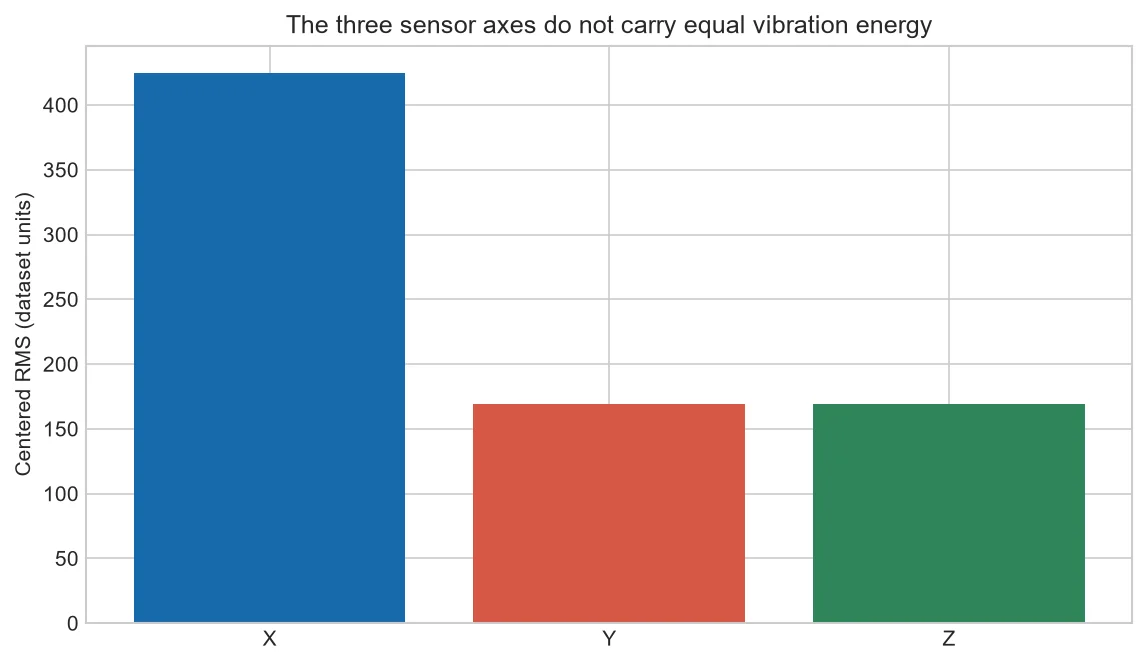
A practical introduction to tri-axial CNC vibration data and why the strongest axis is not automatically the most important.
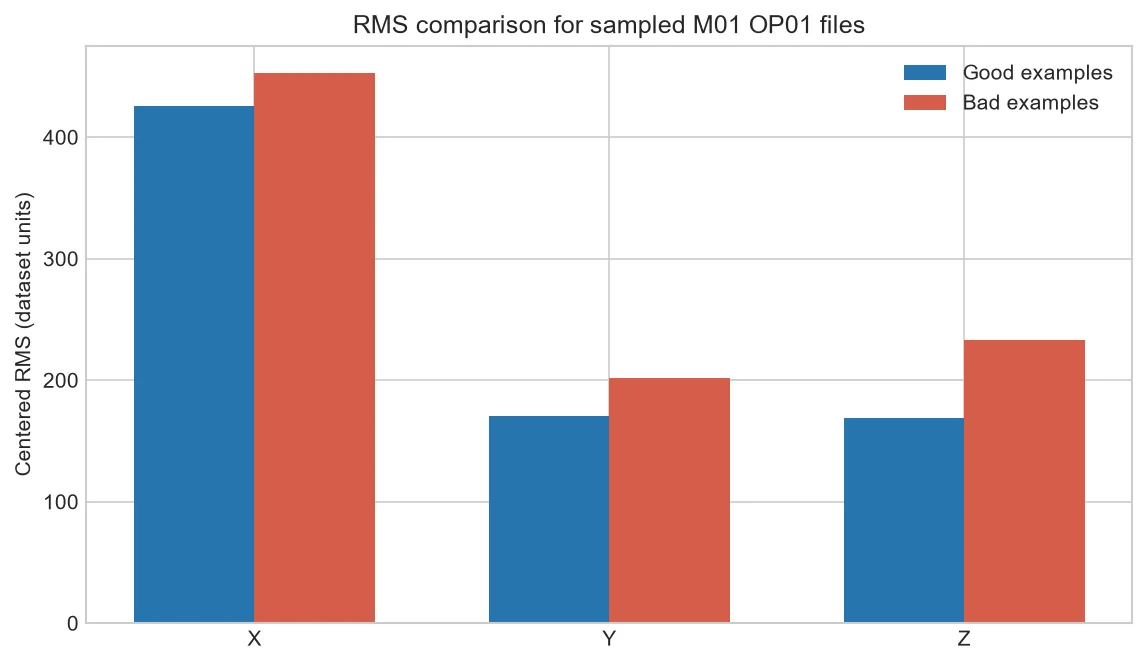
See how labeled good and bad CNC vibration examples can differ—and why a label is not the same as a fault diagnosis.
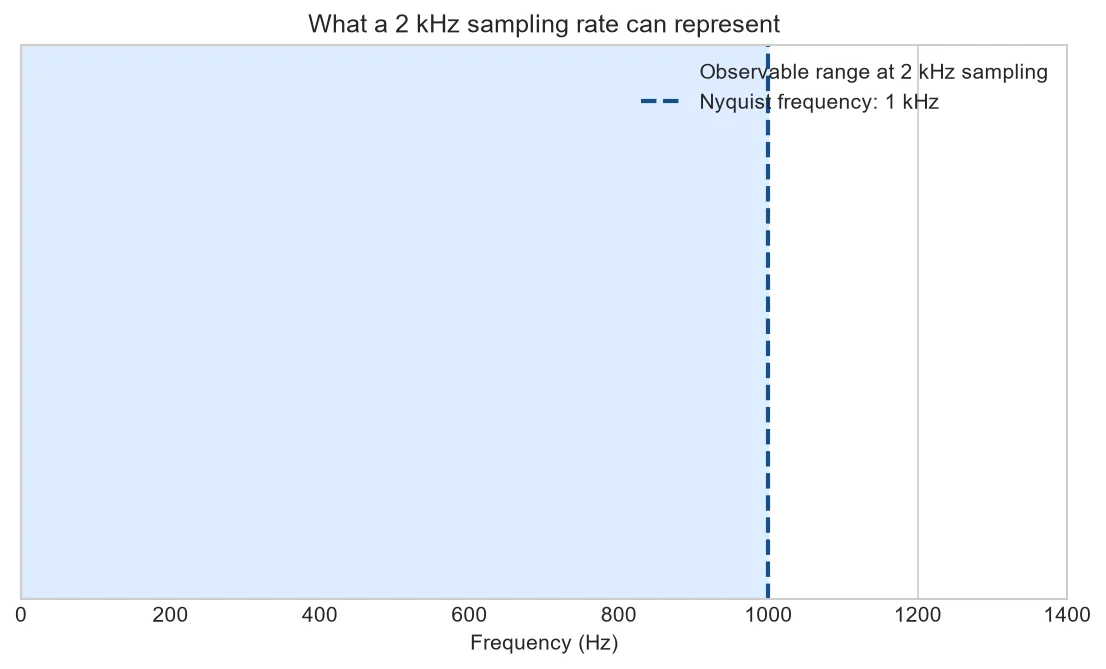
Understand samples per second, the 1 kHz Nyquist limit, aliasing, and how to choose a useful sampling rate.
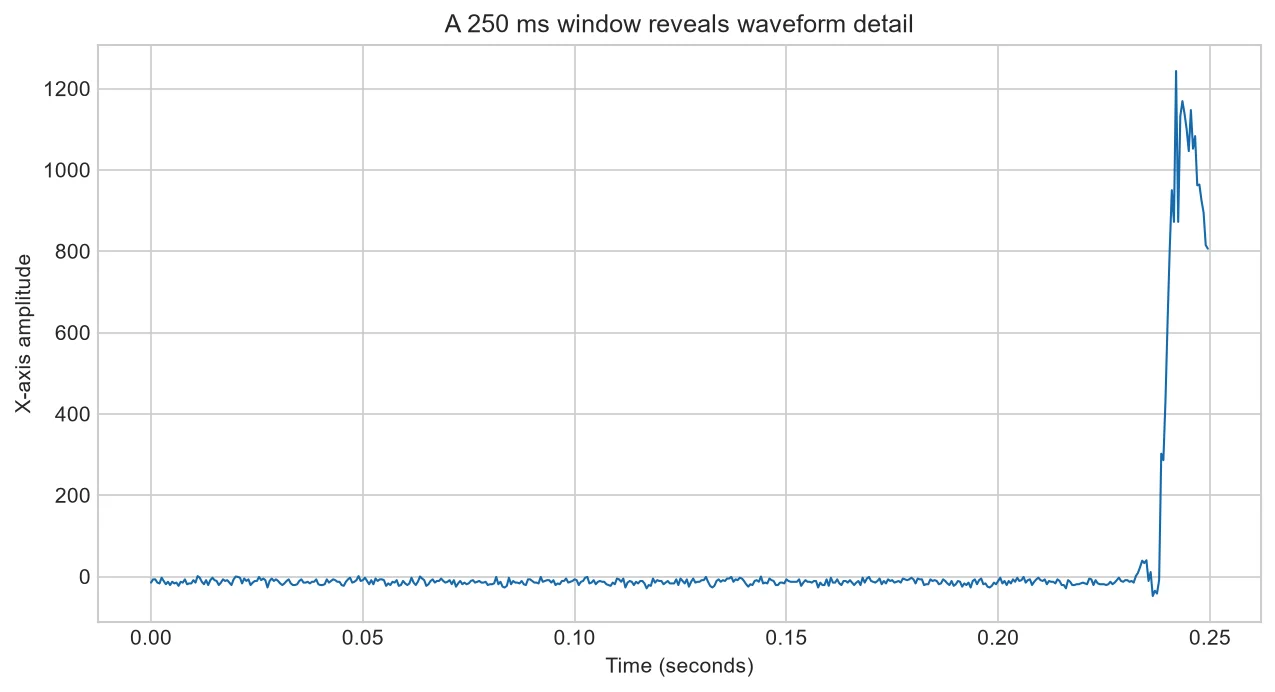
Learn to inspect time-domain CNC vibration for impacts, bursts, drift, repeating cycles, and changes in operating state.
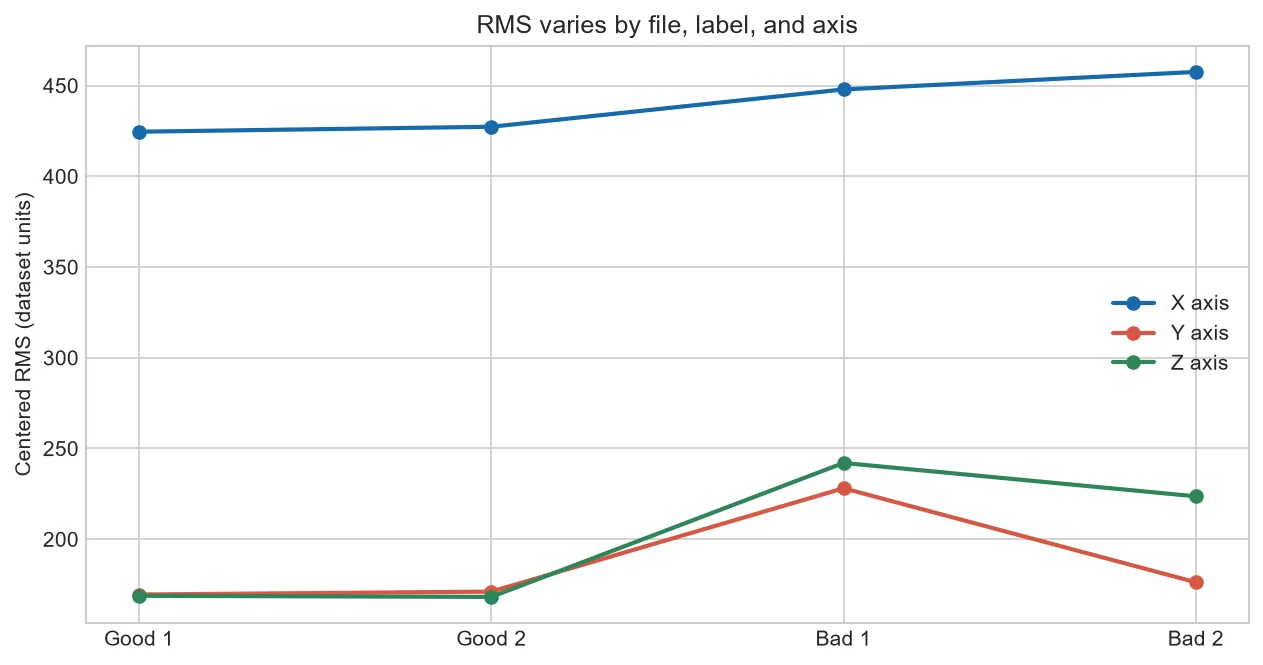
Learn how RMS summarizes CNC vibration energy, how to calculate it, and why it must be trended by operation and axis.
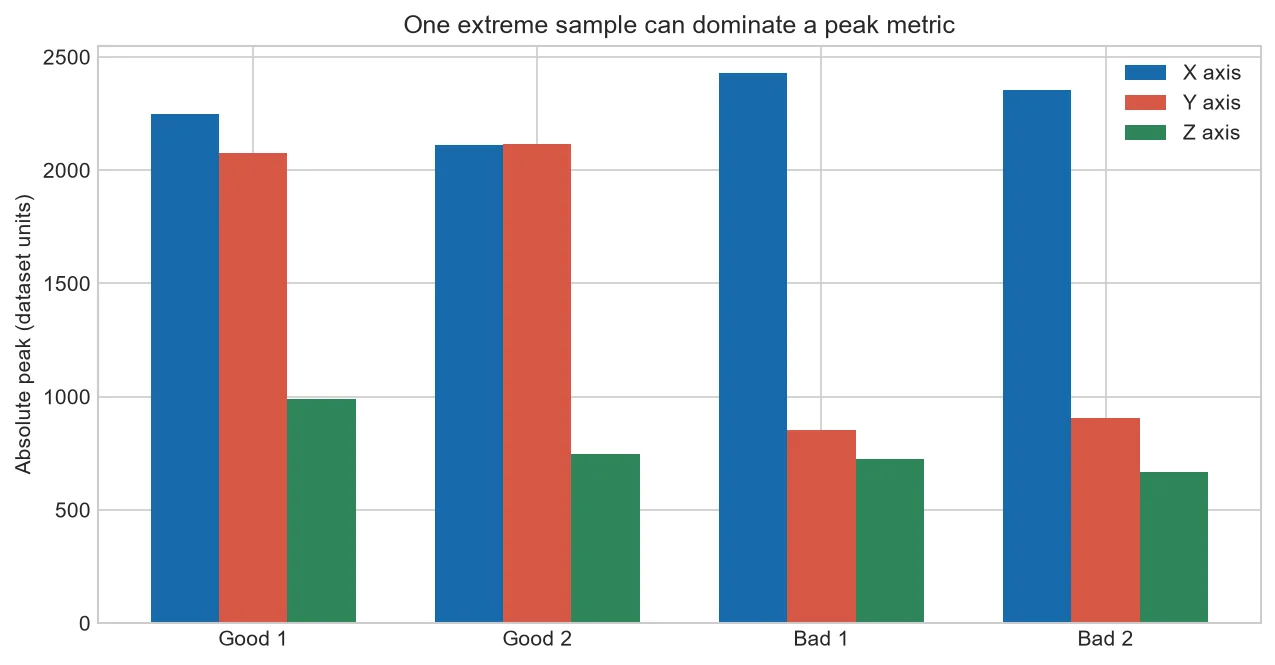
Understand peak, absolute peak, and peak-to-peak measurements—and why one stray sample can distort them.
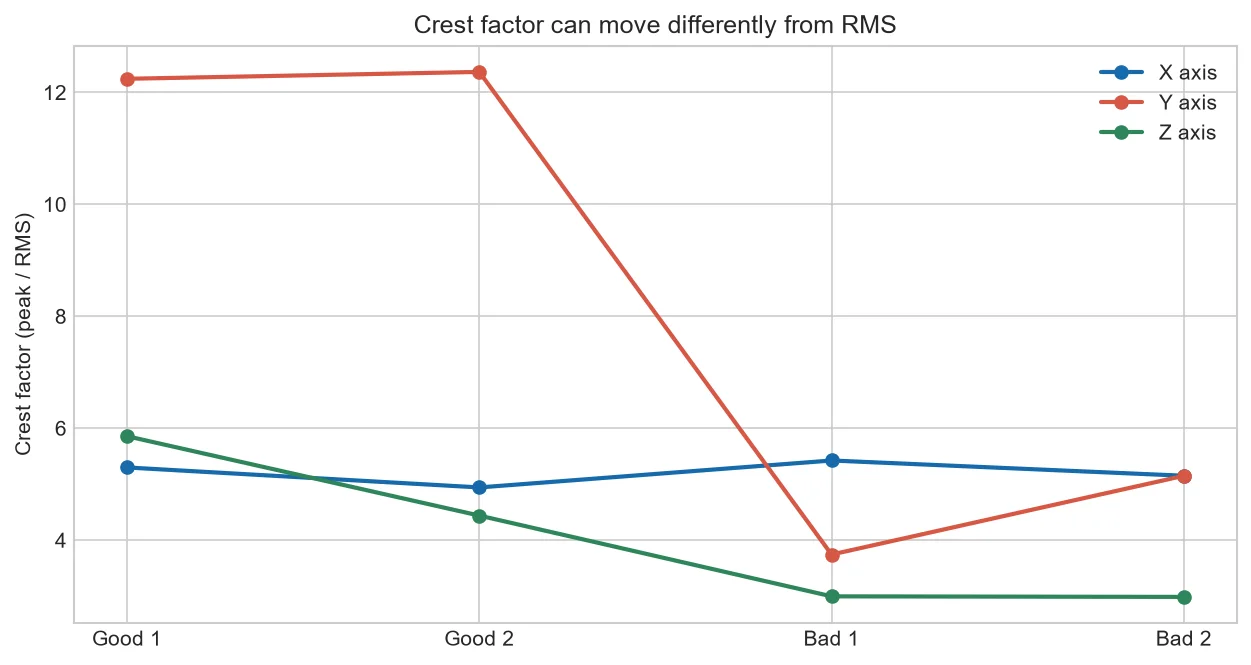
See how crest factor compares peak vibration with RMS and why a lower value does not always mean a healthier process.
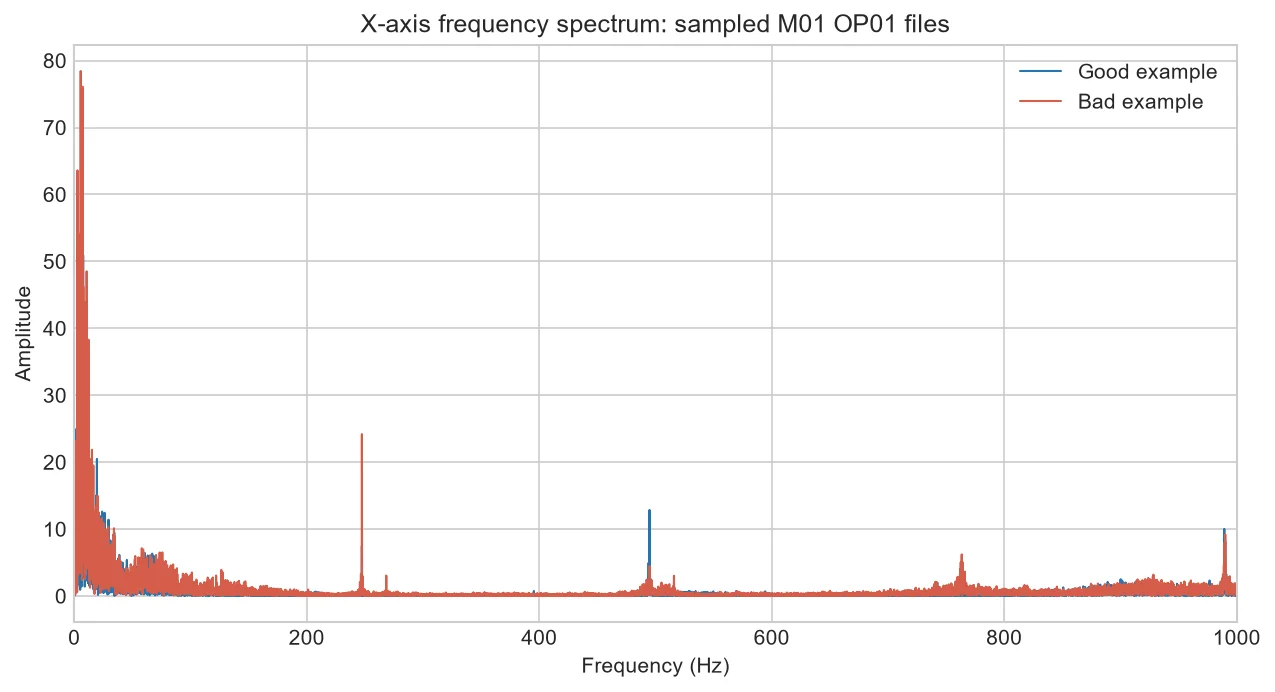
A beginner-friendly guide to FFT, frequency peaks, windowing, resolution, and responsible interpretation of CNC spectra.
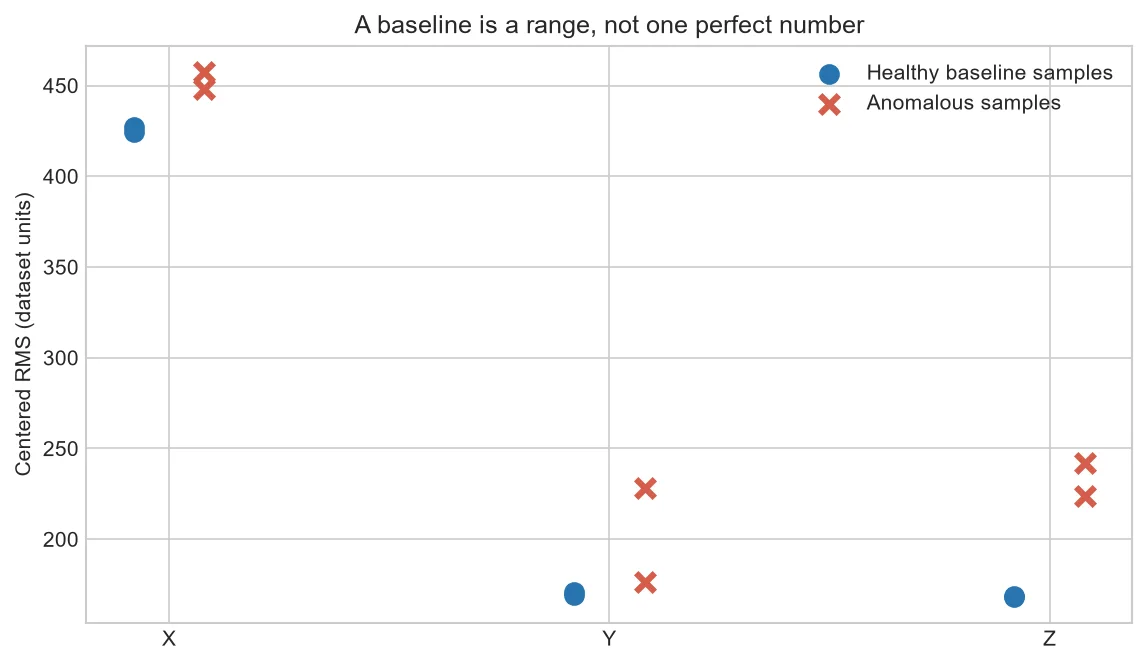
A step-by-step plan for collecting healthy CNC vibration data, separating operations, setting practical limits, and reviewing alerts.
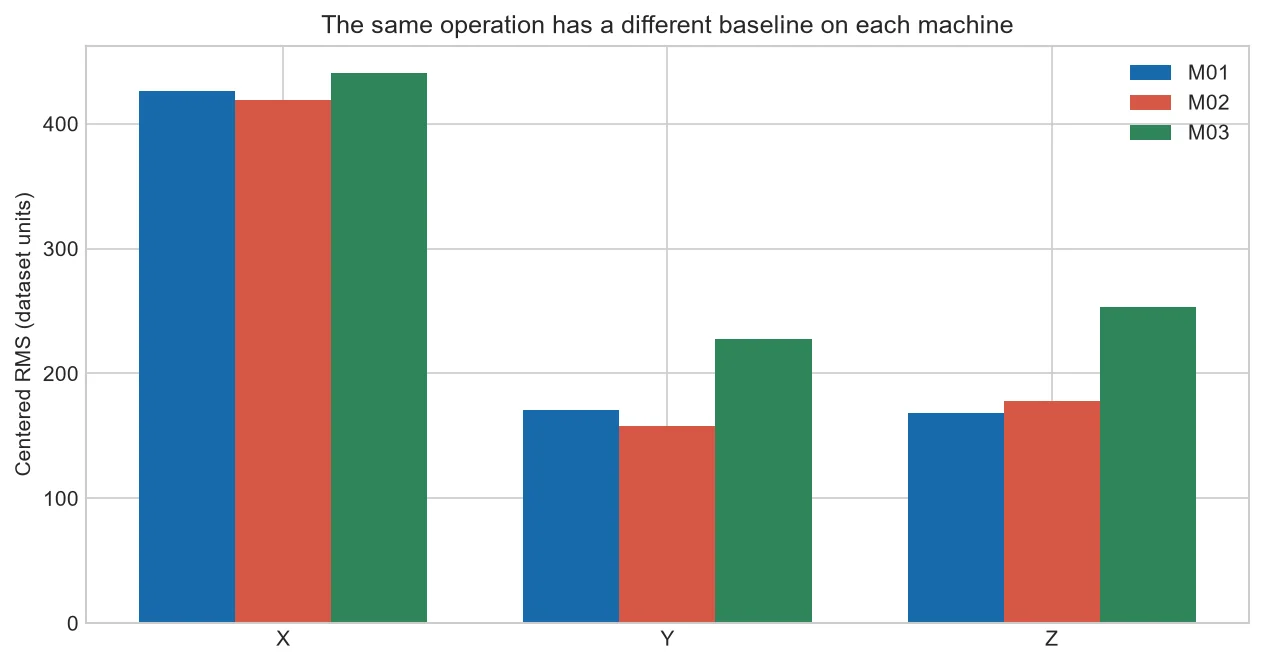
A data-led comparison of healthy OP01 vibration from three CNC machines and the case for machine-specific baselines.
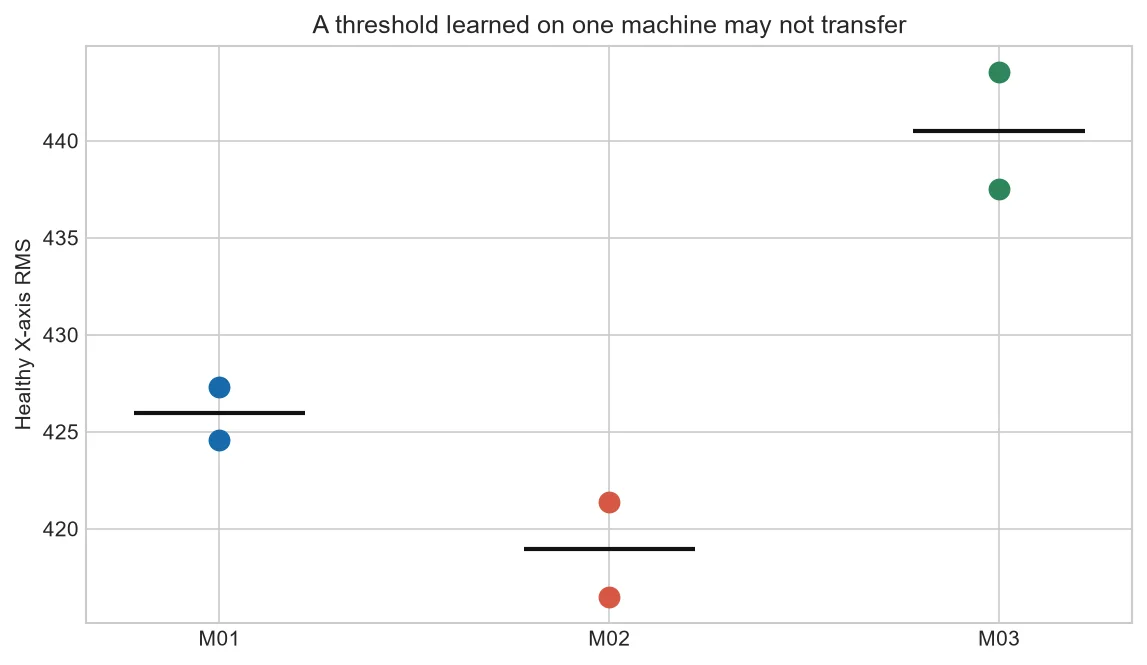
Learn how machine identity changes healthy vibration and how to build local baselines without losing fleet-wide visibility.
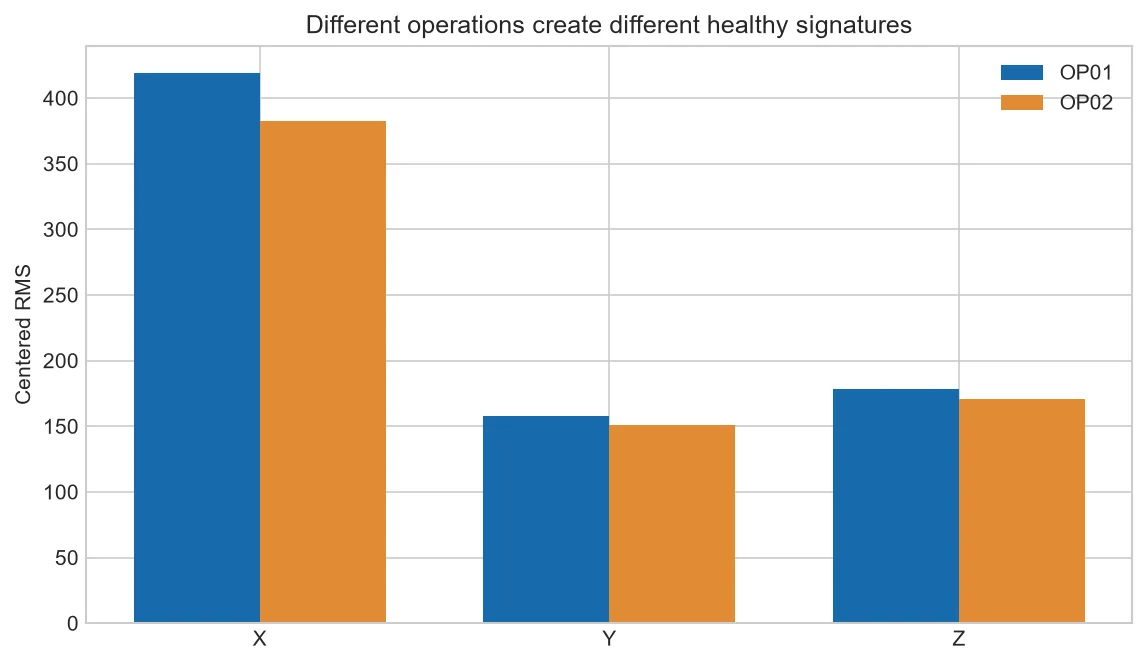
See why different machining operations need separate vibration references, even on the same CNC machine.
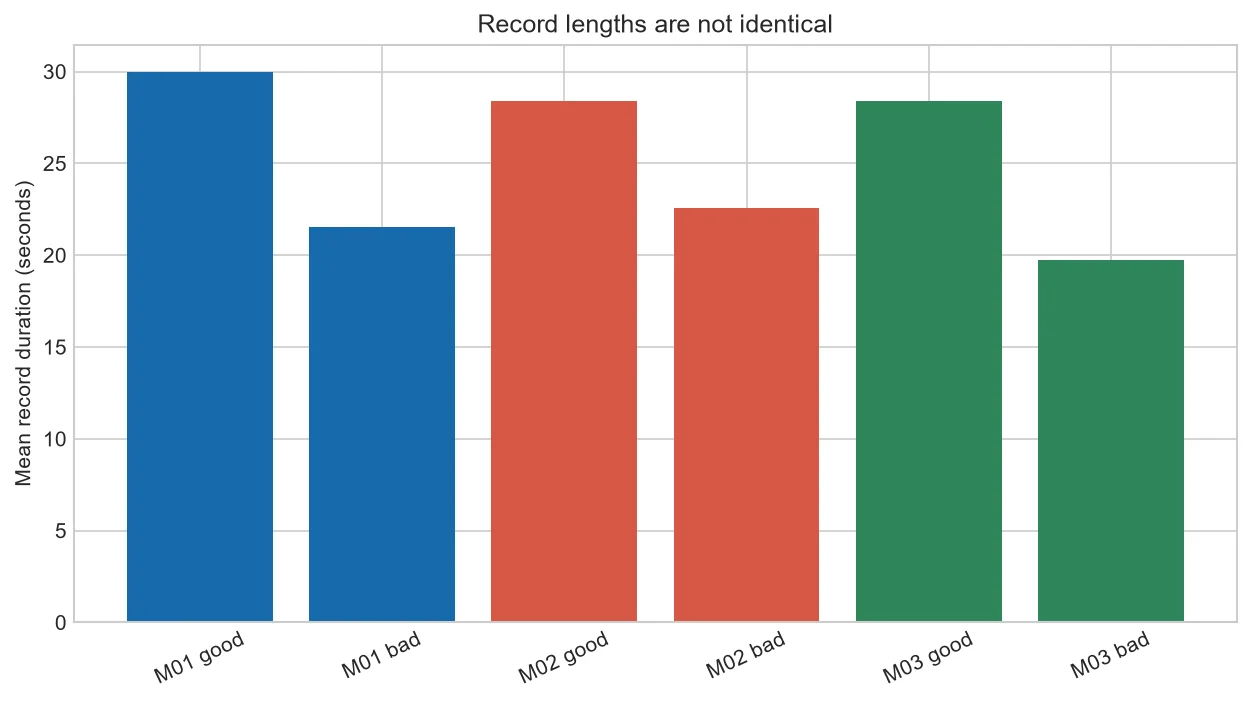
Understand why unequal record lengths affect RMS, FFT resolution and machine-learning inputs—and how to handle them.
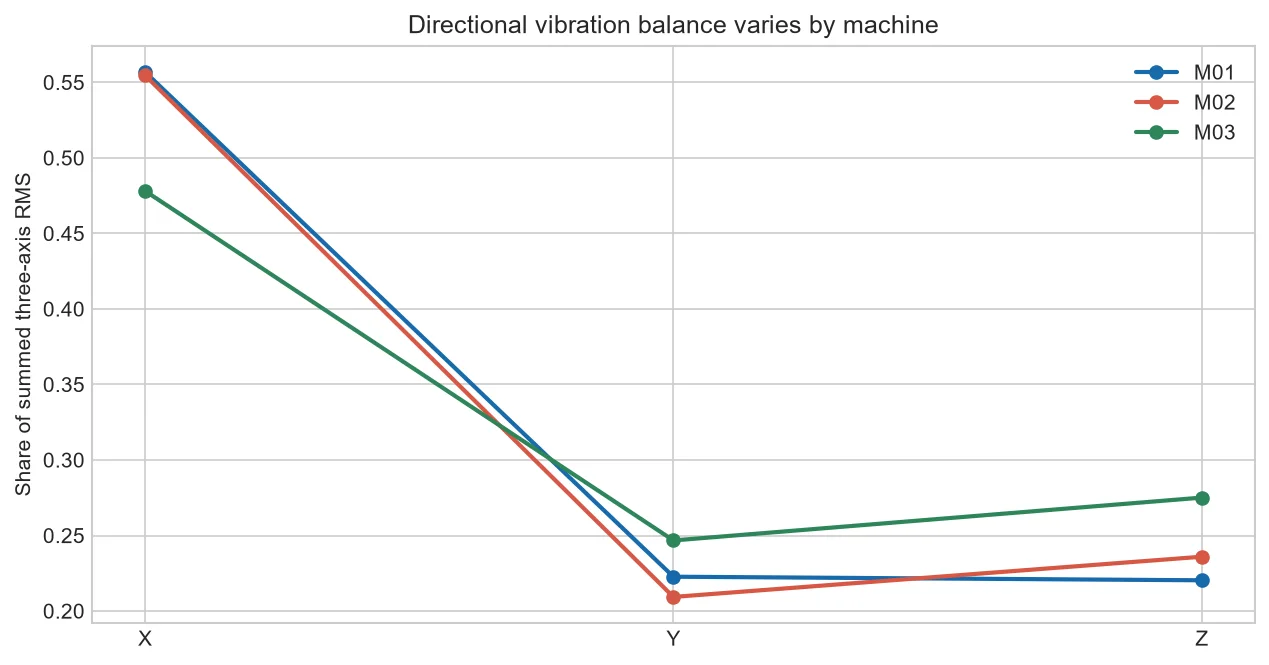
Use relative axis energy to compare vibration direction without letting one machine’s raw amplitude dominate.
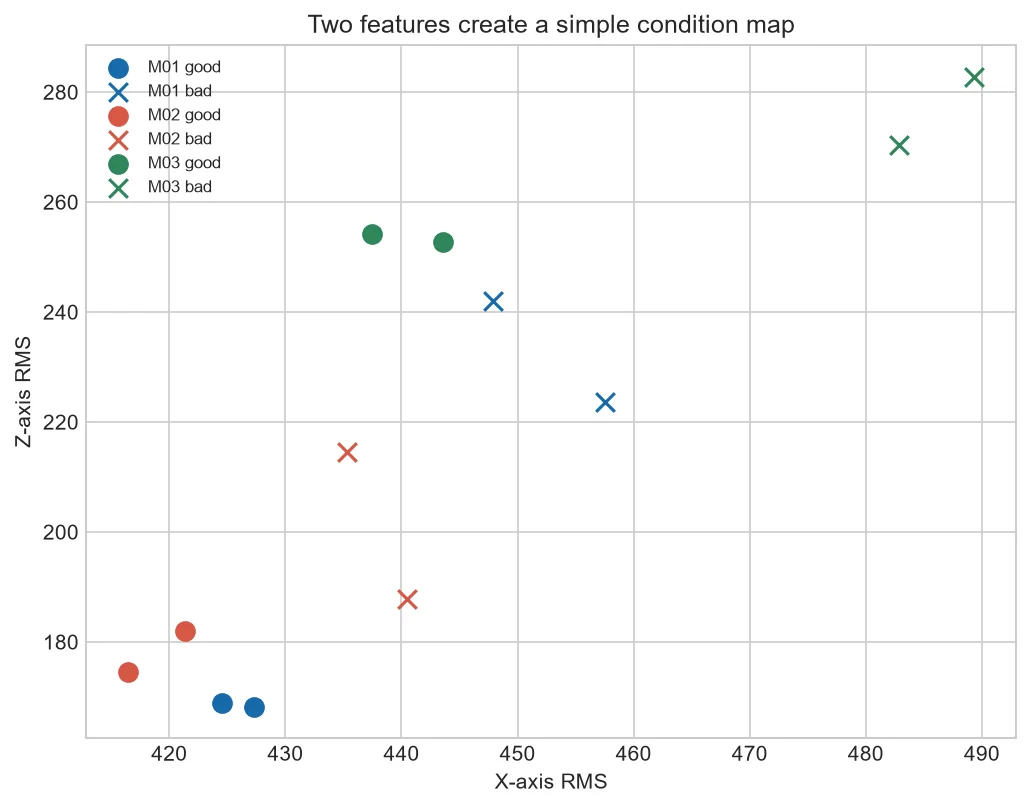
Learn how two vibration features form a condition map and why clusters, overlap and outliers require careful validation.
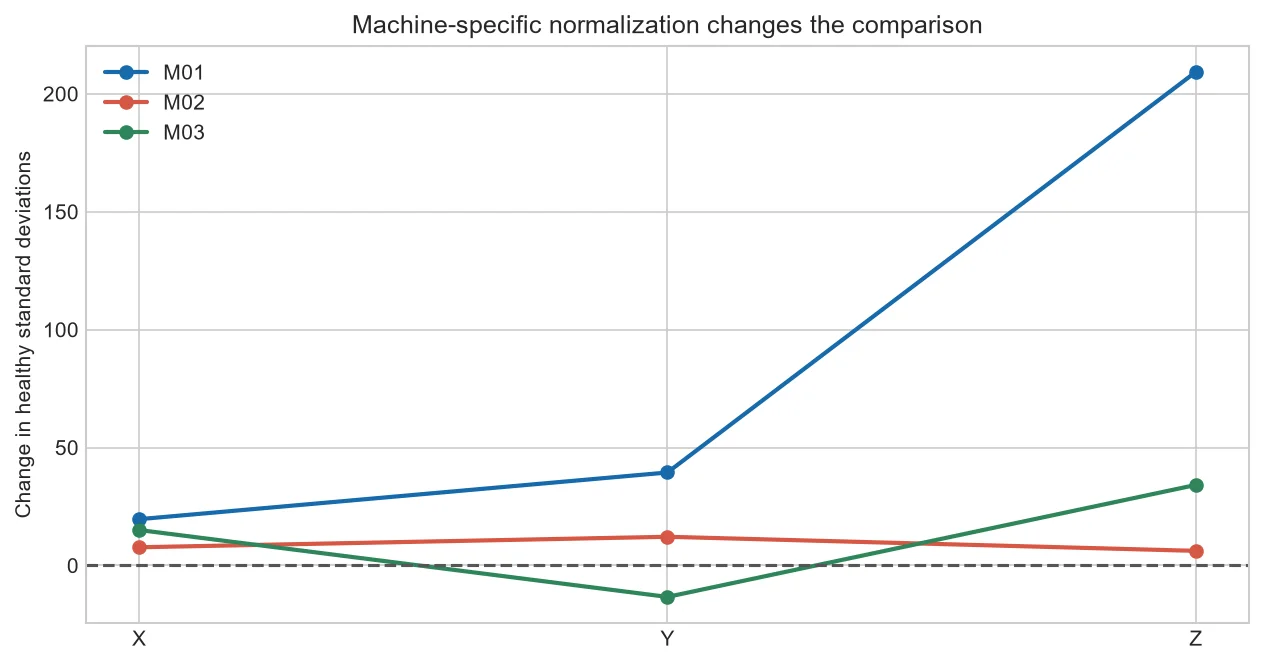
Compare raw features with machine-centered values and learn when normalization helps or harms condition monitoring.
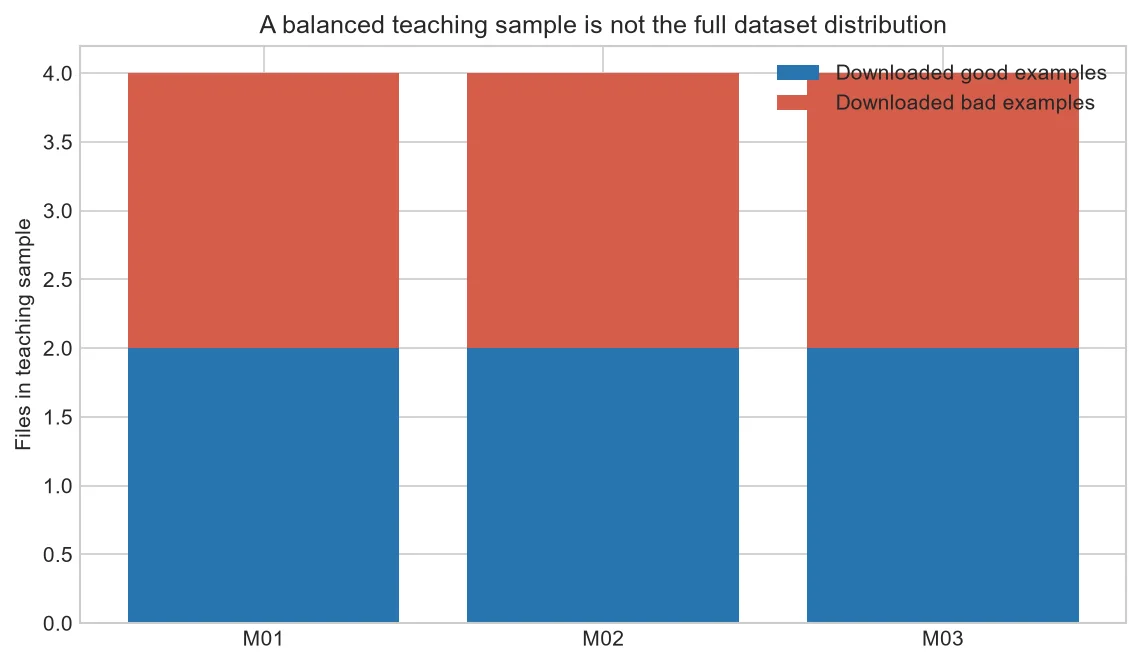
Why healthy cycles usually outnumber anomalies, how accuracy becomes misleading, and what to measure instead.
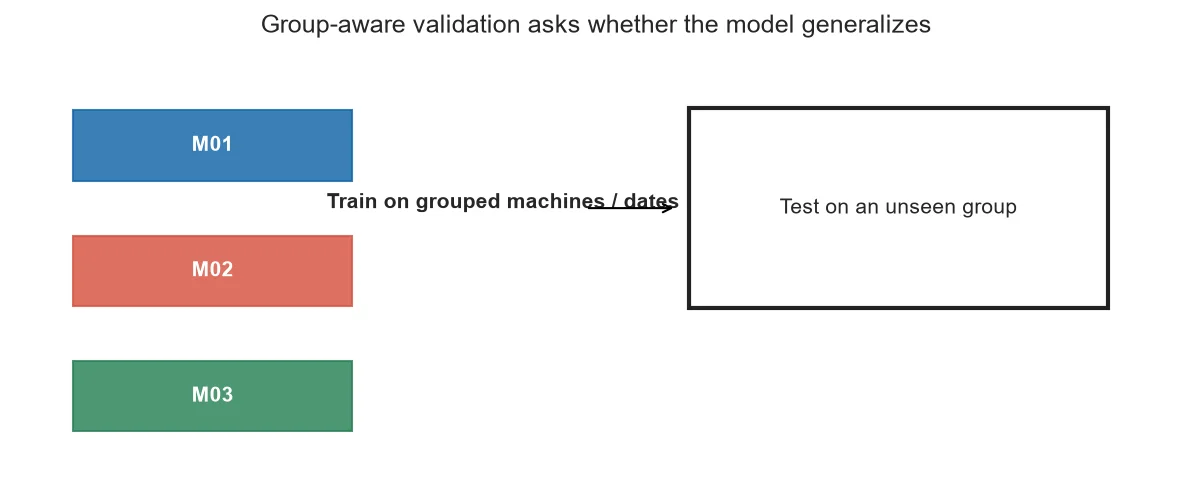
Split vibration data by machine, date or production group to test generalization and prevent misleading scores.
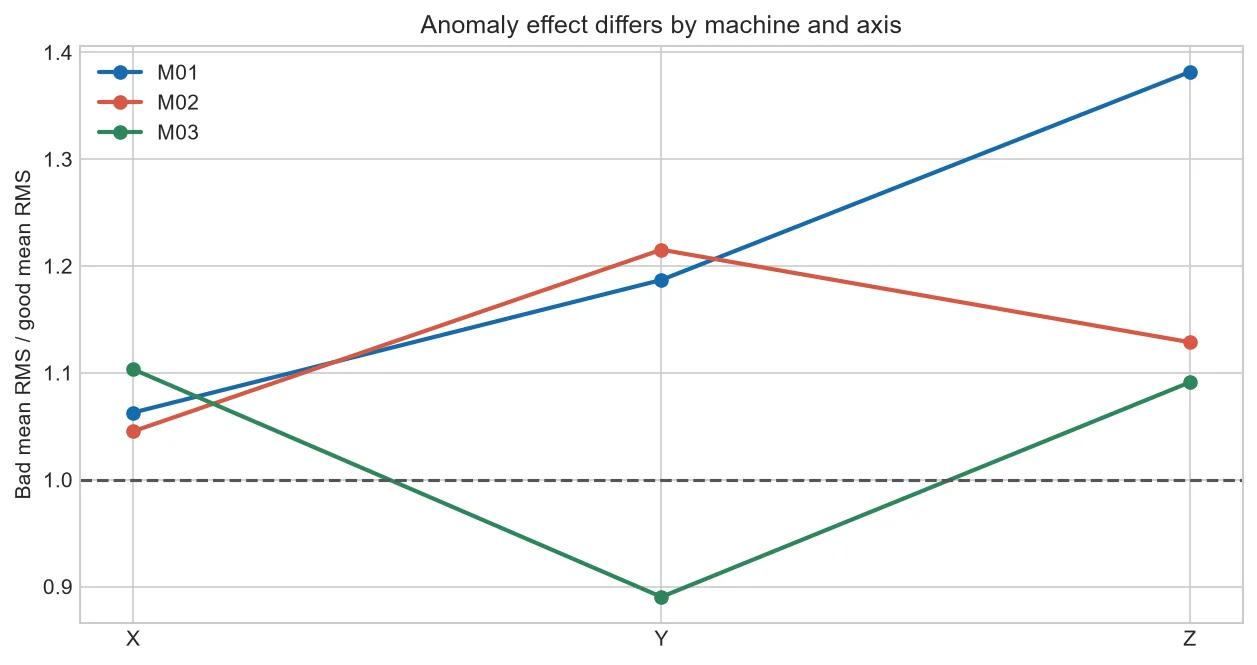
A practical guide to testing model transfer, calibrating local baselines and deciding when retraining is necessary.
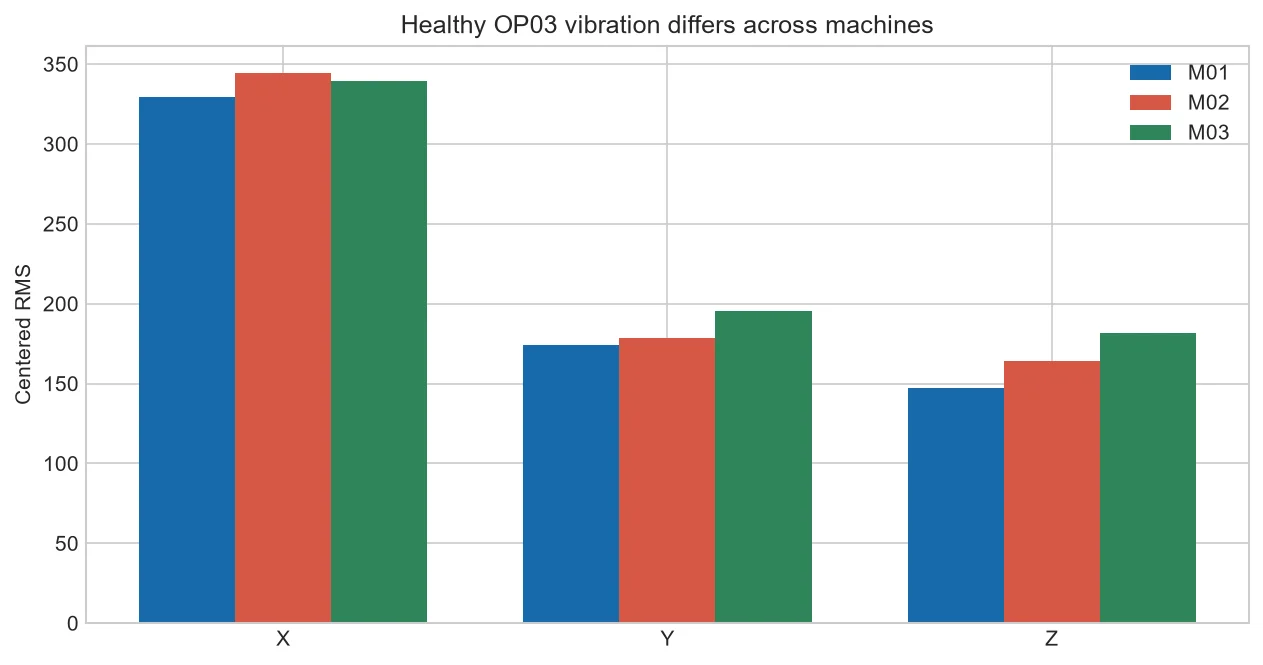
Compare healthy OP03 vibration on M01, M02 and M03 without confusing a different baseline with worse condition.
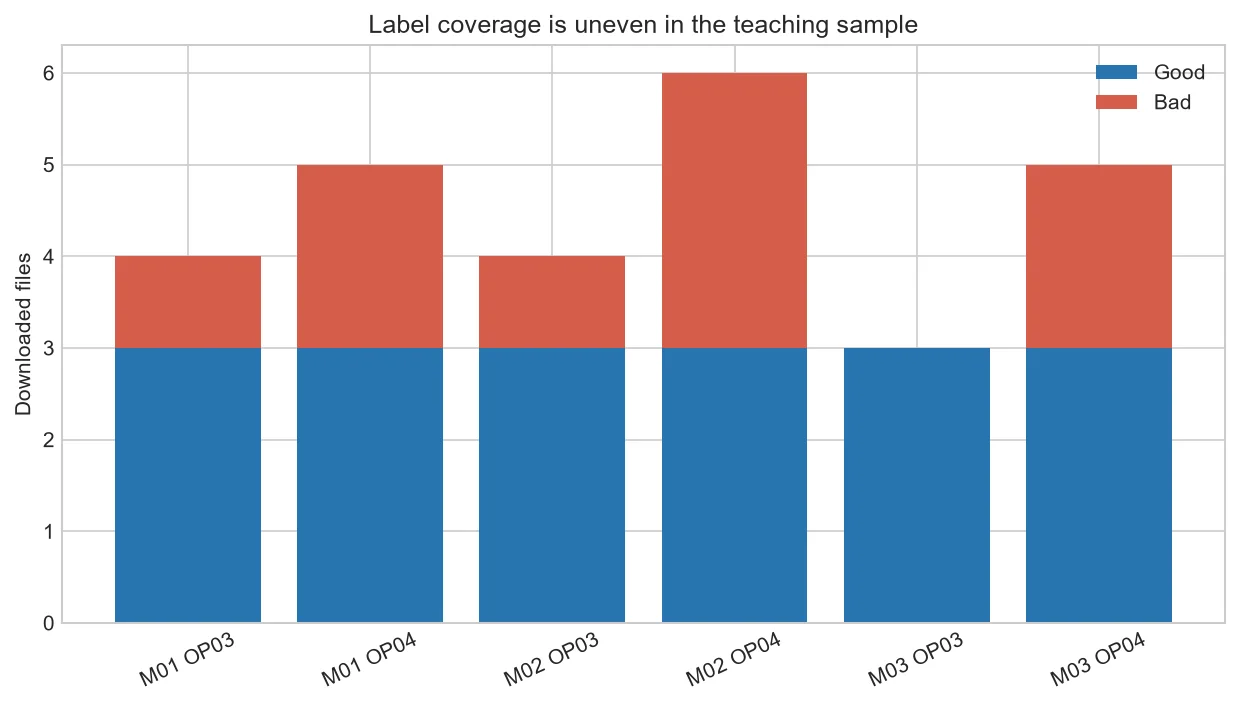
Learn why uneven good/bad coverage across machines and operations changes what a CNC dataset can support.
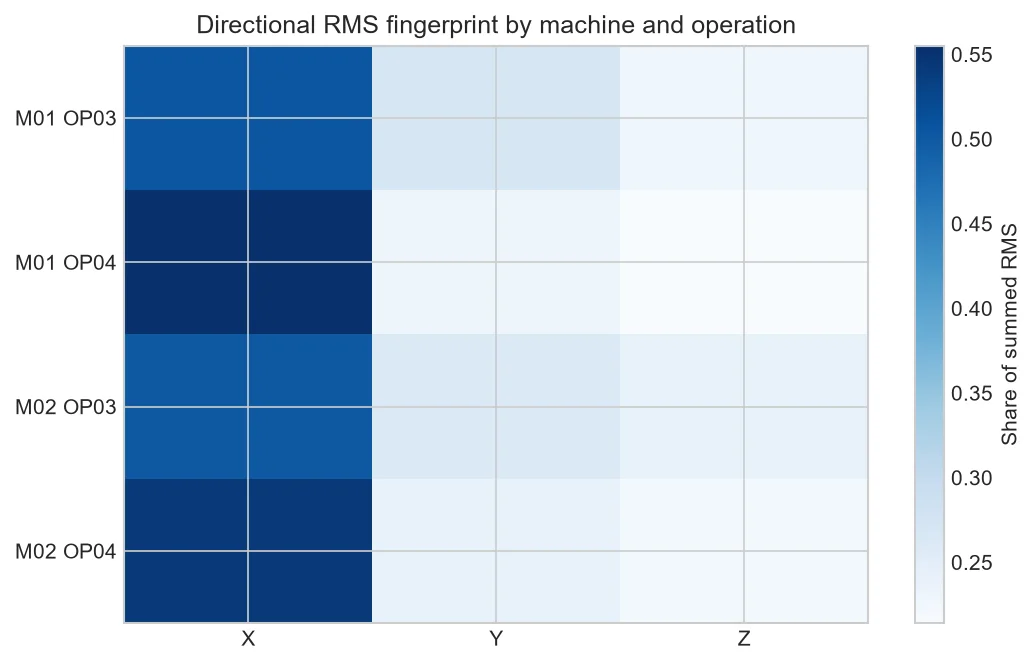
Use normalized X, Y and Z RMS to describe operation direction while preserving the raw signal for review.
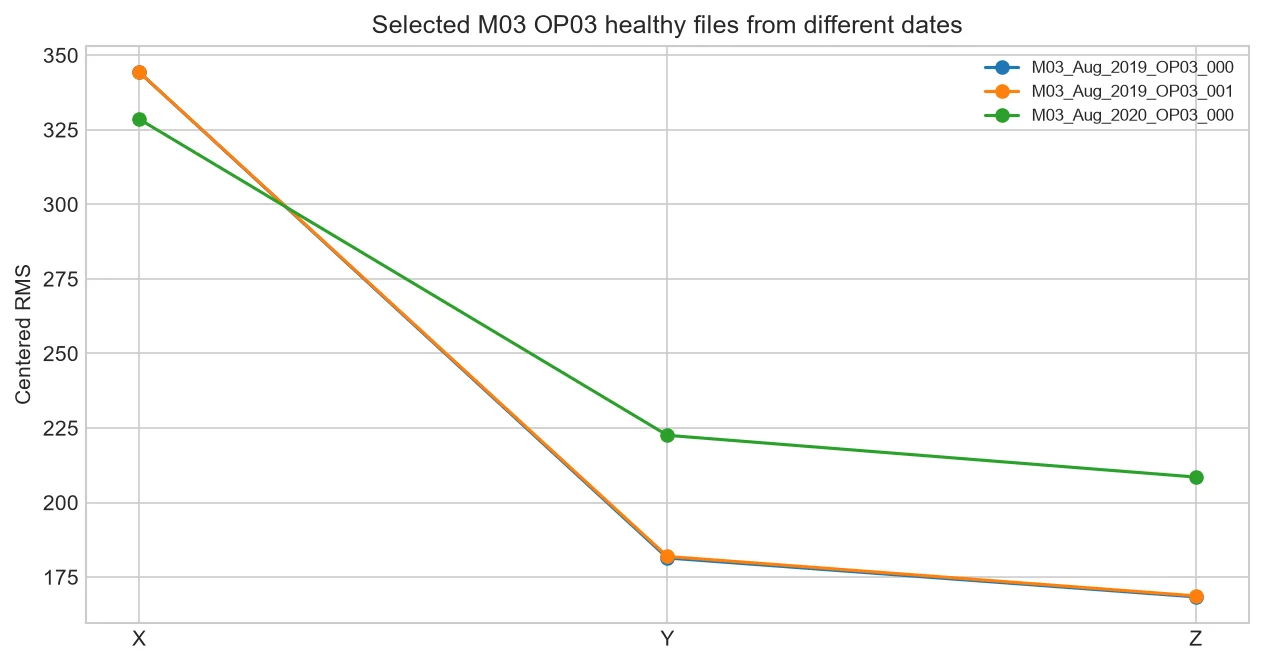
Compare healthy files from different dates and design time-based monitoring that does not learn slow faults as normal.
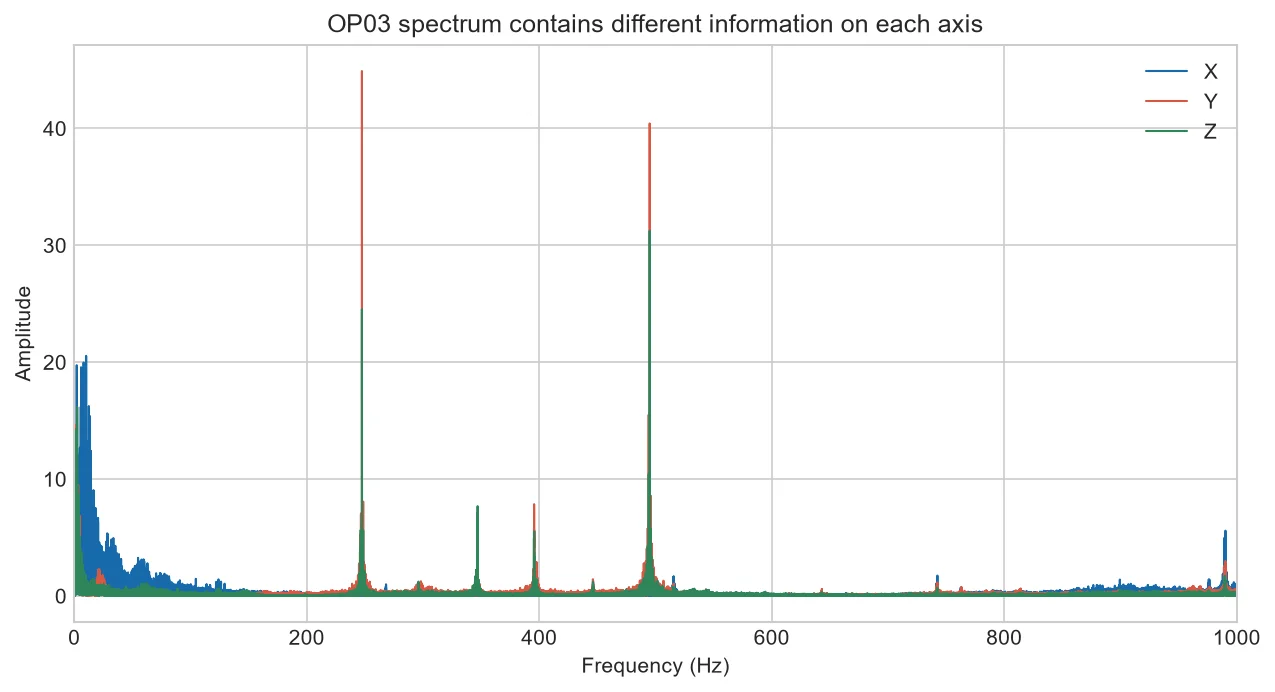
Compare X, Y and Z spectra from the same OP03 record and connect peaks with process frequencies responsibly.
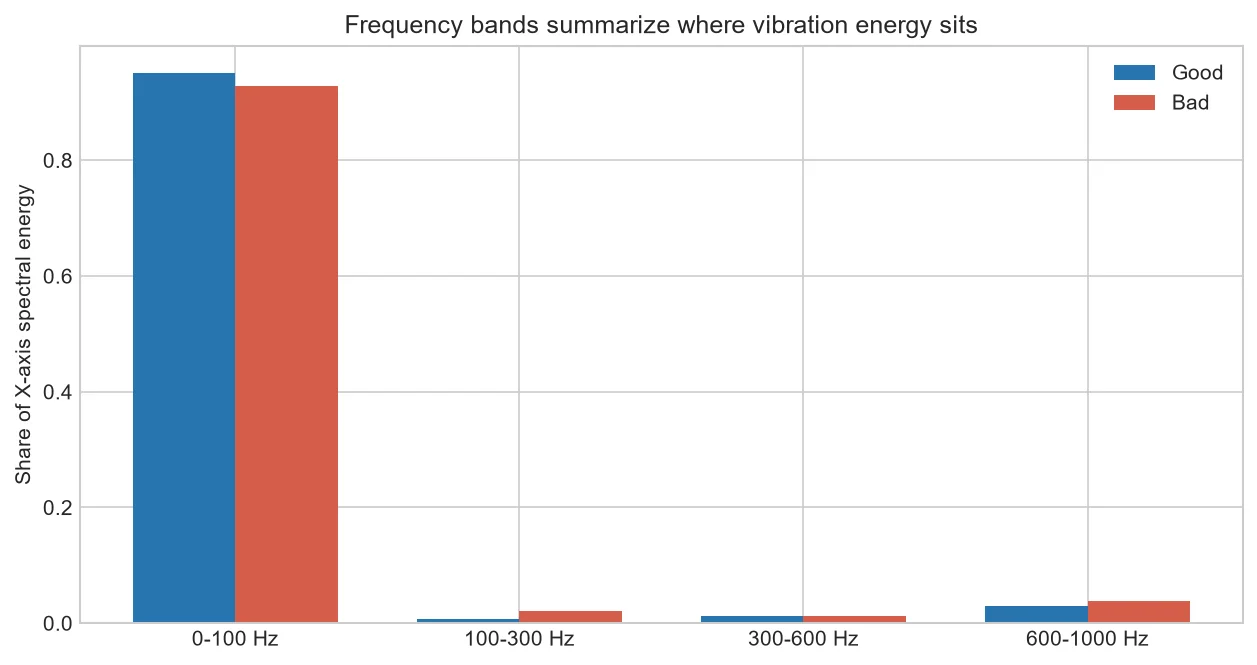
Turn a detailed spectrum into explainable low-, mid- and high-frequency features without losing physical meaning.
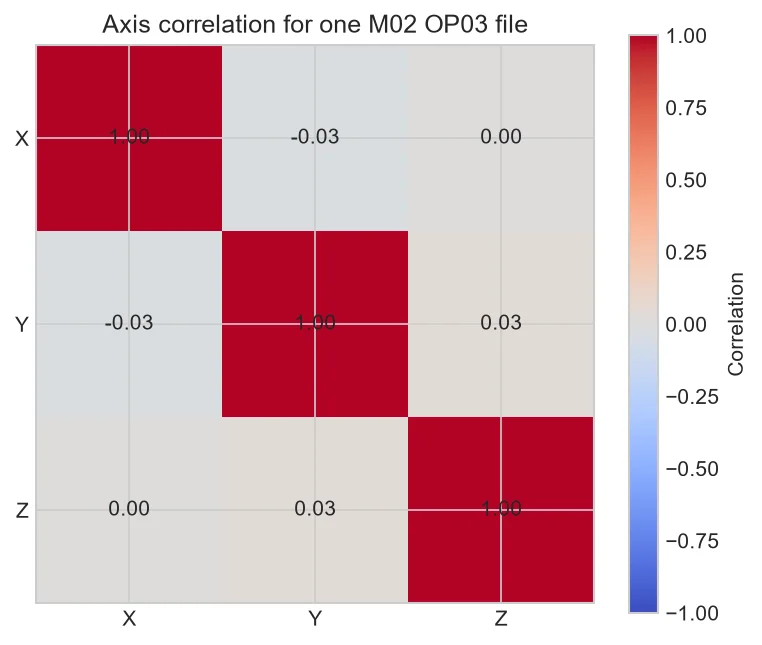
Understand correlation between X, Y and Z vibration, what it can reveal, and why correlation is not causation.
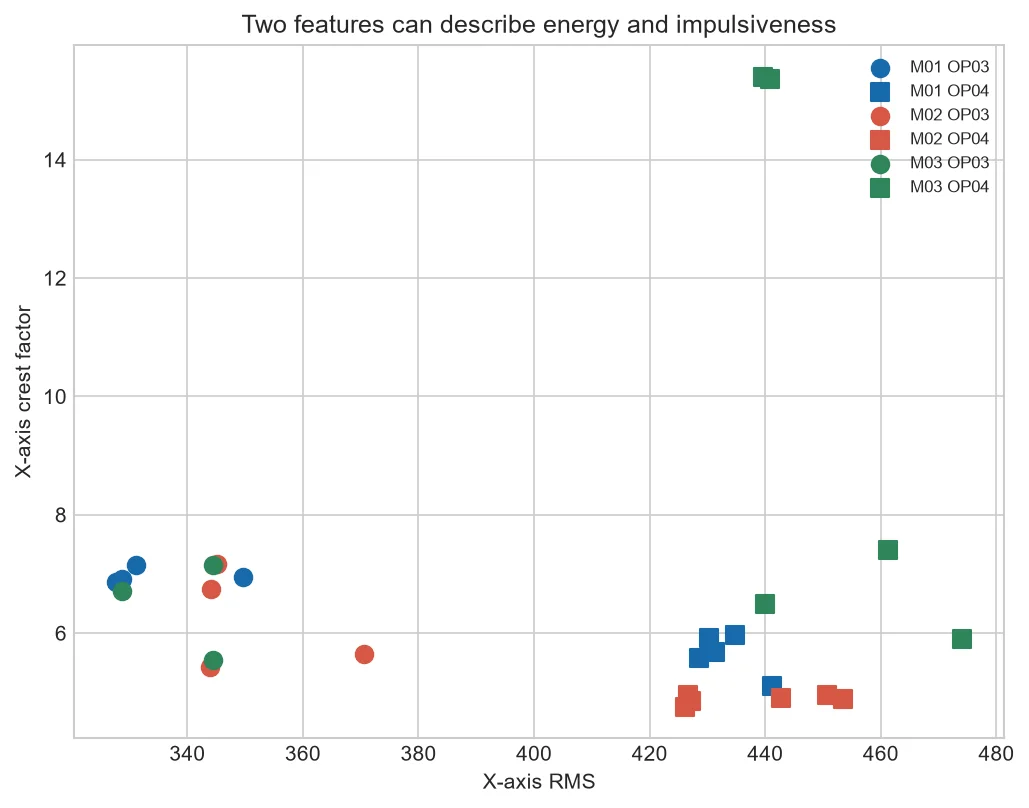
Combine overall vibration energy with impulsiveness and learn why the same RMS can describe different waveforms.
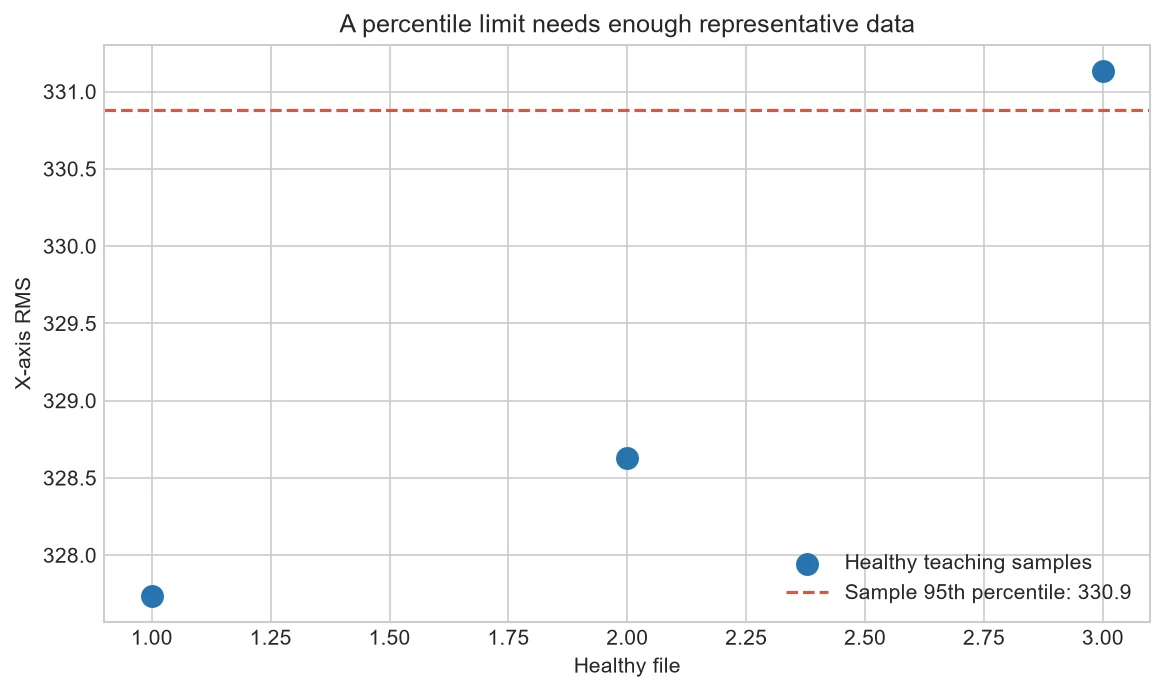
Learn how percentile limits work, how much healthy data they need, and why the chosen percentile is a risk decision.
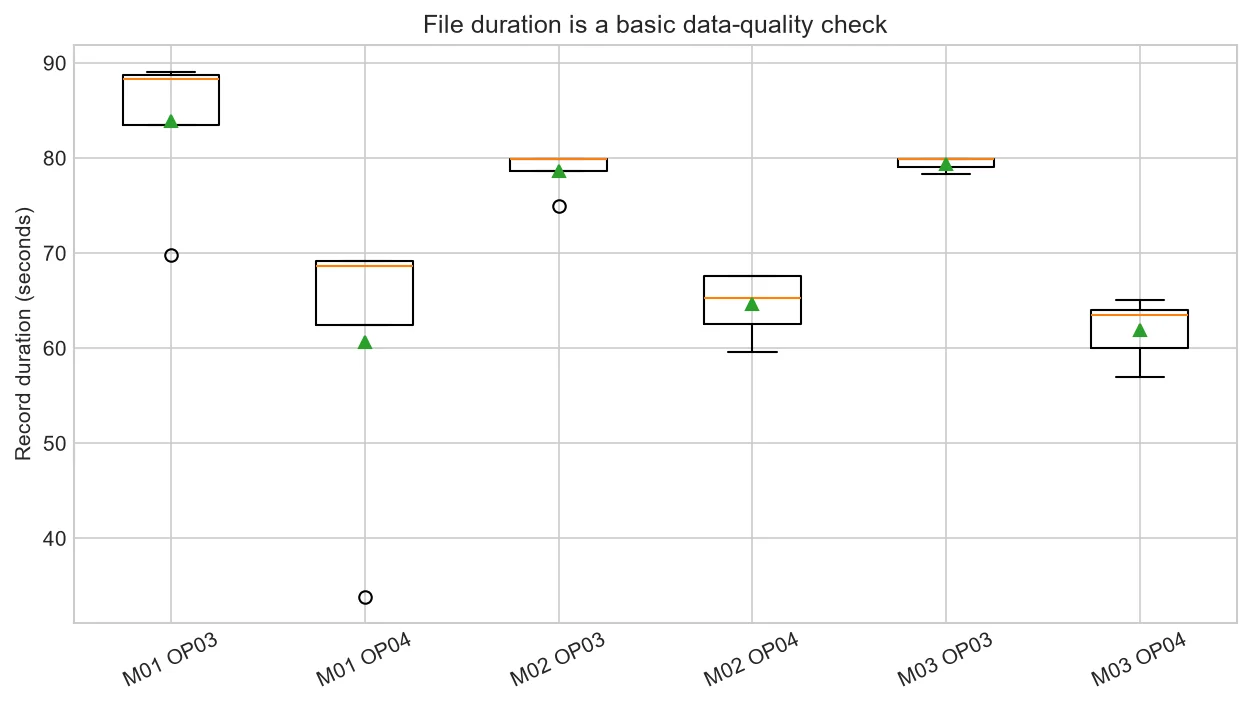
Check file duration, missing values, clipping, sample rate, sensor orientation and process alignment before trusting features.
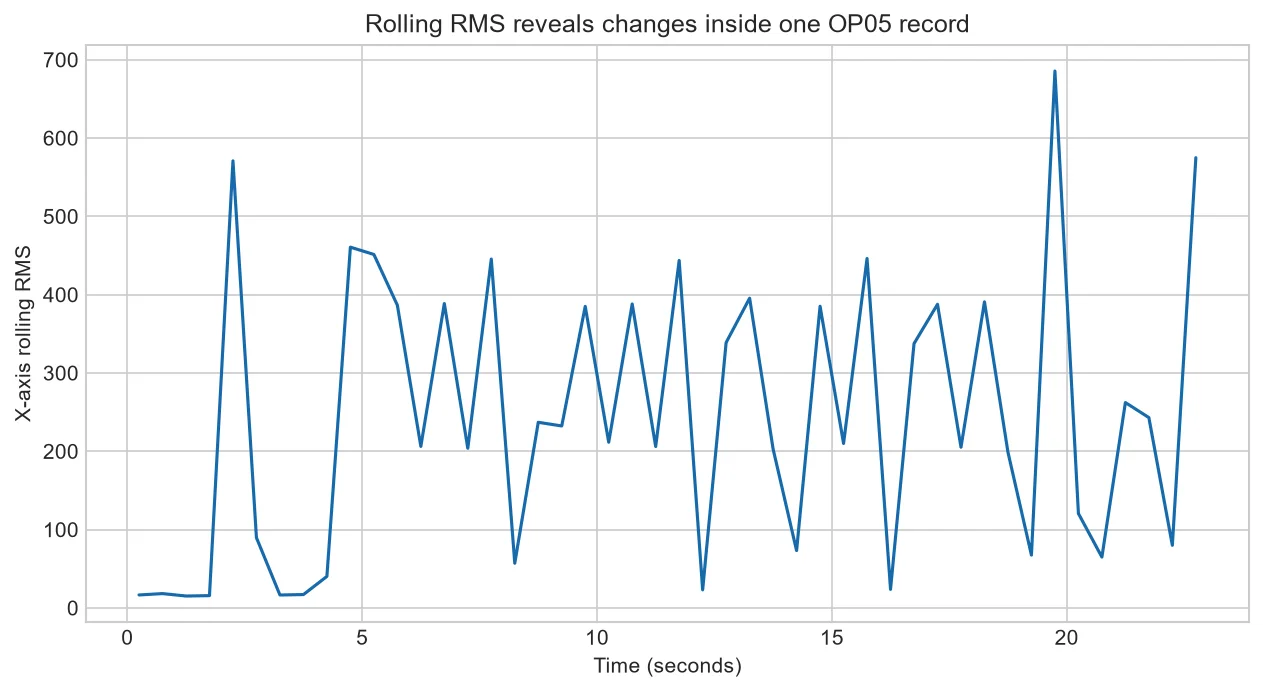
Learn how rolling RMS exposes changing vibration inside a CNC cycle and how to select a window without hiding short events.
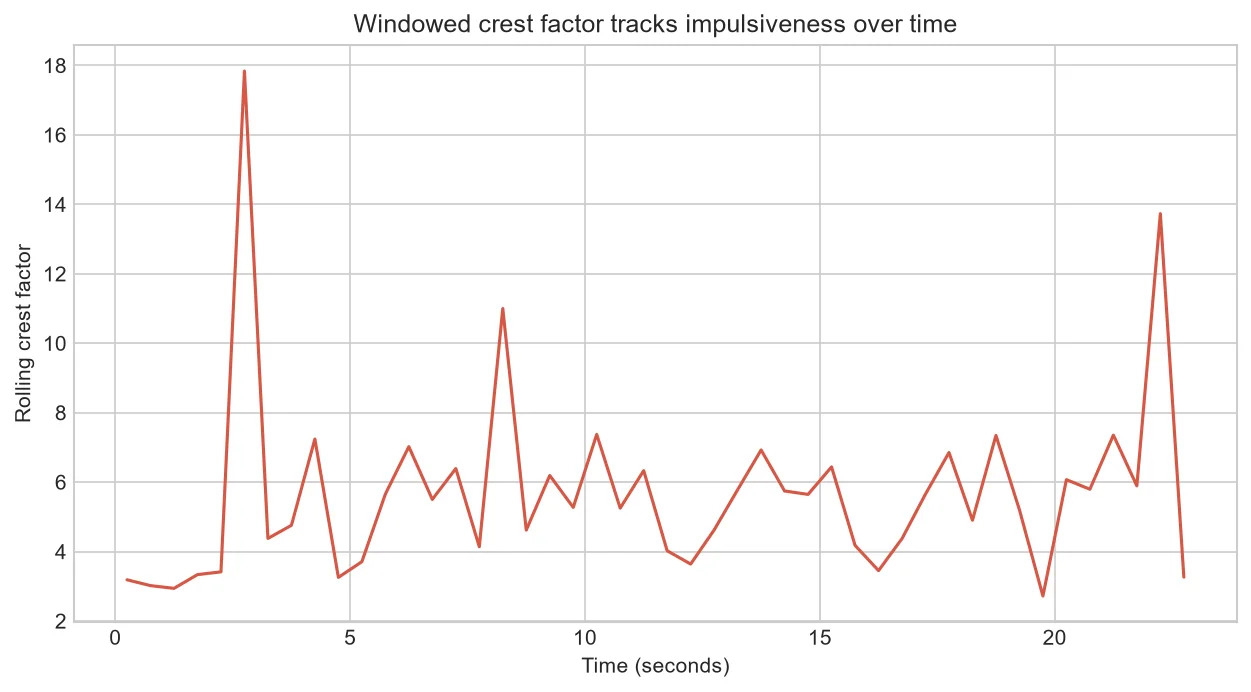
Use windowed crest factor to locate impulsive CNC vibration while avoiding common errors near quiet signal regions.
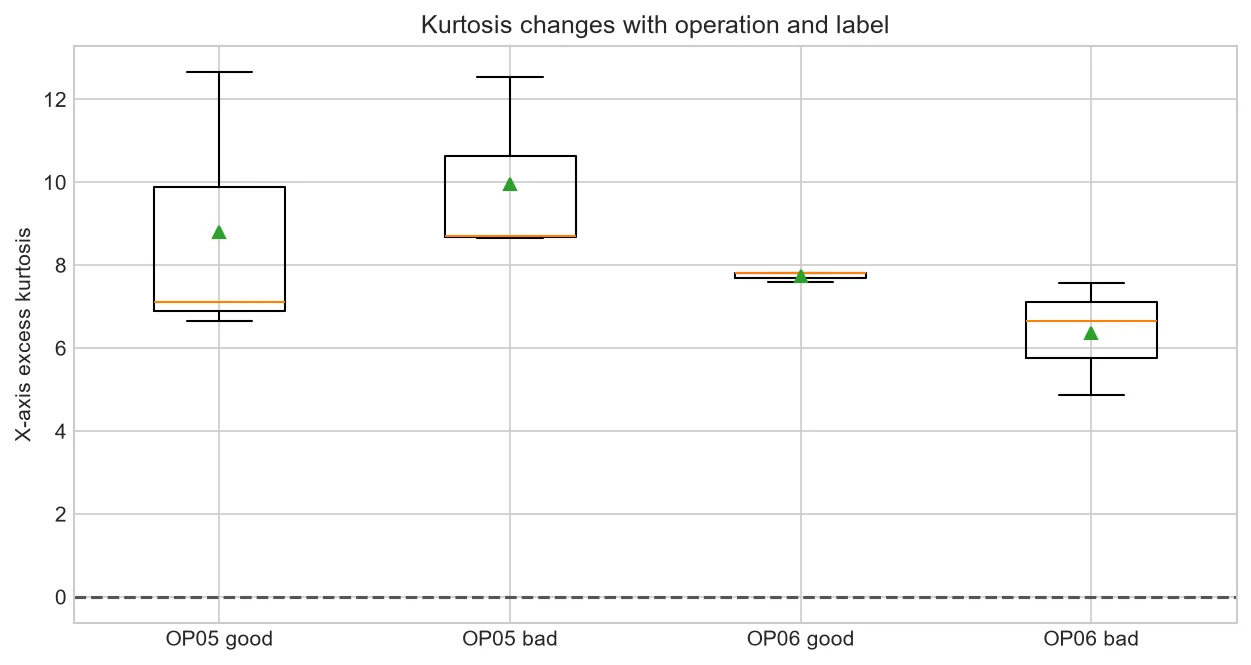
Understand what vibration kurtosis measures, why small samples exaggerate it and how to use it with CNC process context.
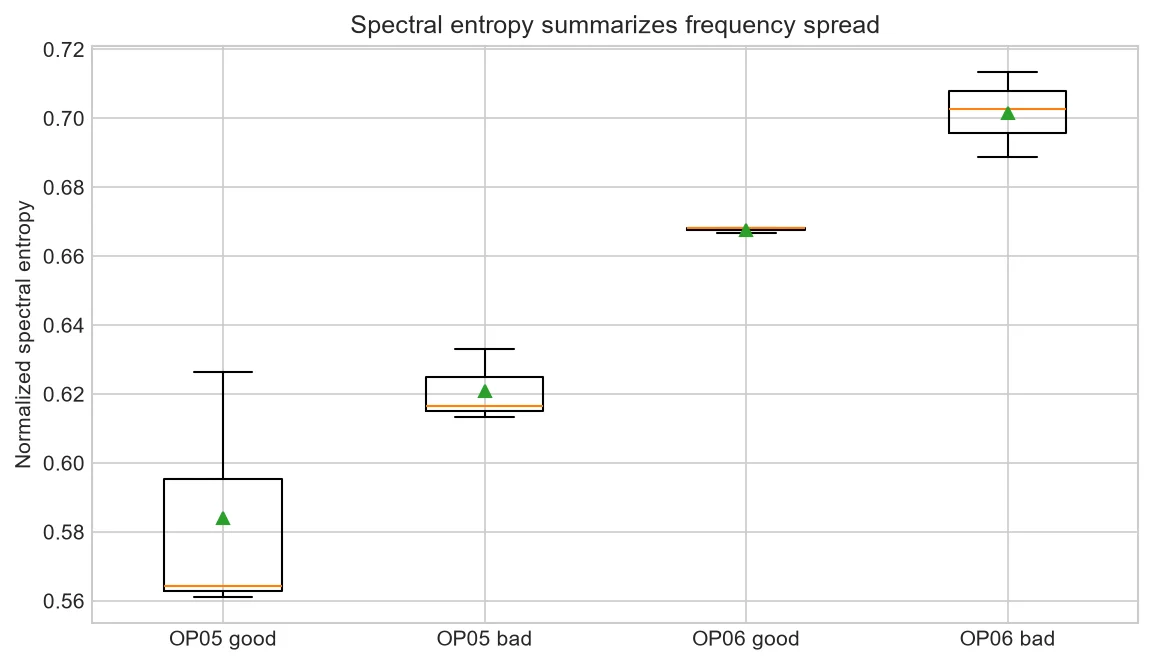
Learn how spectral entropy describes concentrated or distributed vibration energy and when it adds information beyond RMS.
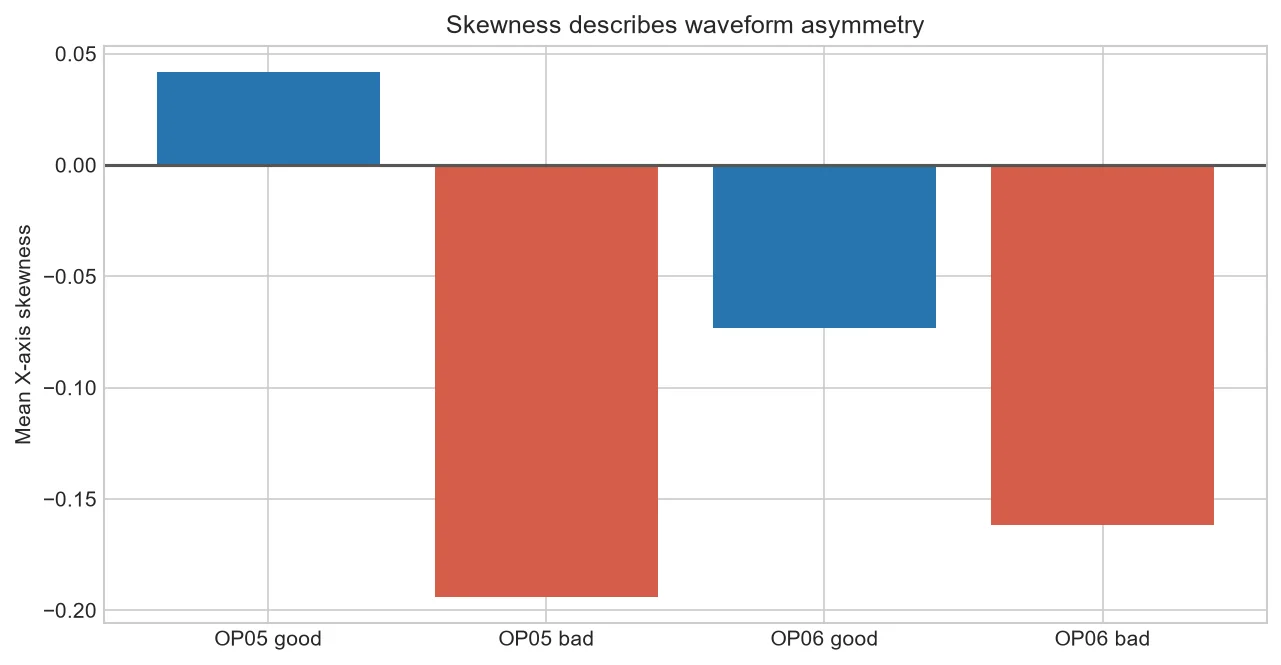
Use skewness to check waveform asymmetry while separating sensor offset, clipping and process effects from machine condition.
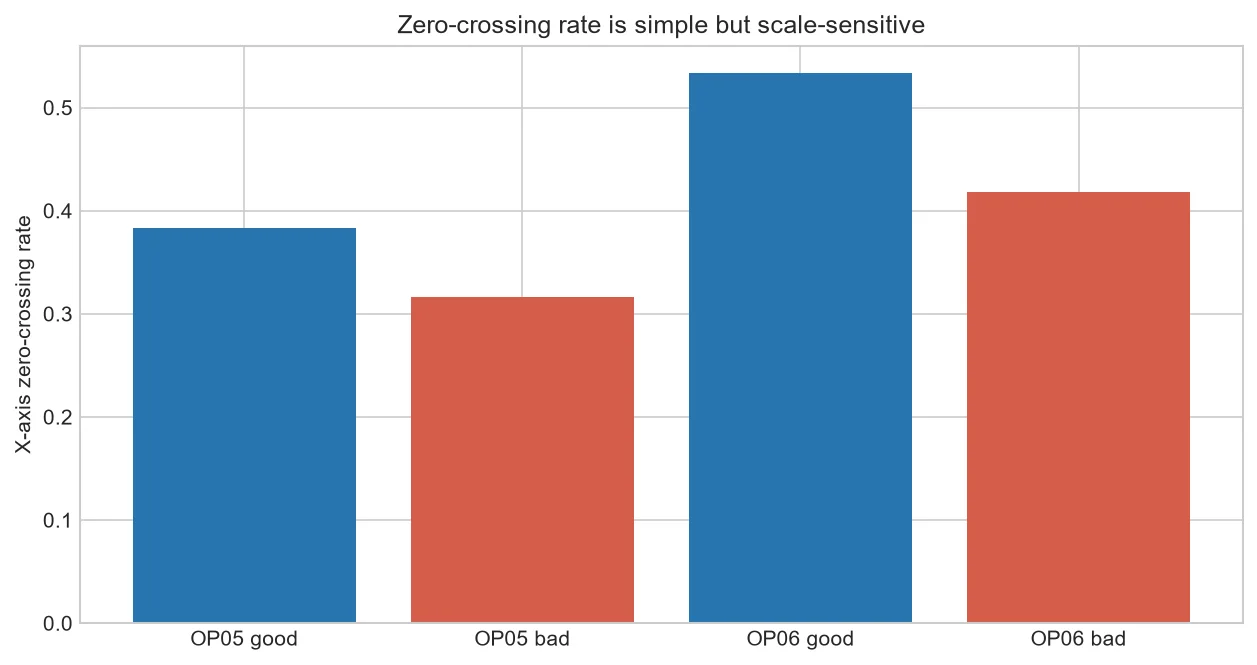
Understand how zero-crossing rate reflects signal activity and why filtering, offset and noise must be controlled first.
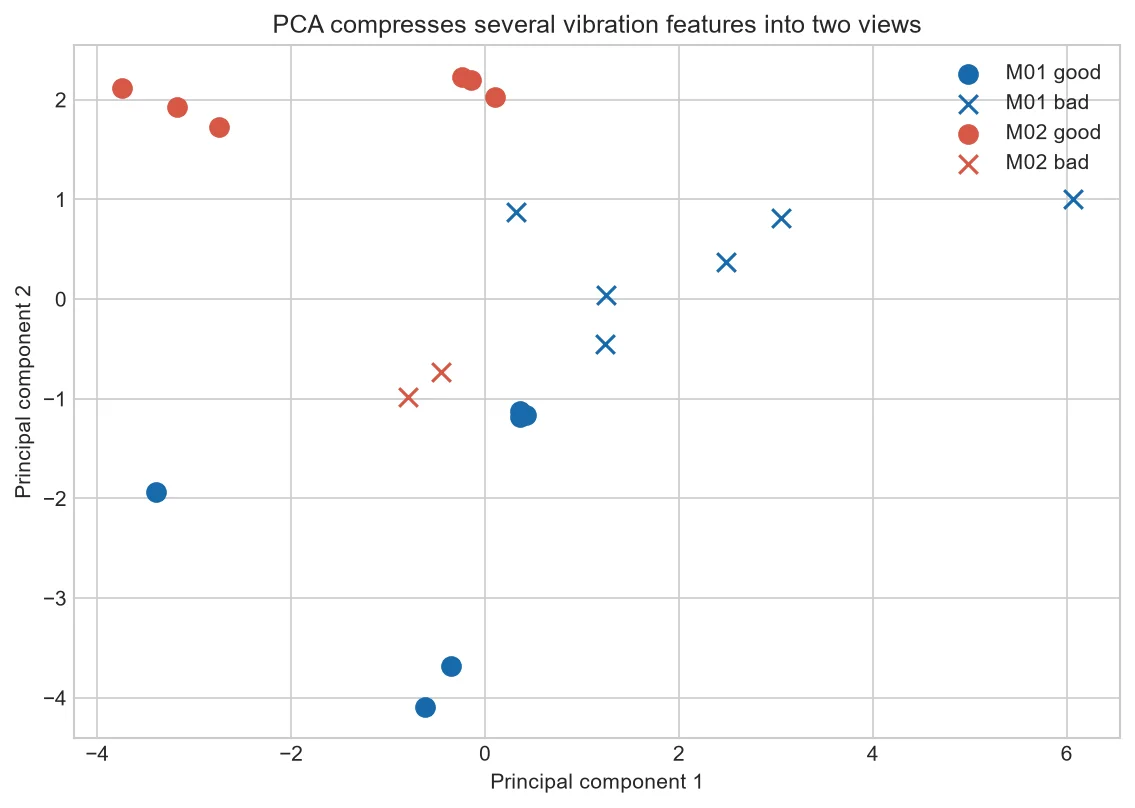
Learn what a PCA feature map shows, how scaling changes it and why grouped validation still matters for CNC monitoring.
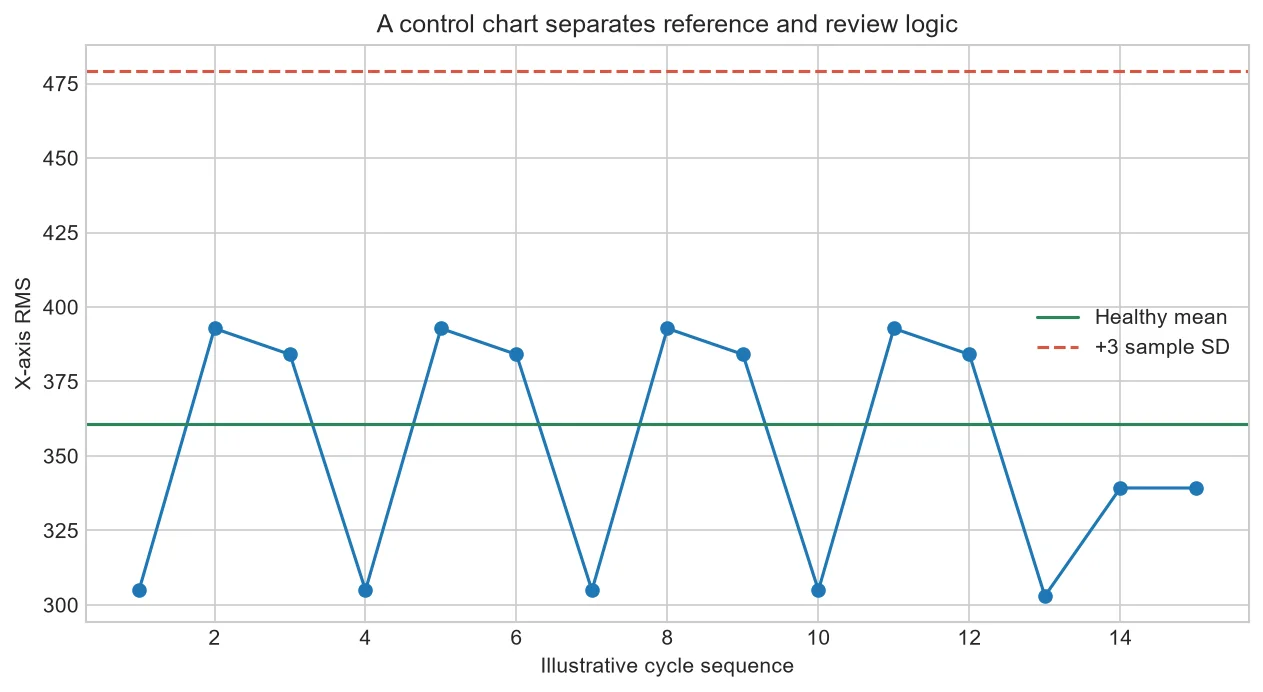
Build an interpretable CNC vibration control chart while respecting autocorrelation, operation phases and non-normal healthy data.
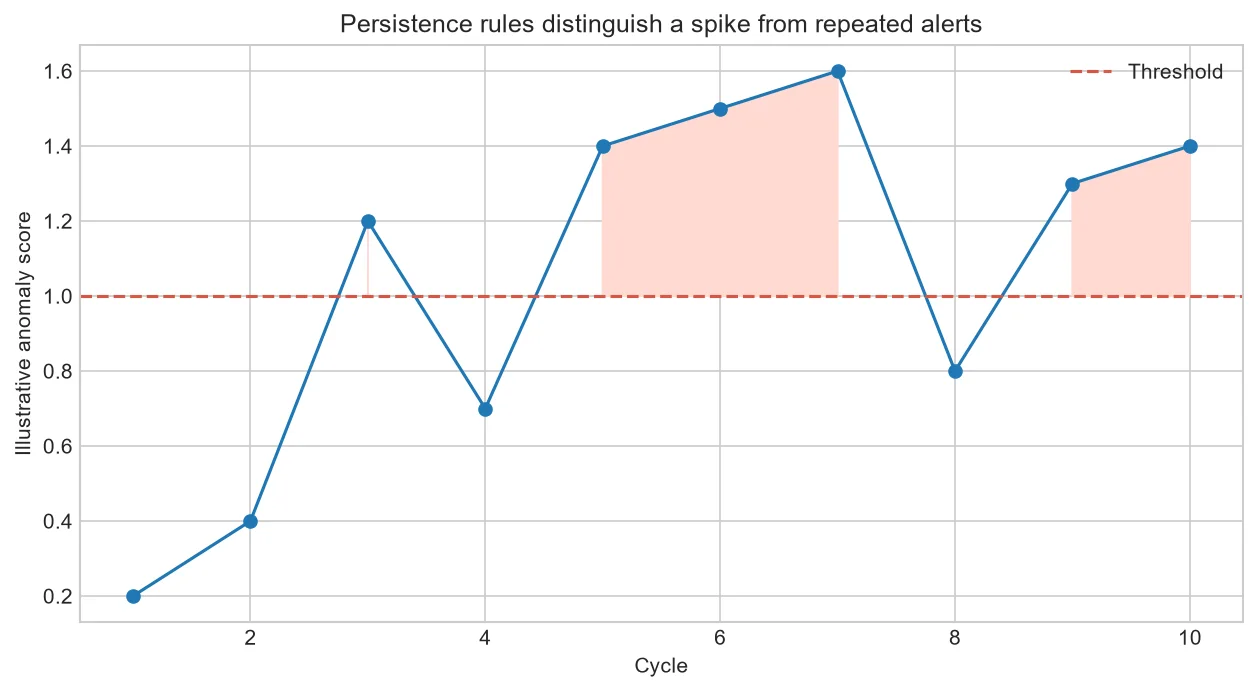
Use persistence, reset and escalation rules to turn noisy CNC vibration features into understandable maintenance alerts.
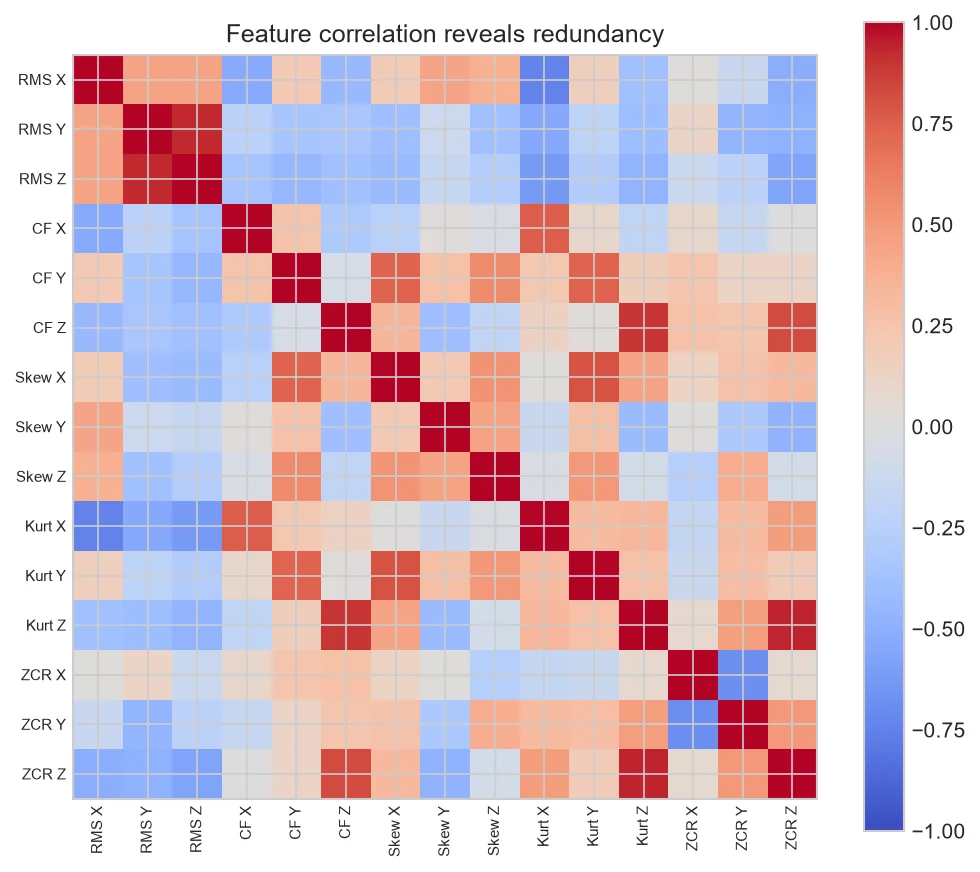
Read a vibration-feature correlation matrix, find redundant variables and avoid conclusions based on a small mixed dataset.
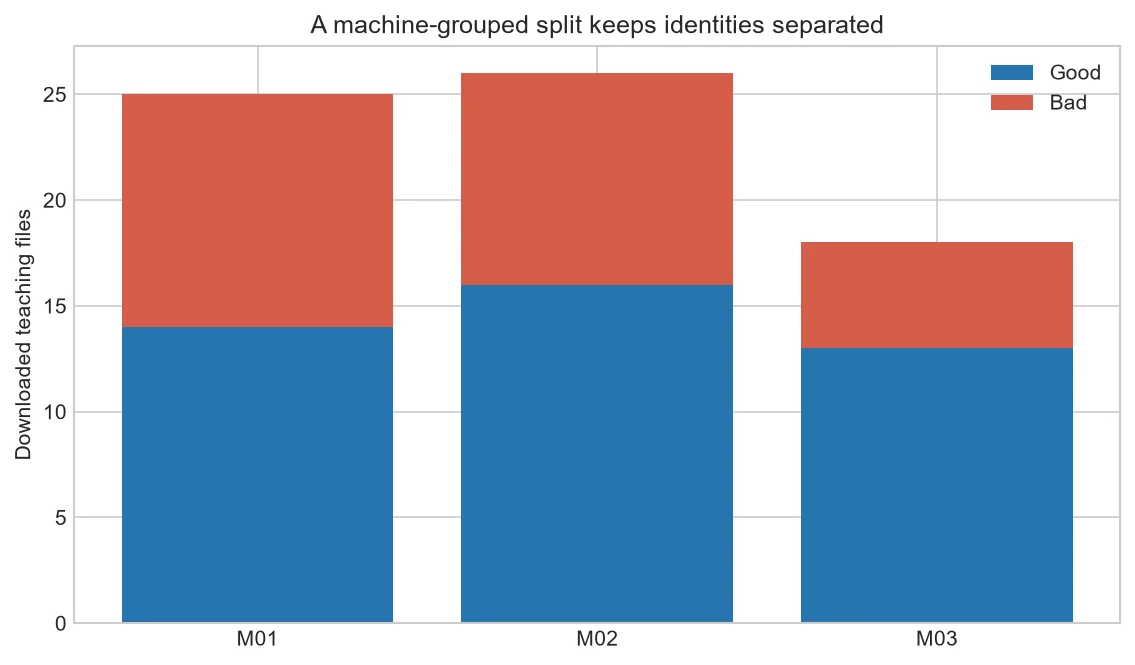
Learn why random file splitting can exaggerate CNC monitoring accuracy and how machine-, session- and time-grouped tests provide stronger evidence.
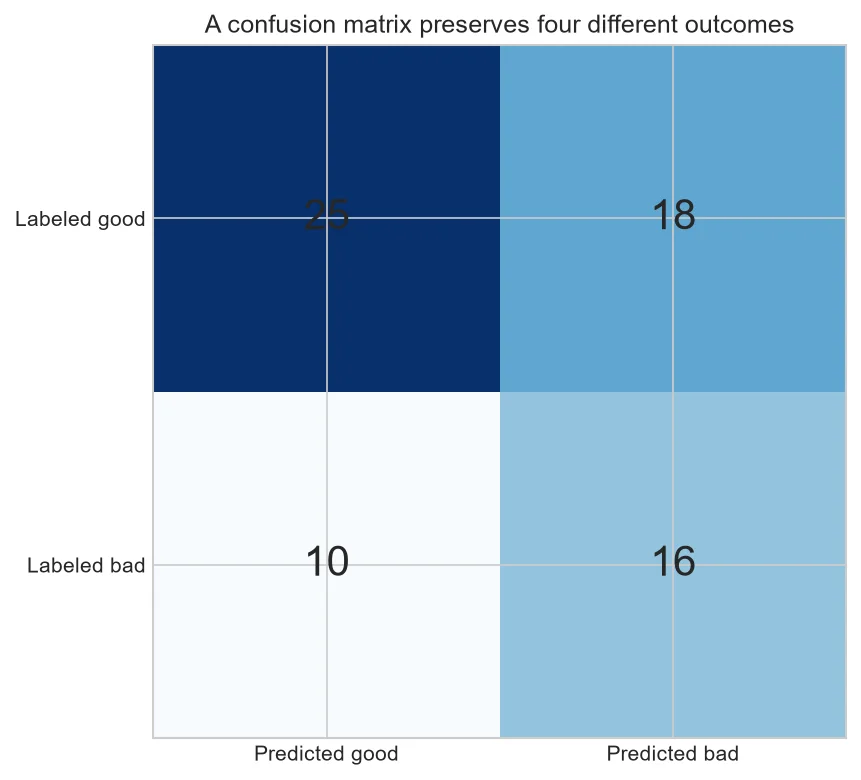
Translate true positives, false positives, true negatives and false negatives into practical CNC inspection consequences.
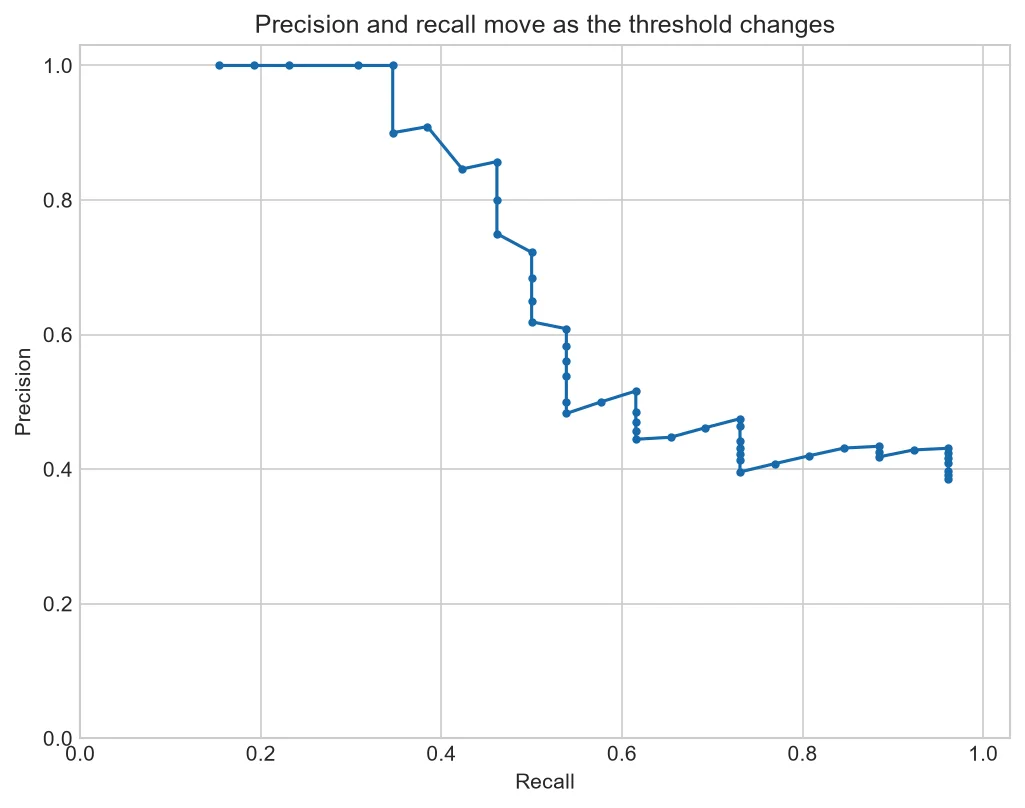
Understand why precision-recall analysis is useful when abnormal CNC events are uncommon and thresholds must be selected carefully.
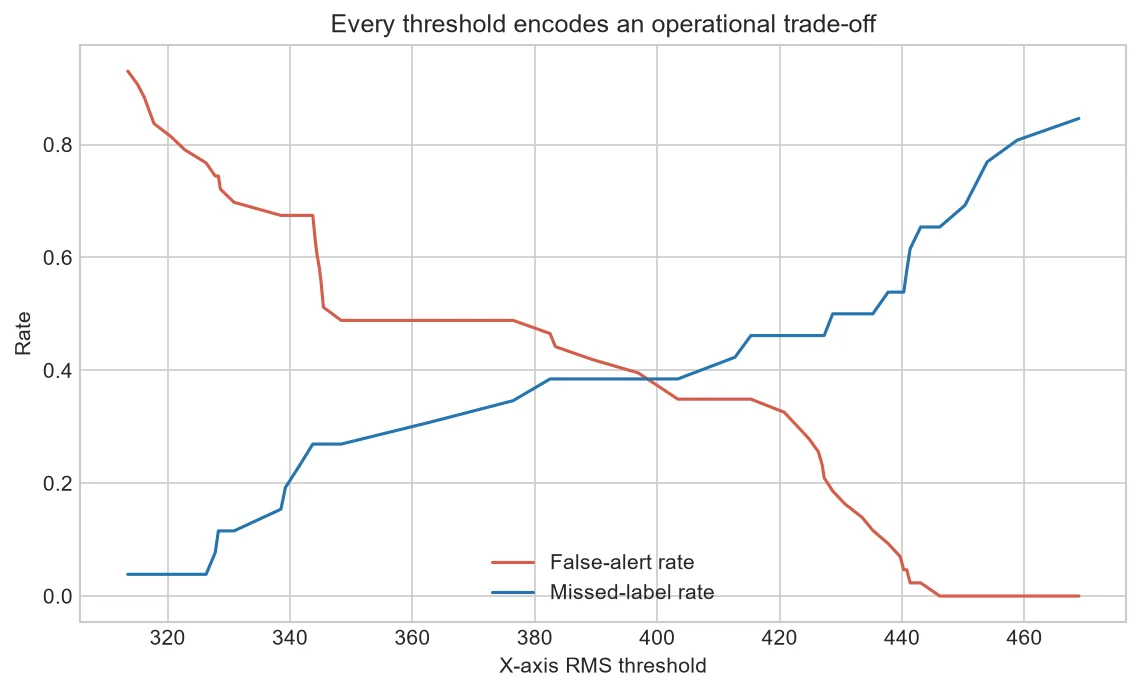
Balance false alerts, missed events and detection delay when selecting a practical CNC vibration threshold.
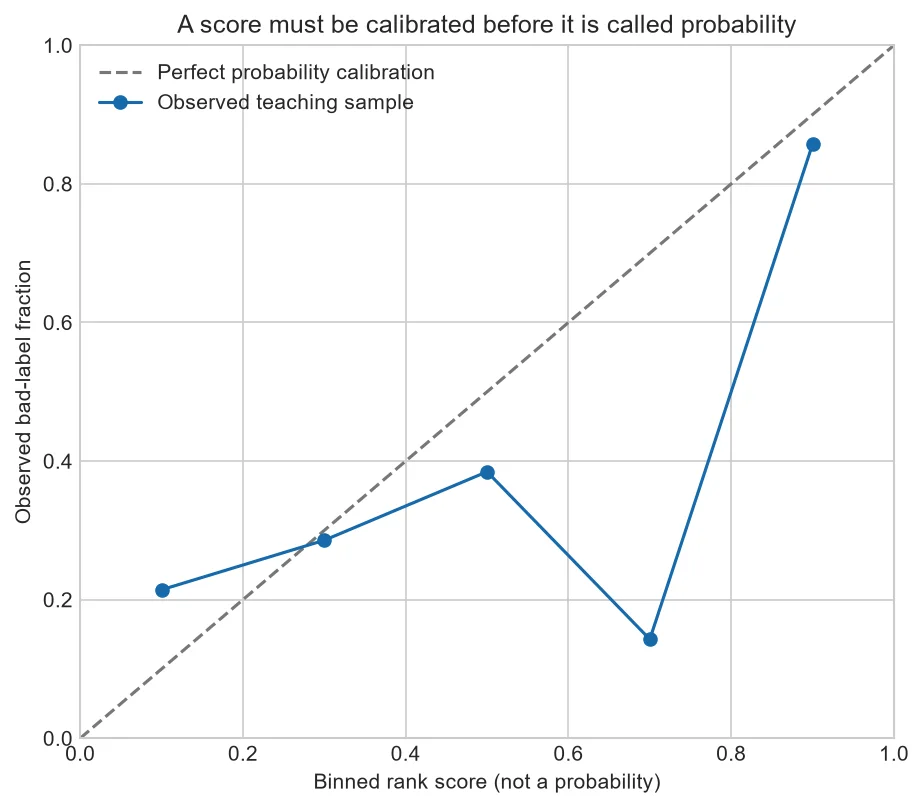
Learn the difference between ranking, anomaly scores and calibrated probabilities before presenting CNC monitoring risk to operators.
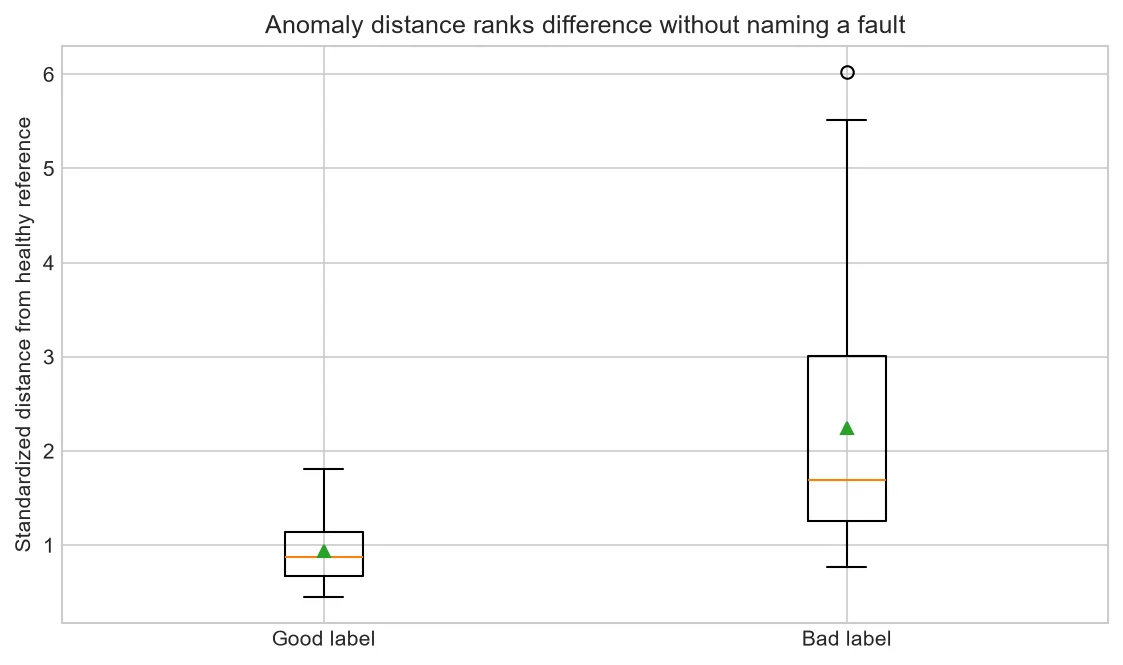
Combine standardized vibration features into an interpretable distance from healthy CNC operation without claiming a specific fault.
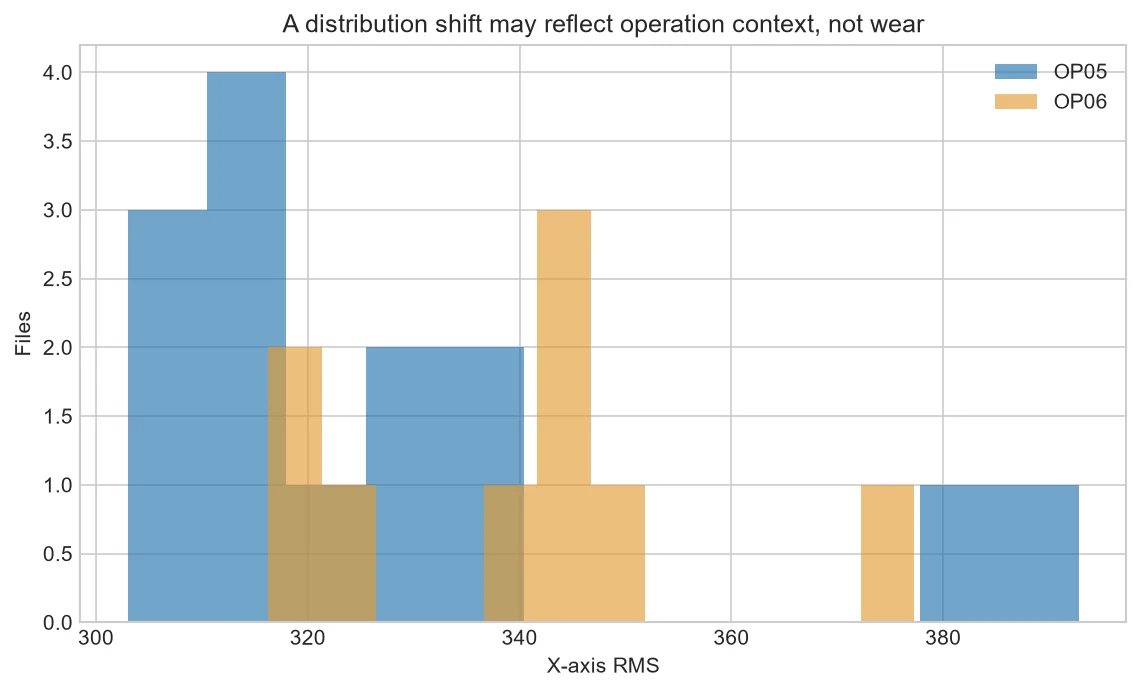
Distinguish operation changes, sensor changes and gradual feature drift before they silently damage CNC monitoring performance.
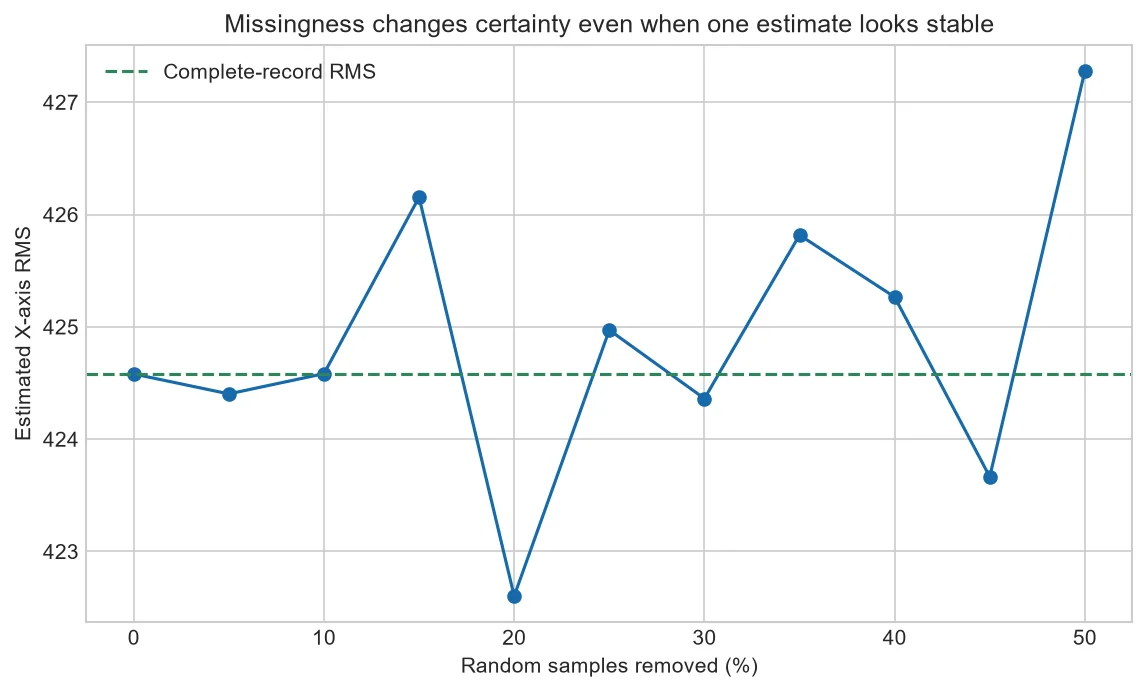
Learn when missing vibration samples bias features, when interpolation is unsafe and how a CNC monitor should report incomplete records.
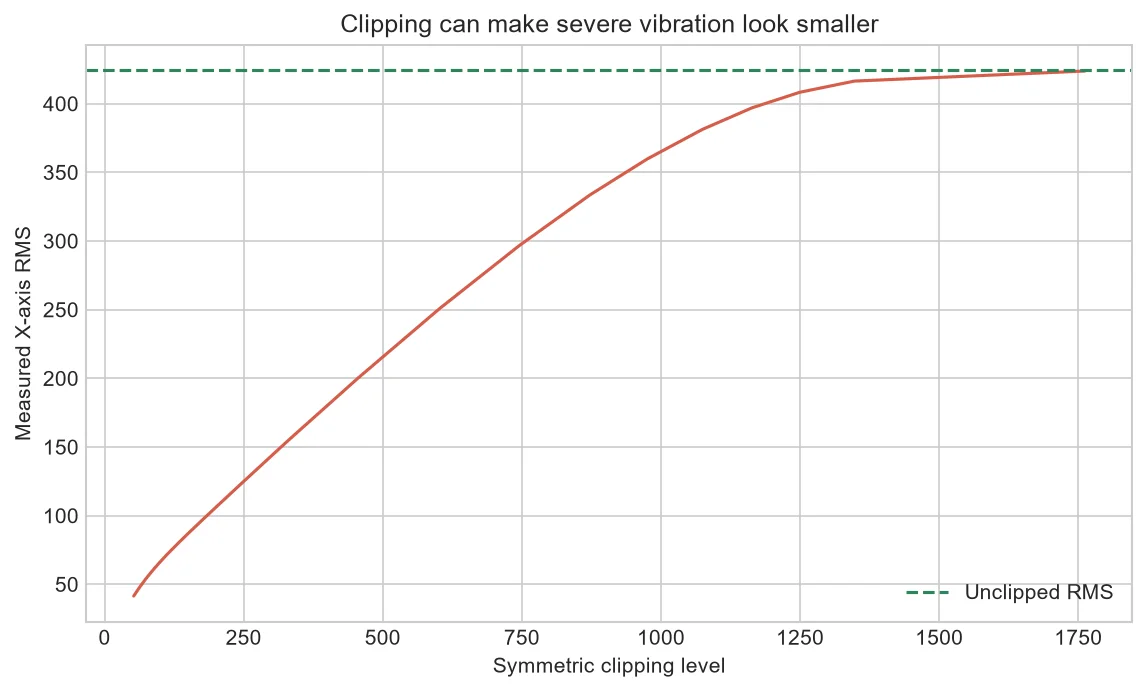
Recognize clipped accelerometer signals, understand their effect on RMS and spectra, and prevent invalid CNC condition alerts.
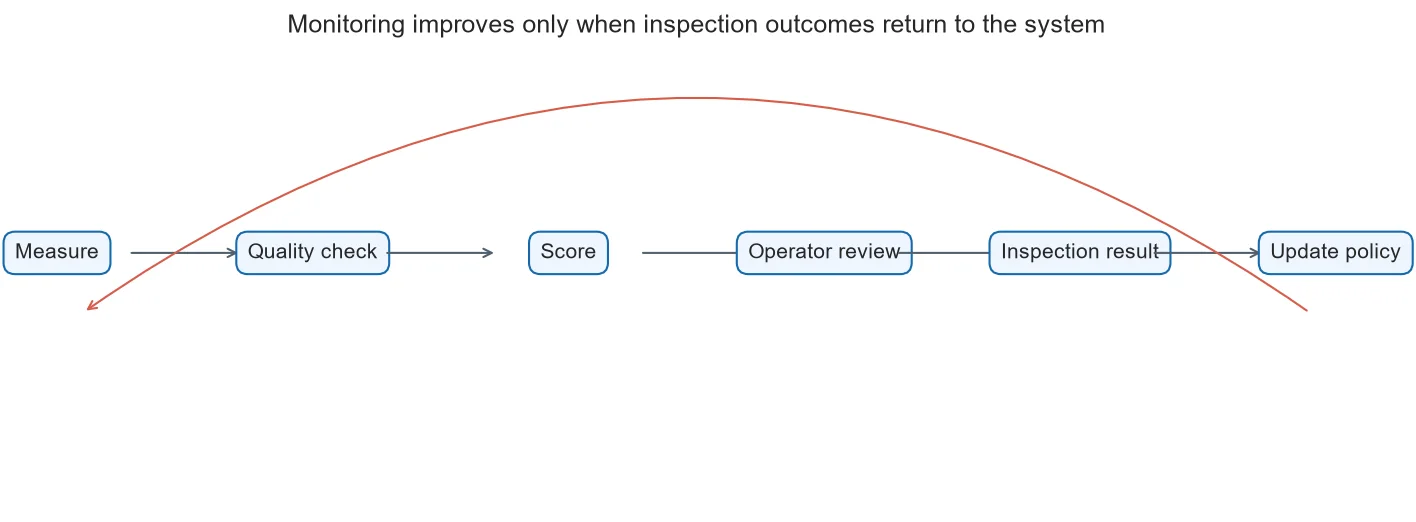
Design a feedback workflow that connects vibration alerts, operator review and inspection outcomes without silently rewriting history.