KB-021
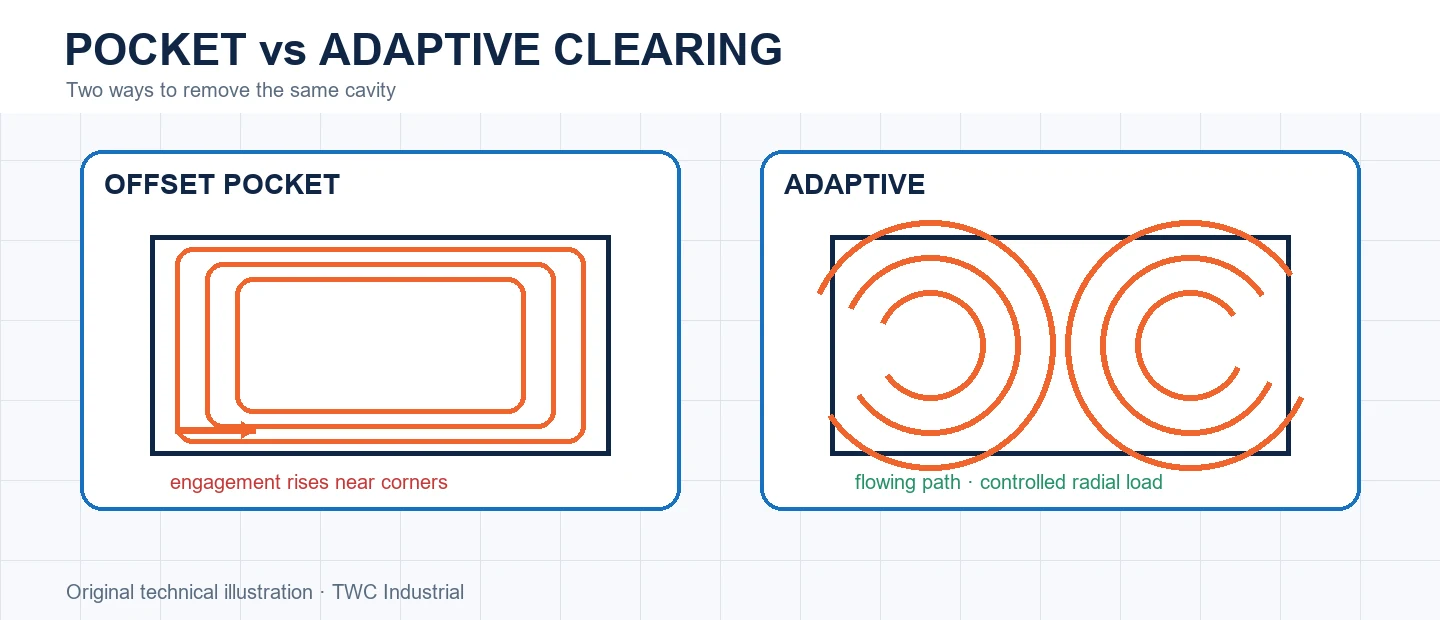
CNC Pocket vs Adaptive Clearing: Which Strategy Fits the Job?
Compare conventional pocket clearing with adaptive toolpaths by engagement, entry method, remaining stock, machine limits and finishing needs.
Knowledge Base Topic · KB-S03
Understand clearing, profiles, entry moves, drilling, finishing, safe heights, sequencing and simulation.
Open one guide at a time or follow the numbered sequence.
Compare conventional pocket clearing with adaptive toolpaths by engagement, entry method, remaining stock, machine limits and finishing needs.
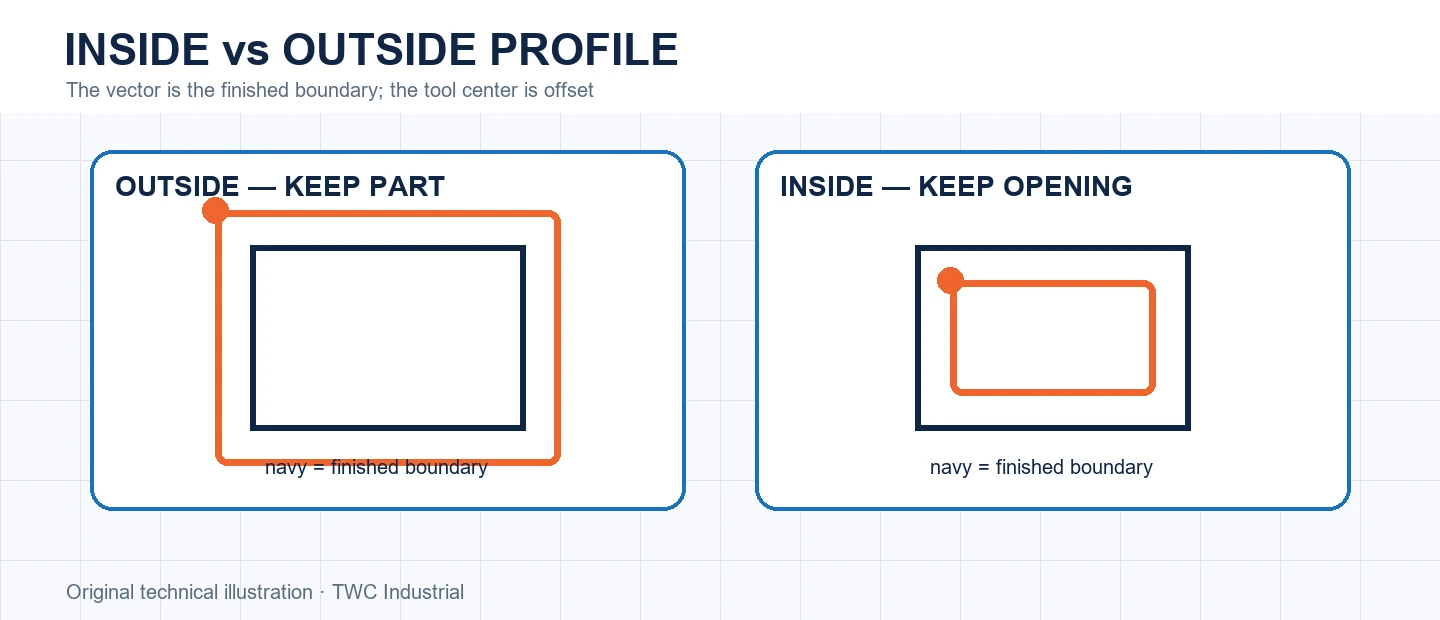
Learn how boundary selection, cutter side, allowance and cut direction determine whether a CNC profile produces the intended part or opening.
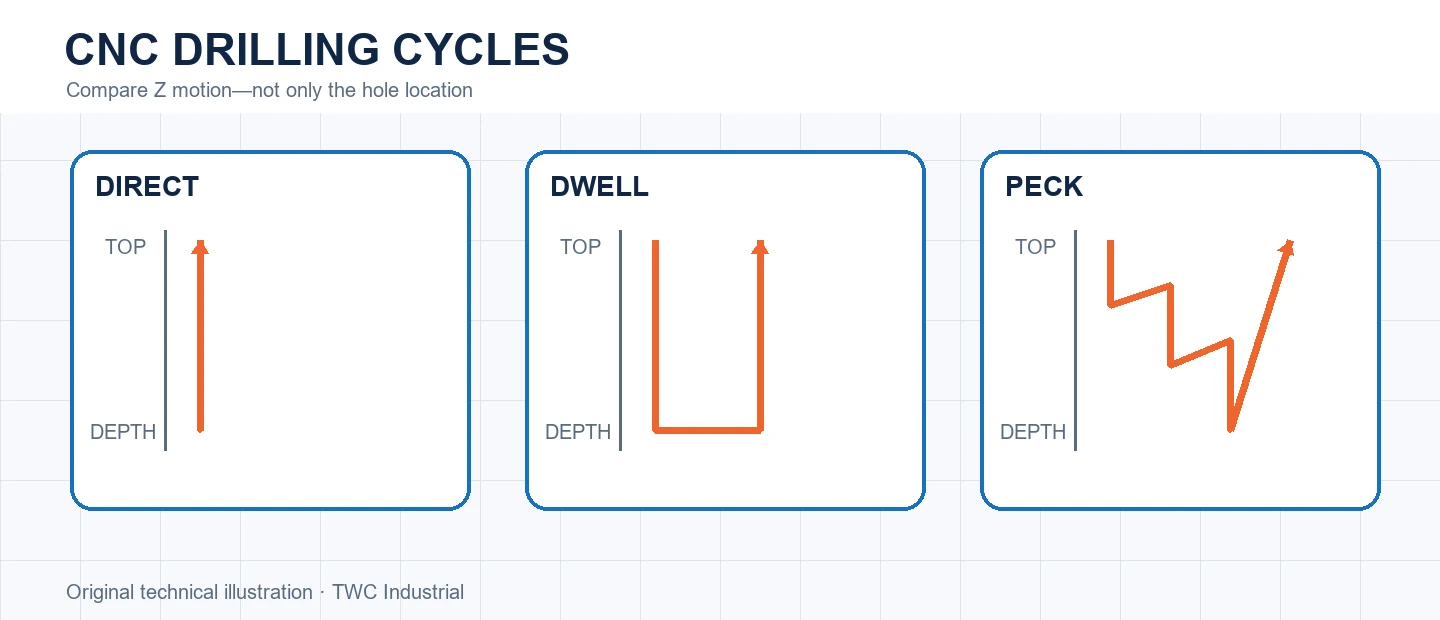
Choose a drilling approach by depth, chip evacuation, tool geometry and material instead of applying pecking or dwell to every CNC hole.
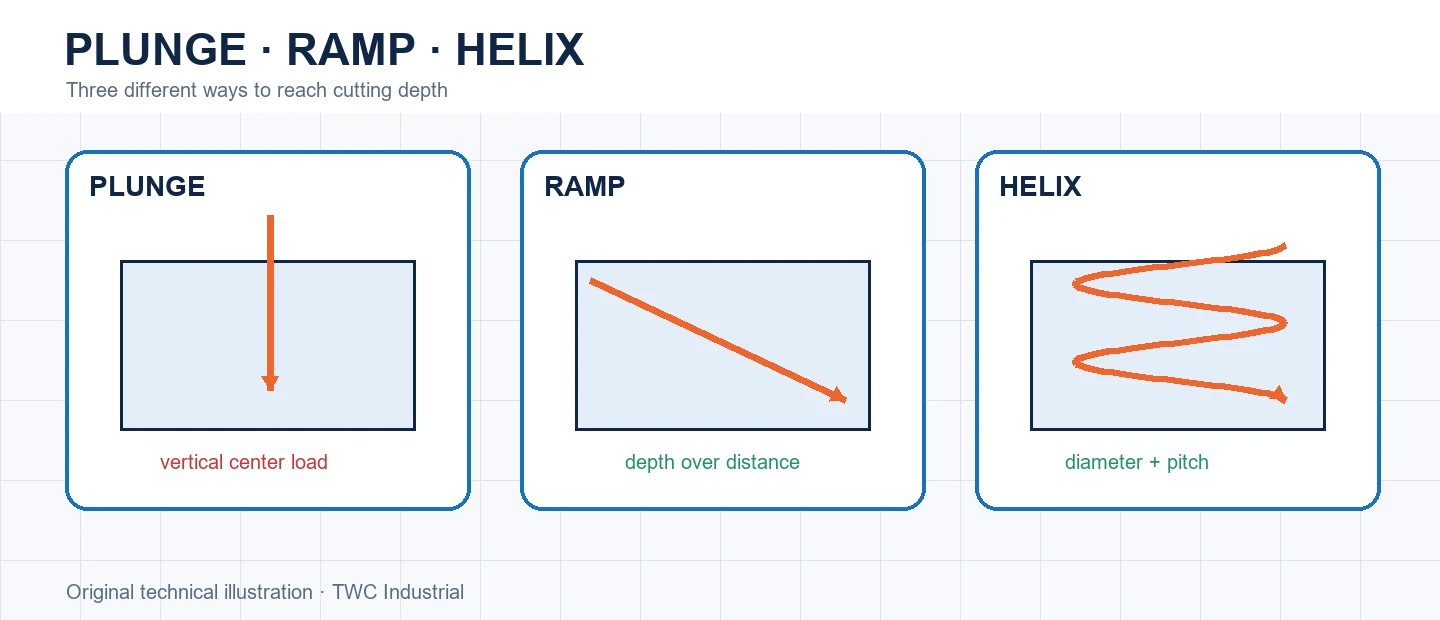
Compare vertical plunges, linear ramps and helical entries by cutter capability, available space, entry angle and chip evacuation.
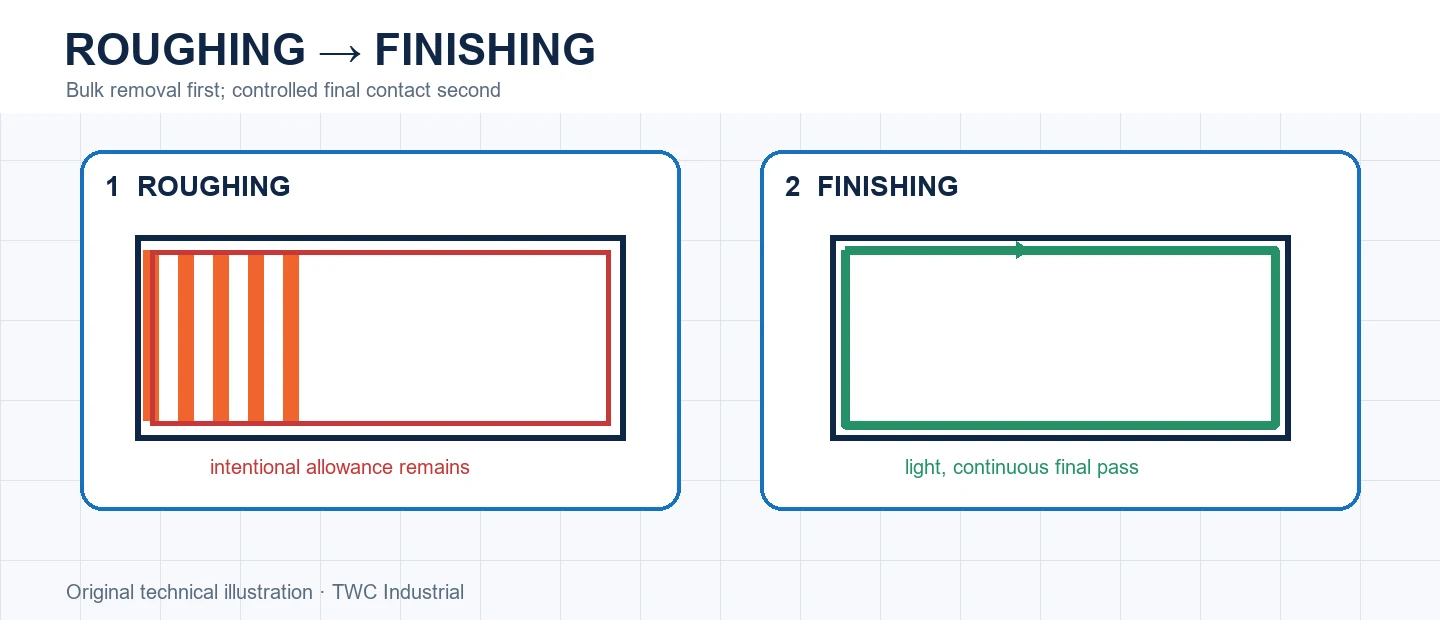
Separate bulk material removal from final sizing so tool engagement, allowance, surface quality and inspection remain understandable.
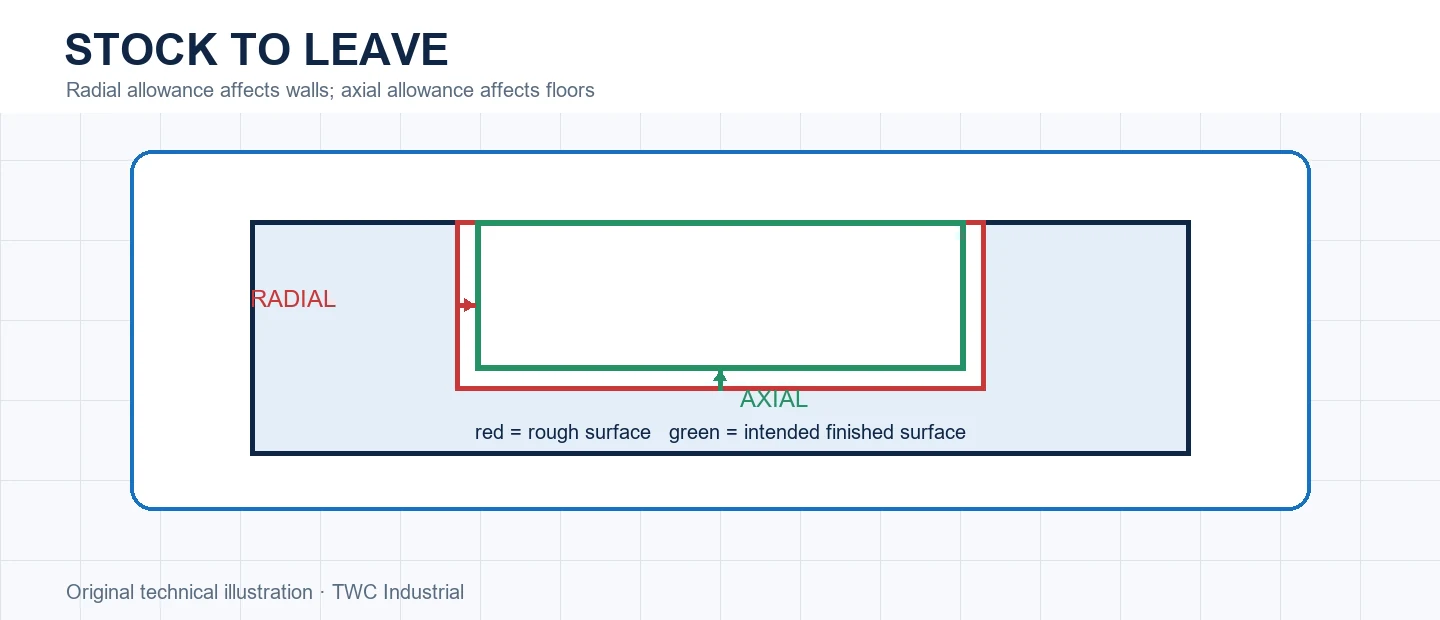
Use radial and axial stock allowances deliberately, verify their sign and connect them to a separate finishing and inspection plan.
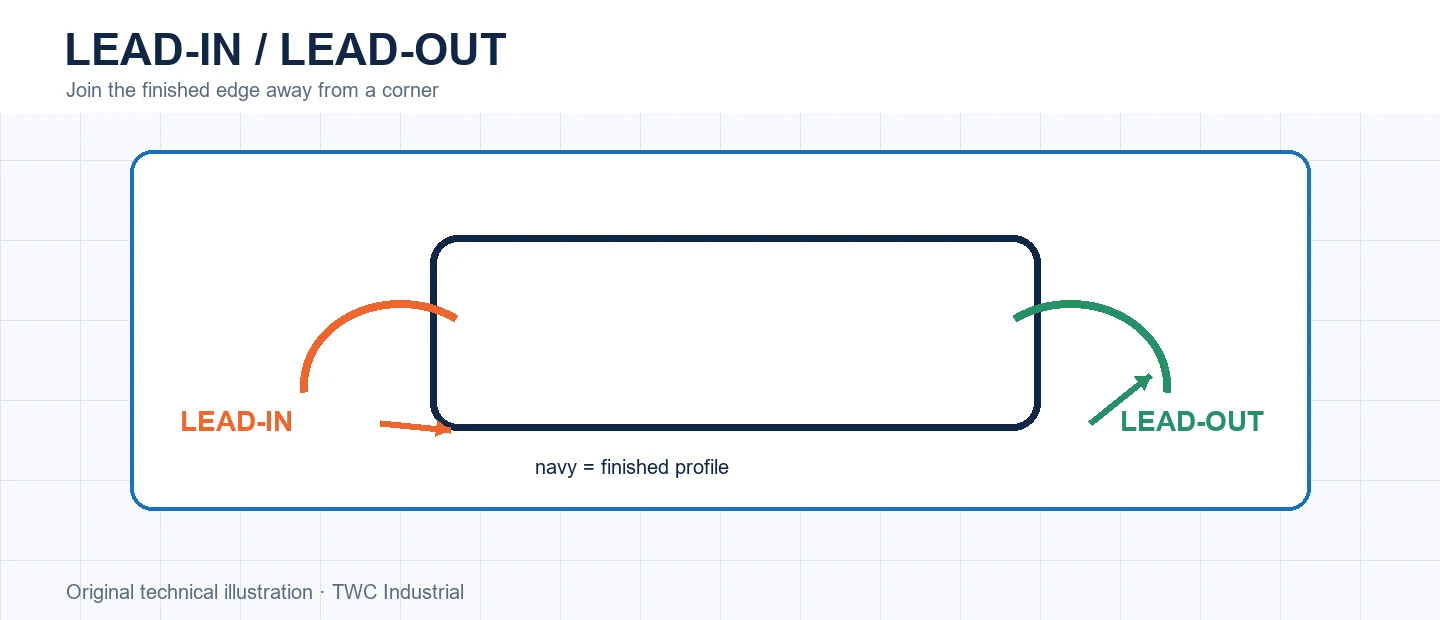
Place entry and exit moves where they have clearance, reach stable cutting conditions and avoid visible dwell or witness marks.
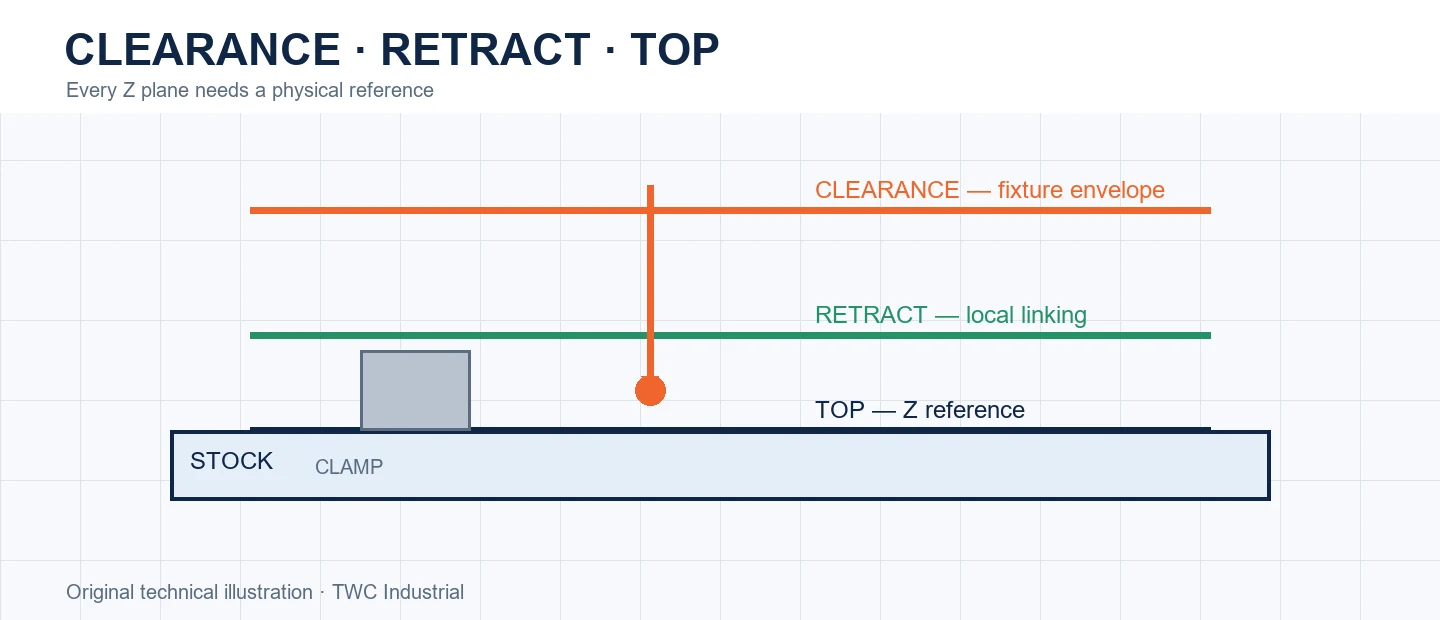
Set CAM heights from measured stock, fixtures and machine travel so rapid moves clear obstacles without wasting motion or exceeding limits.
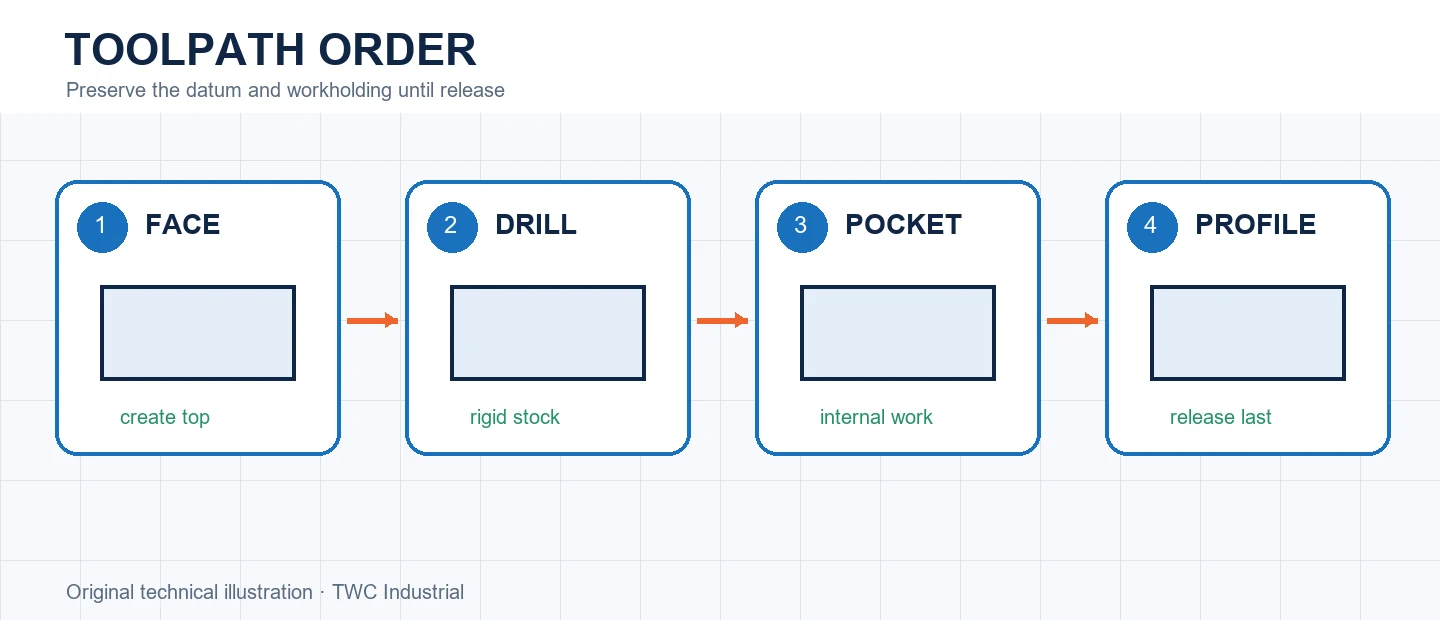
Order facing, drilling, pockets, engraving and profiles so references, rigidity, workholding and tool changes remain controlled.
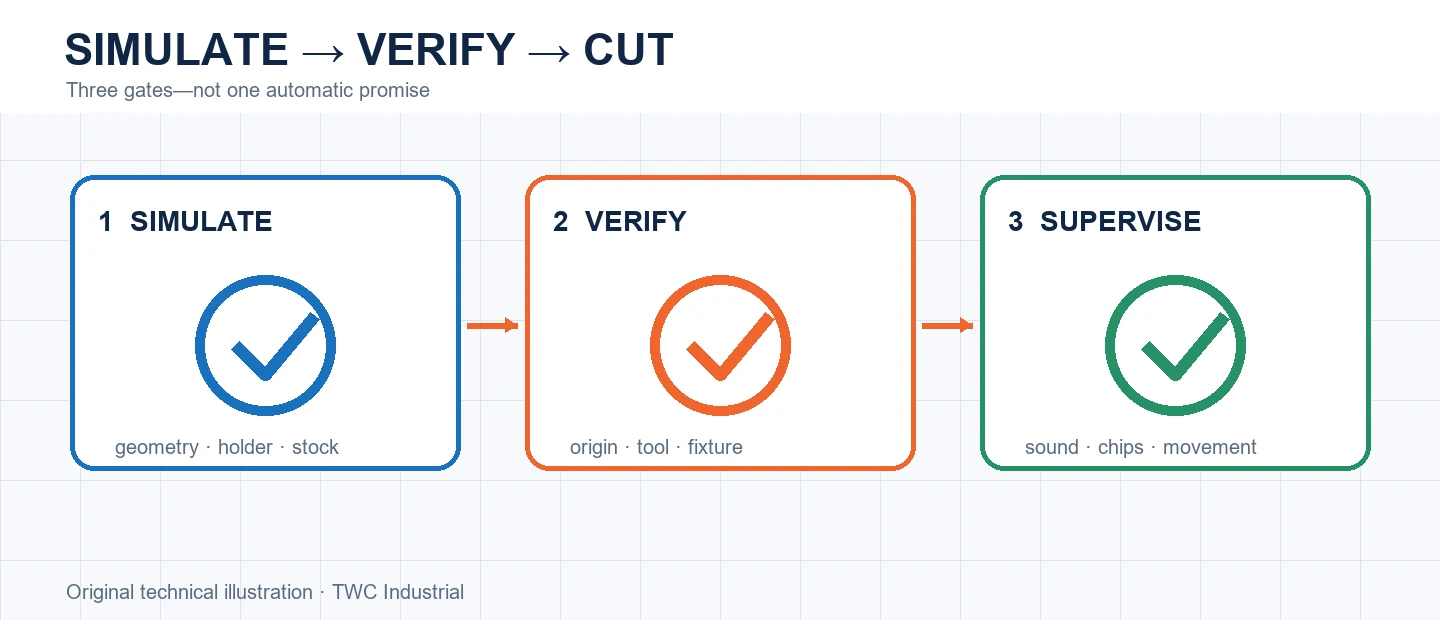
Review tools, stock, coordinates, holder clearance, remaining material and operation order before posting and verifying a CNC program.