KB-031
CNC Router Bit Anatomy: Diameter, Shank, Flute and Cutting Length
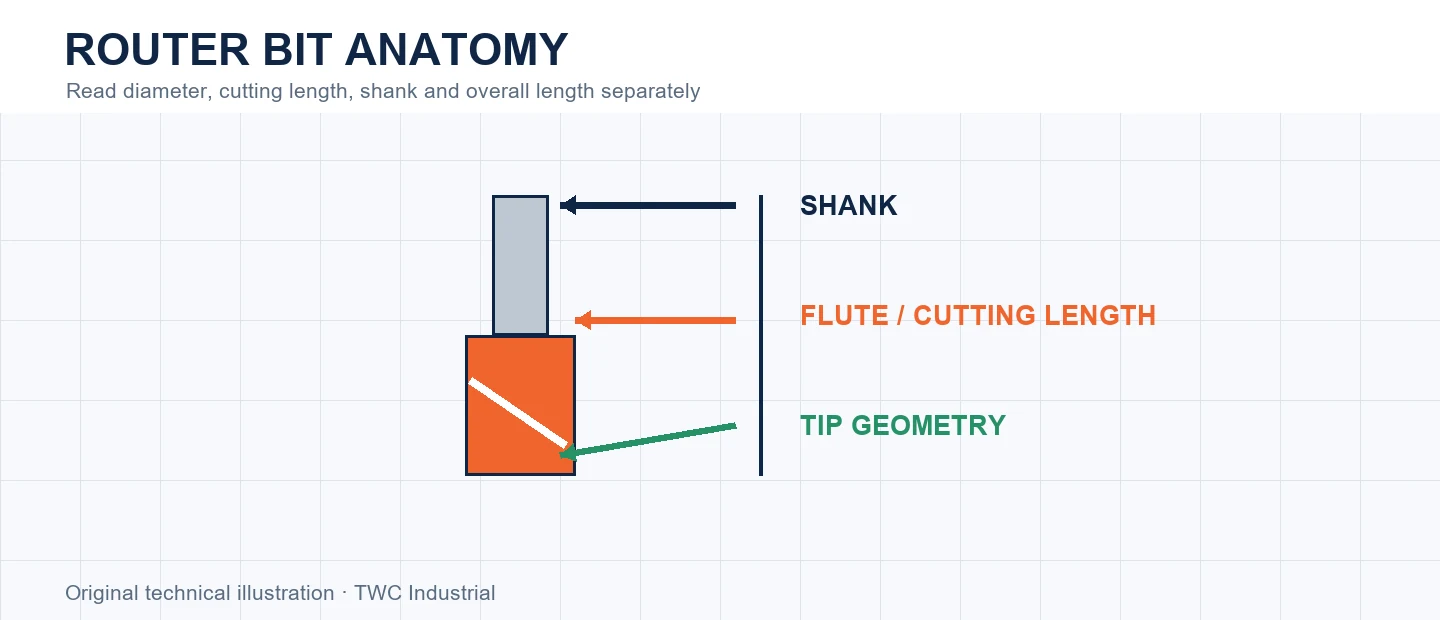
Read router-bit dimensions correctly so the cutter, collet, tool library, depth and holder-clearance assumptions describe the same physical tool.
Knowledge Base Topic · KB-S04
Choose and document cutter geometry, dimensions, flute count, reach, collet fit, runout and wear.
Open one guide at a time or follow the numbered sequence.
Read router-bit dimensions correctly so the cutter, collet, tool library, depth and holder-clearance assumptions describe the same physical tool.
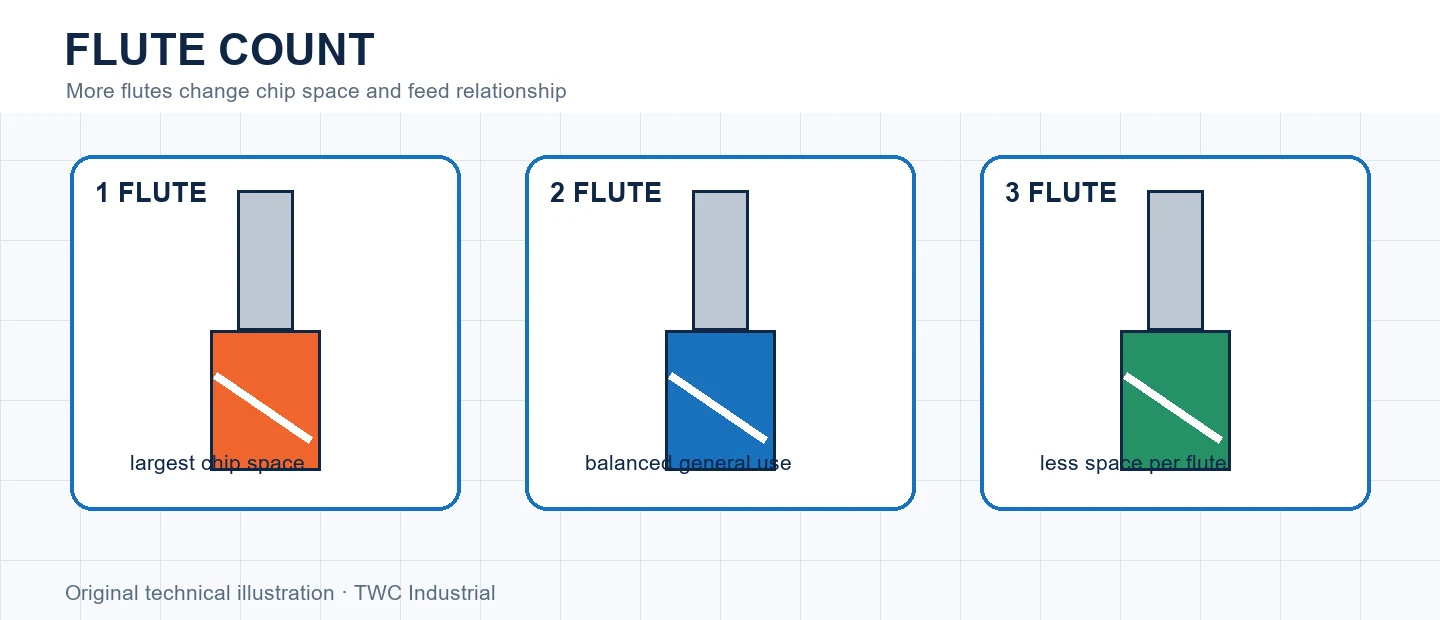
Choose flute count by chip space, feed capability, material and finish instead of assuming more cutting edges always produce a better result.
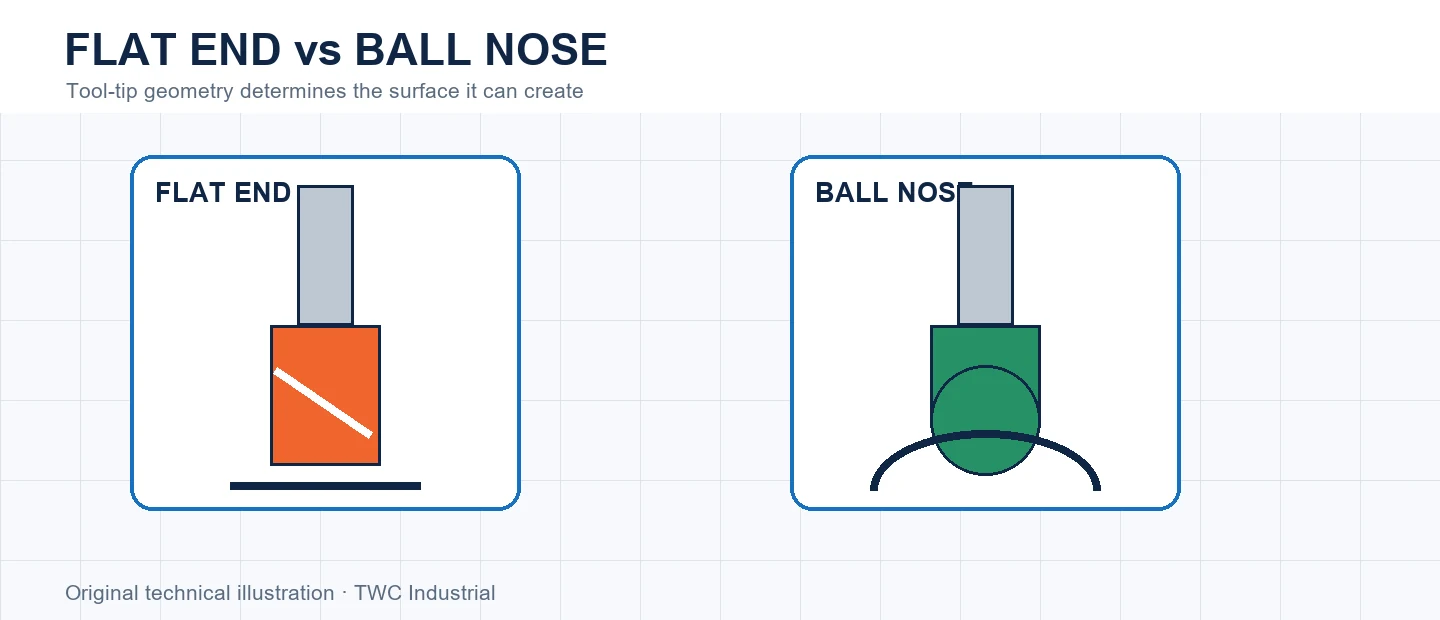
Compare flat and ball-nose geometry for pocket floors, profiles, 3D surfaces, finishing contact and remaining material.
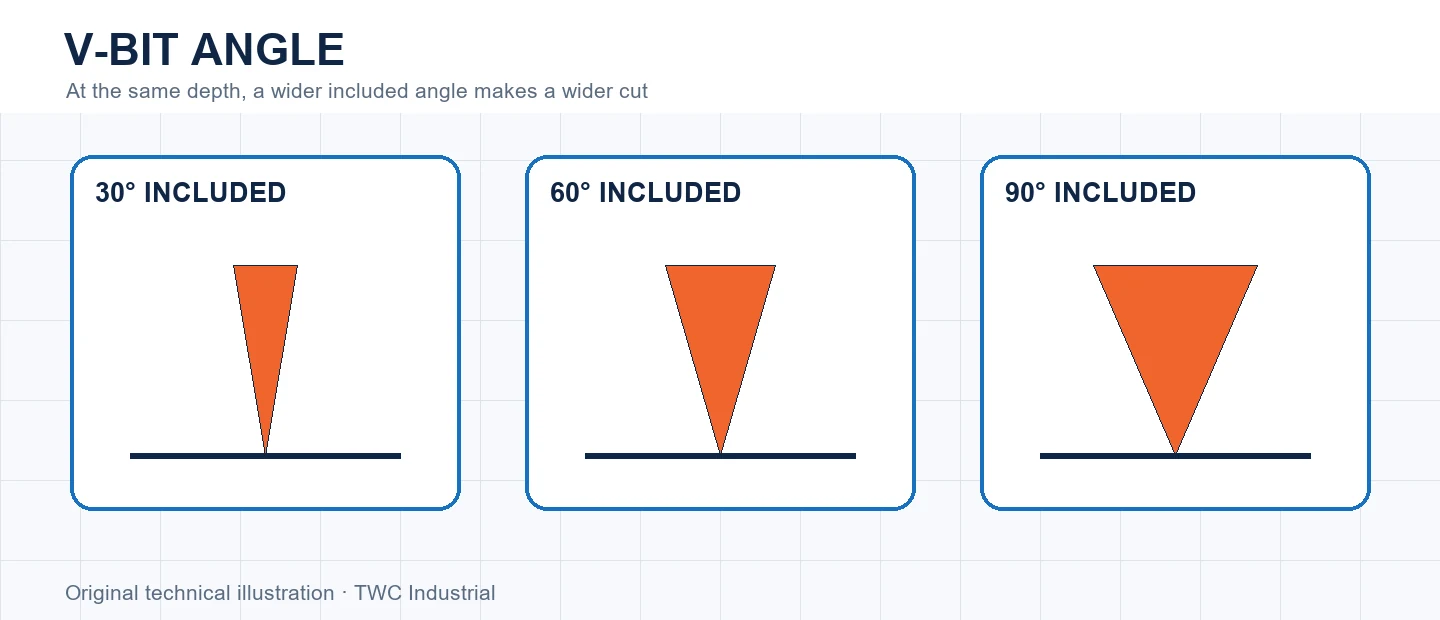
Understand included angle, tip condition, depth and lettering geometry before choosing a V-bit for signs, chamfers or engraving.
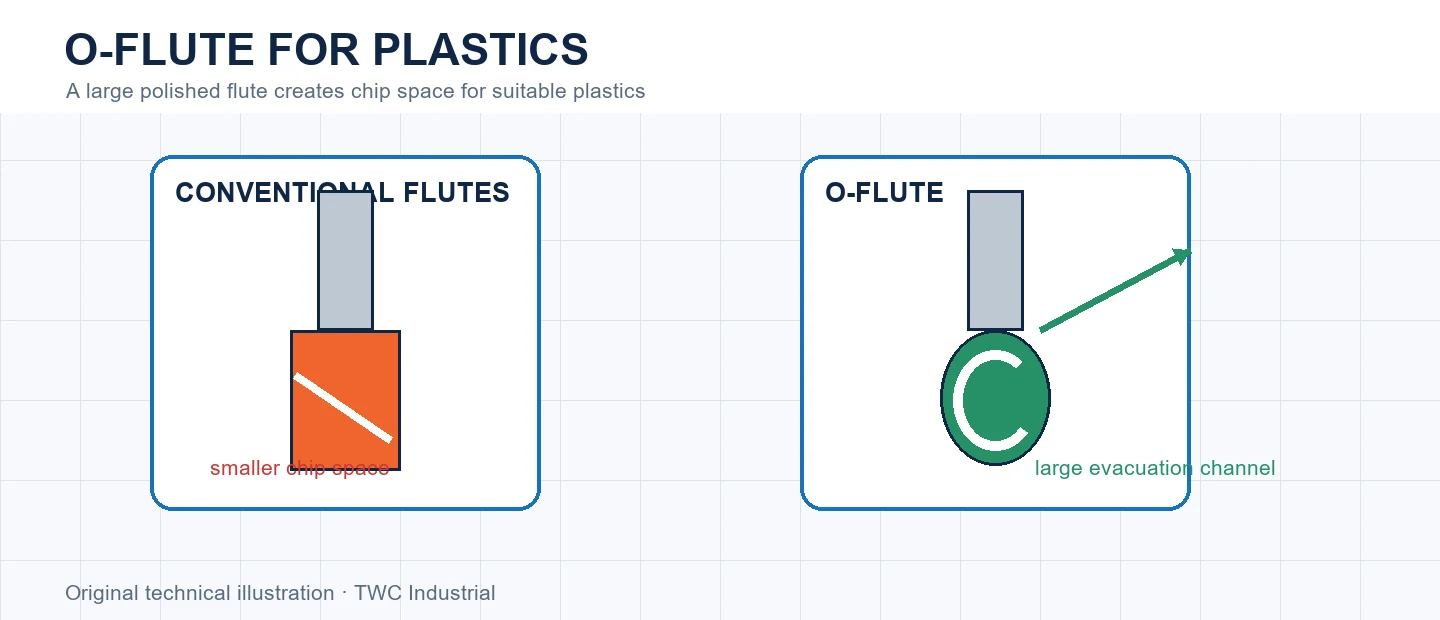
Learn why O-flute geometry is used for suitable plastics and how chip evacuation, heat, workholding and material identity shape the setup.
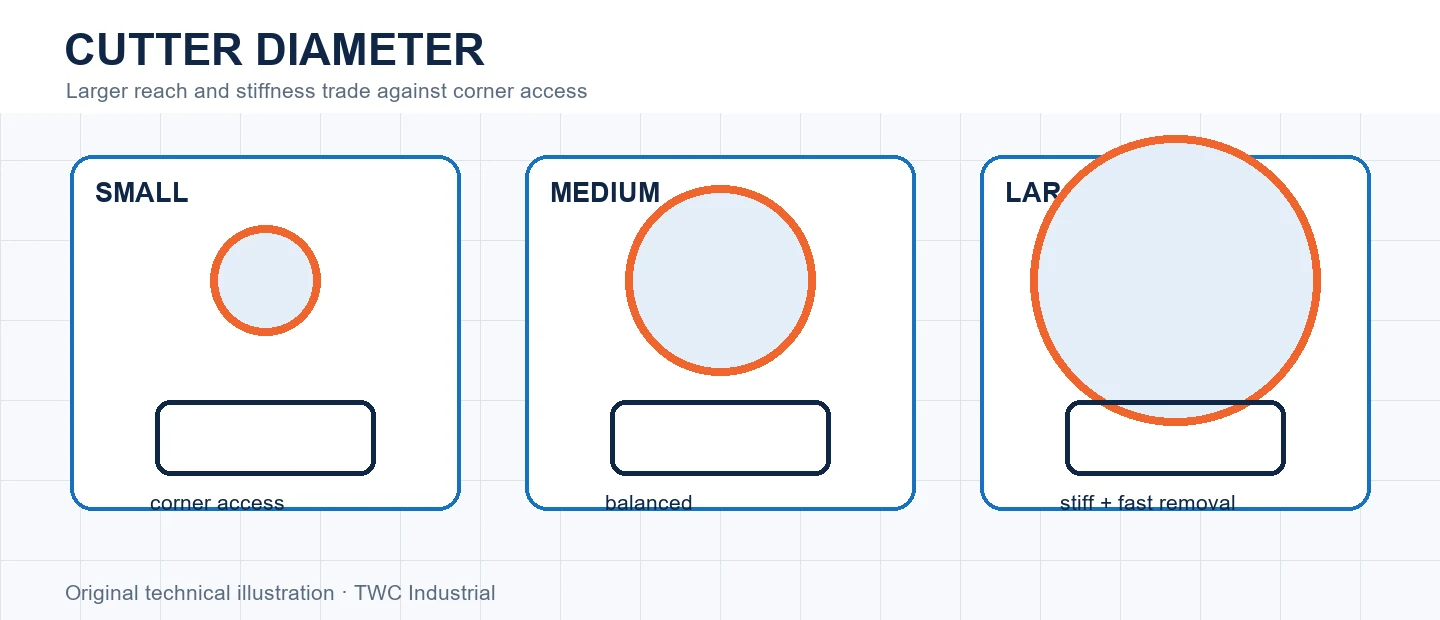
Balance corner access, rigidity, chip space, removal rate and spindle limits when selecting cutter diameter for a CNC router operation.
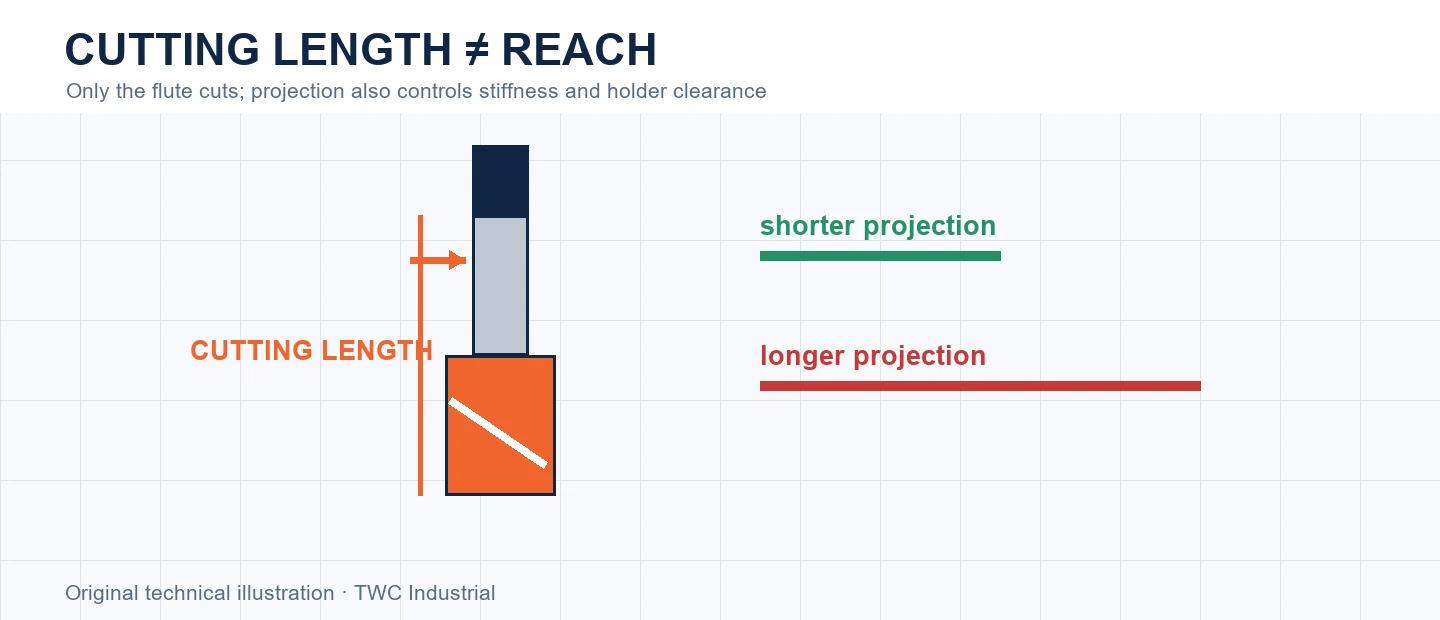
Distinguish flute length, neck clearance, overall length and projection before selecting a long-reach cutter for deep CNC features.
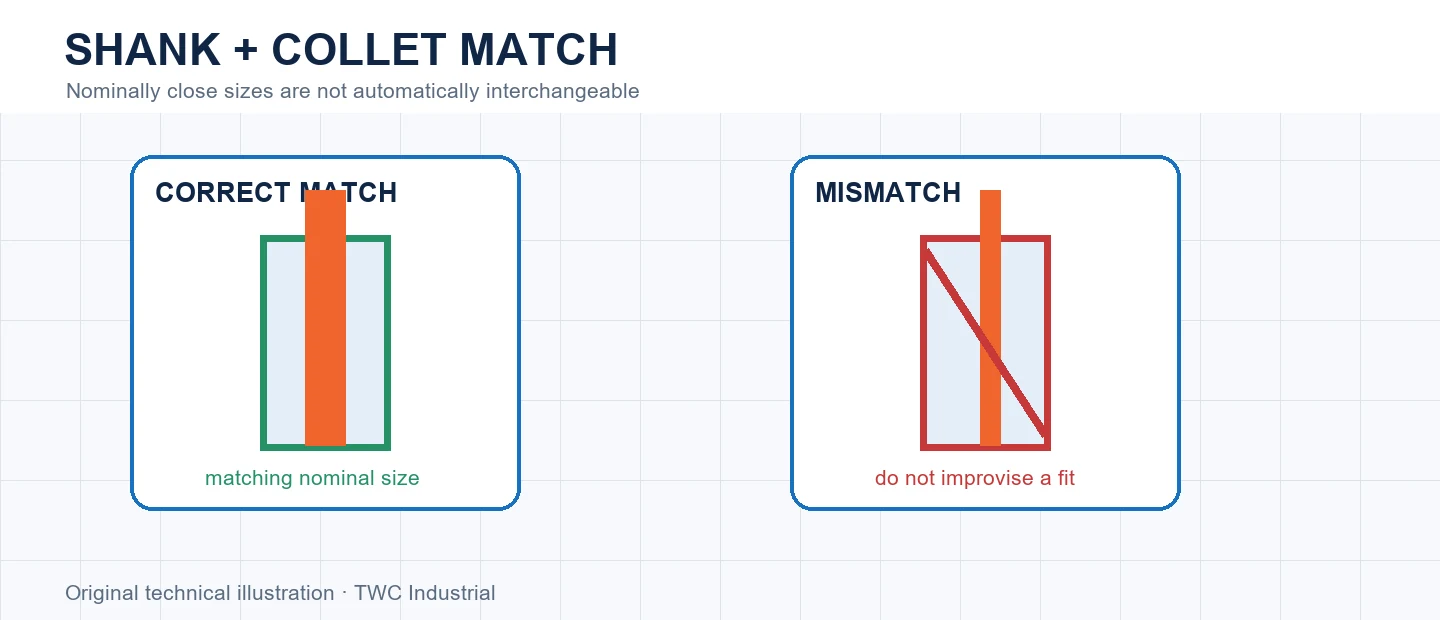
Match nominal shank and collet dimensions, inspect mating surfaces and avoid treating close metric and inch sizes as interchangeable.
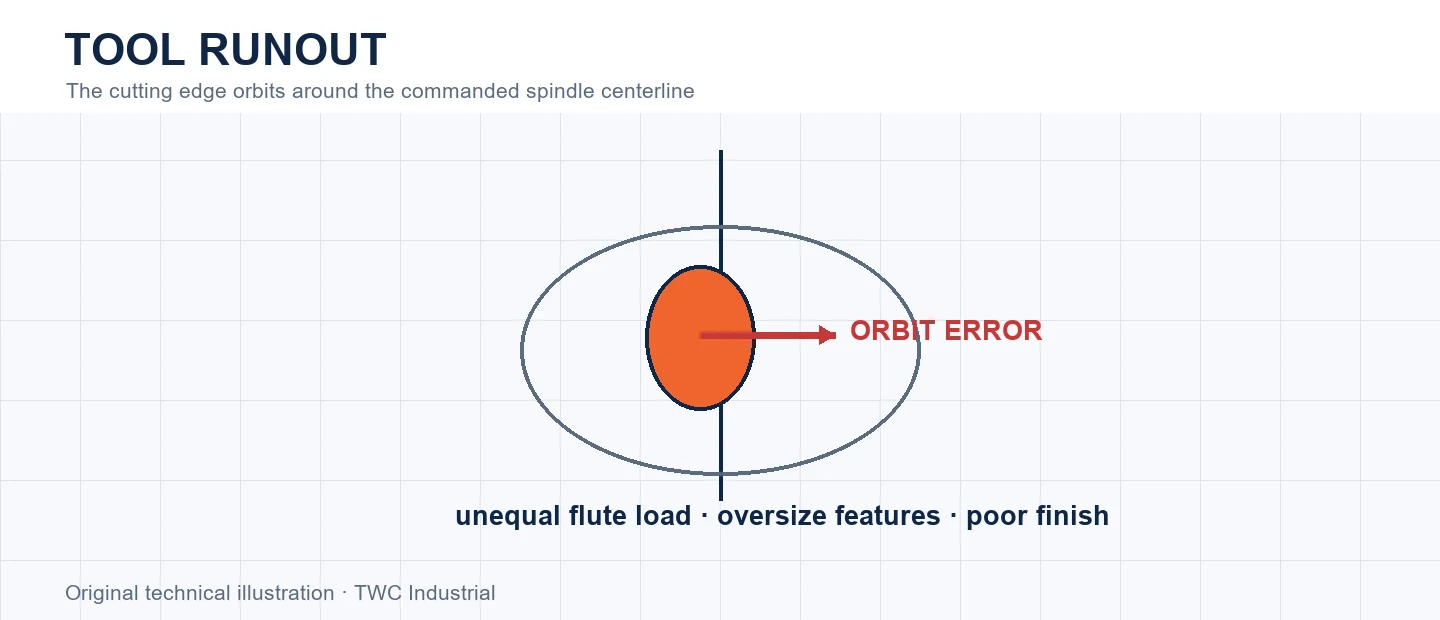
Understand how off-axis rotation changes flute load, feature size and finish, then trace runout through the cutter, collet and spindle stack.
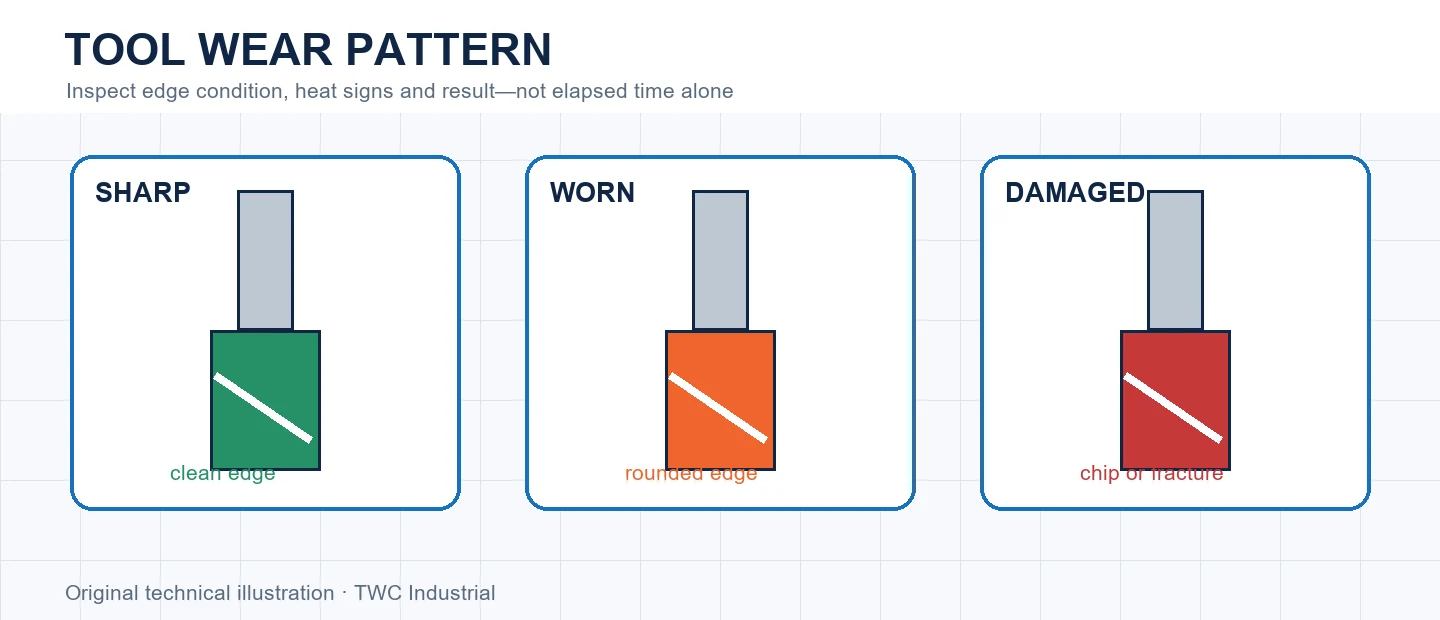
Separate residue, gradual edge wear and physical damage by tracking heat, chips, finish, dimensions and tool history.