Pipe Insulation Thickness Calculator
Calculate minimum insulation thickness for industrial process piping up to 1,200°F. Solves for OSHA 140°F personnel protection and energy conservation. Covers steam, hot oil, and process lines.
Free Tool · Up to 1,200°F · OSHA 140°F Check · ASTM C680 · Process PipingOSHA 29 CFR 1910 and ASTM C1055 require accessible pipe surfaces ≤140°F. "Both" uses the thicker of the two requirements.
Use 75°F for indoor plant, 40–60°F for outdoor exposed piping.
For steam >300°F: use Calcium Silicate or Mineral Wool. Fiberglass degrades above 350°F. Aerogel where space is limited.
Typical industrial target: 30–75 BTU/hr/ft. DOE BestPractices recommends ≤50 BTU/hr/ft for insulated steam pipe. Used only when goal includes energy conservation.
| Design Requirements | |
| Design goal | — |
| OSHA thickness required | — |
| Energy conservation thickness | — |
| Recommended thickness (use this) | — |
| Thermal Performance | |
| Pipe / fluid temperature | — |
| Ambient temperature | — |
| Temperature difference (ΔT) | — |
| Outer surface temperature | — |
| Insulated OD | — |
| Heat Loss Comparison | |
| Bare pipe heat loss (per ft) | — |
| Insulated heat loss (per ft) | — |
| Heat loss reduction | — |
| Total bare loss (full run) | — |
| Total insulated loss (full run) | — |
| Pipe & Material | |
| Nominal pipe size / OD | — |
| Insulation material / k-value | — |
| ASHRAE 90.1 reference | — |
Insulation ring scales with calculated thickness. The amber dot shows the outer surface temperature — must stay below the red 140°F OSHA limit for personnel protection.
How Insulation Thickness Is Calculated for Process Piping
Process piping insulation serves two distinct engineering purposes that often require different thicknesses: personnel protection (OSHA 140°F surface limit) and energy conservation (minimizing heat loss to reduce fuel cost). The required thickness is always the greater of the two. For high-temperature steam and hot oil lines, personnel protection typically governs at lower pipe temperatures, while energy conservation may govern at higher temperatures or large pipe diameters.
1 Cylindrical Conduction
Heat flows through pipe insulation as cylindrical conduction — unlike flat walls, the heat transfer area increases with radius. This means adding insulation has diminishing returns: the first inch saves far more than the fourth inch.
2 OSHA 140°F Personnel Limit
OSHA 29 CFR 1910 and ASTM C1055 require that all accessible pipe surfaces be maintained at or below 140°F (60°C) to prevent contact burns. The insulation must be thick enough that the outer jacket temperature never exceeds 140°F at the design pipe temperature.
3 Energy Conservation Thickness
Economic insulation thickness minimizes total life-cycle cost: insulation capital + annual energy loss. DOE BestPractices and ASTM C680 provide the methodology. Typical industrial target: 30–75 BTU/hr per linear foot of insulated pipe.
4 Material Selection by Temperature
Not every material survives every temperature. Using fiberglass on 400°F steam is a fire risk — the binder burns off and the insulation loses effectiveness. Always match material to operating temperature plus a safety margin.
For pipe temperatures above 600°F (e.g., 400 psig steam at 448°F, or hot oil at 650°F), a single thick layer of calcium silicate or mineral wool is often impractical due to joint cracking from differential thermal expansion. The industry standard is double-layer insulation with staggered joints: an inner layer of calcium silicate directly against the pipe, and an outer layer of lower-cost mineral wool. This also allows the inner layer to be inspected and replaced without disturbing the outer jacket. Always specify staggered joints — aligned joints create thermal bridges that can reduce effective insulation performance by 15–30%.
Worked Examples — 3 Industrial Scenarios
Use: 2.0" mineral wool
Surface: ~118°F ✓
Use: 3.5" calcium silicate
Surface: ~138°F ✓
Use: 3.0" calcium silicate
Surface: ~108°F ✓
ASHRAE 90.1 Reference — Minimum Thickness for Steam Pipe (HVAC Systems)
Note: ASHRAE 90.1 Table 6.8.3-1 applies to HVAC / building systems, not industrial process piping. Process piping uses economic thickness based on fuel cost and operating hours (ASTM C680). These values shown for reference — process piping may require more or less depending on economics.
| Fluid Temp Range | 1" NPS | 1½" NPS | 2" NPS | 3" NPS | 4" NPS | 6"+ NPS |
|---|---|---|---|---|---|---|
| ≤200°FHot water heating | 1.0" | 1.5" | 1.5" | 2.0" | 2.0" | 2.0" |
| 201–250°FLow-pres. steam | 1.5" | 1.5" | 2.0" | 2.5" | 2.5" | 2.5" |
| 251–350°FMed-pres. steam | 2.5" | 2.5" | 3.0" | 3.5" | 3.5" | 3.5" |
| >350°FHigh-pres. steam | 3.0" | 4.0" | 4.5" | 5.0" | 5.0" | 5.0" |
Frequently Asked Questions
Related Industrial Tools
Top Picks for CNC Router Tooling
Professional-grade carbide tools ready to ship. Click any product to view details and pricing.
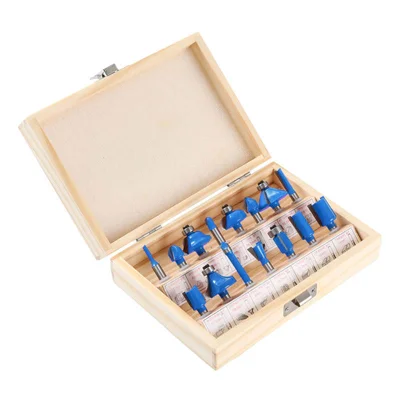
15-Piece Router Bit Set
Multi-size starter kit with carrying case
View on Alibaba →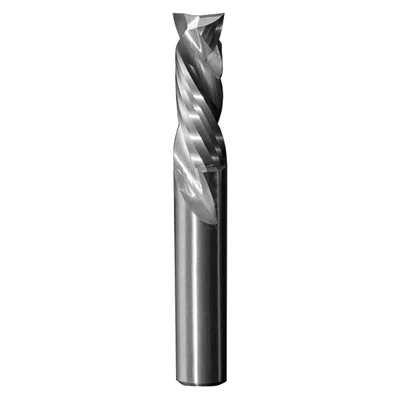
Compression Spiral Bits
Clean edges on plywood & MDF
View on Alibaba →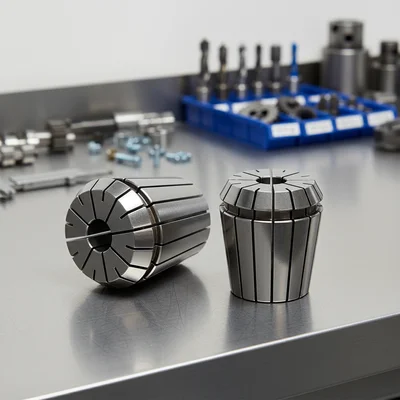
ER Collet Set
Precision holding, zero runout
View on Alibaba →As an Alibaba affiliate partner, we earn from qualifying purchases at no cost to you.