Deck Board Calculator
Enter your deck dimensions, board size, and layout to instantly get board count, linear feet, screw count, and a full materials list — ready to take to the lumber yard.
Free Tool · Boards · Screws · Hidden Fasteners · Waste FactorMeasure the finished surface area. For L-shaped decks, split into rectangles and use the larger section first.
5/4×6 (actual 1″×5.5″) is the most popular residential deck board in the U.S. Always use actual dimensions for material calculations.
Match board length to deck width when possible to eliminate butt joints and reduce waste.
Use 1/8″ for dry lumber. Use 3/16″ for green pressure-treated (it shrinks as it dries). Composite brands often require 1/4″ — check manufacturer specs.
Diagonal installation requires ~41% more linear footage (√2 factor) plus extra waste. Also requires 12″ OC joist spacing for composite boards.
5/4×6 boards max out at 16″ OC. 2×6 lumber can span 24″ OC. Composite manufacturers typically require 12″ OC for diagonal layouts.
Face screws are standard and easiest for DIY. Hidden fasteners create a clean, screw-free surface — require grooved-edge boards and add $150–300 to material cost.
How Deck Board Calculations Work
Calculating deck boards requires four steps: (1) find total deck area, (2) determine how many board rows fit across the deck width using actual board width + gap, (3) determine boards per row from board length vs. deck length, then (4) add a waste factor and calculate fasteners from joist crossings. Always use actual dimensions — a "2×6" board is actually 1.5″ × 5.5″.
🟢 Deck Area
Multiply deck length by width to get square footage. For an L-shaped deck, break it into rectangles and add the areas. This is the foundation for all material estimates.
🔵 Board Rows
Divide deck width (in inches) by actual board width + gap. Round up to a whole number. This tells you how many runs of board span the deck from edge to edge.
🟡 Boards per Row + Waste
Divide deck length by board length (round up) for boards per row. Multiply rows × boards per row, then add waste: 10% for straight, 15% for diagonal layout.
🟣 Screw Count
Face screws use 2 screws per joist crossing. Count joist crossings per board (board length ÷ joist spacing), multiply by total boards × 2. Hidden clips use 1 fastener per crossing.
A "2×6" is actually 1.5″ × 5.5″. A "5/4×6" is actually 1″ × 5.5″. Using nominal sizes in your calculations will give you the wrong board count — always use actual face width. The same applies to composite boards: most are 5.5″ wide but some premium brands differ. Check the product data sheet before ordering. Pre-drill screw holes within 2 inches of board ends to prevent splitting, especially with pressure-treated and hardwood decking.
3 Real-World Example Calculations
These worked examples show the calculator across three common residential deck projects in the U.S.
Screws: ~630 · Boxes: 2
Clips: ~1,152 · Packs: 3
Screws: ~1,632 · Boxes: 5
Deck Board Nominal vs. Actual Sizes — Quick Reference
Always use actual dimensions in your calculations. Nominal sizes are lumber yard labels — the board you receive is smaller after milling and drying.
| Nominal Size | Actual Width | Actual Thickness | Max Joist Spacing | Coverage per LF | Best For |
|---|---|---|---|---|---|
| 5/4×6Most Common | 5.5 in | 1.0 in | 16 in OC | 0.458 SF/LF | Residential, PT pine |
| 2×6Stronger | 5.5 in | 1.5 in | 24 in OC | 0.458 SF/LF | Heavy load / spas |
| 5/4×4 | 3.5 in | 1.0 in | 16 in OC | 0.292 SF/LF | Narrow profile look |
| 2×4 | 3.5 in | 1.5 in | 16 in OC | 0.292 SF/LF | Budget / deck stairs |
| Composite 1×6Low Maintenance | 5.5 in | 1.0 in | 16 in OC (12 in diagonal) | 0.458 SF/LF | No maintenance |
Frequently Asked Questions
Nominal size is the label at the lumber yard — it refers to the rough dimension before the board is milled and dried. The actual size you receive is always smaller. A "2×6" board is actually 1.5 inches thick and 5.5 inches wide. A "5/4×6" is actually 1 inch thick and 5.5 inches wide. Composite boards are generally sold by actual dimensions. Always use actual face width in your calculations — using nominal width will cause you to under-order boards.
A widely-used rule of thumb is 350 screws per 100 square feet of decking at 16-inch joist spacing, or roughly 3.5 screws per square foot. At 12-inch joist spacing, plan for about 467 screws per 100 square feet. This calculator uses the precise formula: total boards × joist crossings per board × 2 screws each, which is more accurate than the rule-of-thumb method.
A board installed at 45 degrees must span √2 (about 1.41×) more distance than a board running straight across. This means you need more linear feet of material and more end cuts, which is why the waste factor increases from 10% to 15%. On the joist spacing side, the diagonal board's effective unsupported span increases, so most composite manufacturers require 12-inch OC joist spacing for diagonal installations to prevent flex and sagging.
Use 1/8 inch for dry or kiln-dried pressure-treated lumber. Use 3/16 inch for green (wet) pressure-treated lumber — it will shrink to about 1/8 inch as it dries over the first season. For composite decking, most manufacturers require 1/4 inch gaps and some require more at butt joints. Always check the manufacturer installation guide for composite and PVC products — incorrect gaps can void the warranty.
Hidden fasteners are metal or plastic clips that hook into the grooved edge of specially-milled deck boards and fasten to the joist, so no screw heads are visible on the surface. They typically cost $150–300 extra in materials for a 200 sq ft deck and require grooved-edge boards. The result is a cleaner, furniture-grade surface that's easier to clean. They are most popular with composite and hardwood decking. For standard pressure-treated pine, face screwing is more cost-effective and easier for DIY repair.
Related DIY Tools
Top Picks for CNC Router Tooling
Professional-grade carbide tools ready to ship. Click any product to view details and pricing.
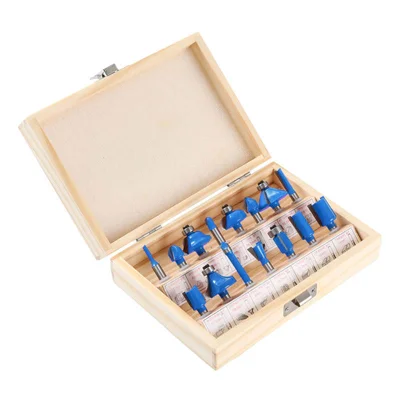
15-Piece Router Bit Set
Multi-size starter kit with carrying case
View on Alibaba →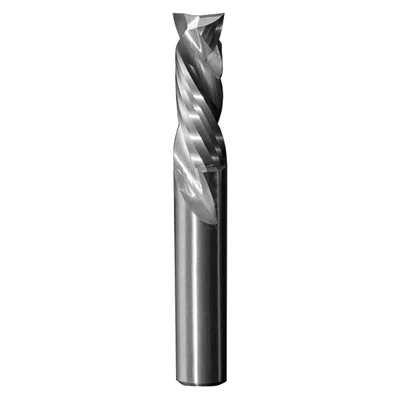
Compression Spiral Bits
Clean edges on plywood & MDF
View on Alibaba →
ER Collet Set
Precision holding, zero runout
View on Alibaba →As an Alibaba affiliate partner, we earn from qualifying purchases at no cost to you.