Pipe Thermal Expansion Calculator
Calculate pipe growth (ΔL), thermal stress (psi), and U-loop expansion loop sizing for industrial piping systems. Imperial units. Based on ASME B31.3 material data.
Free Tool · ΔL Inches · Thermal Stress PSI · Expansion Loop · ASME B31.3Selects α (coefficient of thermal expansion) and E (Young's modulus). Override below if needed.
Total straight run between fixed anchors or expansion points.
Fixed = pipe anchored at both ends, cannot grow → maximum thermal stress. Free = expansion loop or joint absorbs growth → zero thermal stress.
| Pipe Growth | |
| ΔL — linear pipe growth | — |
| ΔL in feet | — |
| ΔL in millimeters | — |
| Thermal Stress (if constrained) | |
| Thermal stress (σ = E·α·ΔT) | — |
| % of yield strength | — |
| Constraint condition | — |
| Expansion Loop Sizing | |
| U-loop leg length required | — |
| Loop formula used | — |
| Material & Inputs | |
| Material | — |
| α (thermal exp. coeff.) | — |
| E (Young's modulus) | — |
| Pipe length | — |
| Install temp → Oper. temp | — |
| ΔT | — |
The amber arrow shows the magnitude of thermal growth — changes live with your inputs. Growth is exaggerated for visibility.
Thermal stress shown for fully constrained pipe. Free-to-expand pipe has zero thermal stress — use expansion loops or bellows to eliminate constraint.
The U-loop leg length is the minimum to safely absorb pipe growth without exceeding allowable stress. Always consult a piping stress engineer for final design.
How Pipe Thermal Expansion Works
When a pipe heats up, it gets longer. A 100-foot carbon steel steam line rising from 70°F to 350°F grows nearly 2.6 inches. If that pipe is bolted between two concrete walls with no room to move, it will generate over 28,000 psi of compressive stress — approaching the yield strength of the steel. Understanding and accommodating thermal expansion is one of the most critical tasks in industrial piping design per ASME B31.3.
1 Linear Pipe Growth (ΔL)
Pipe grows proportionally to its length, the temperature rise, and the material's expansion coefficient. A longer pipe or a hotter service = more growth. This is the starting point for all piping flexibility analysis.
2 Thermal Stress (Constrained)
If the pipe cannot grow — anchored at both ends — the thermal expansion creates compressive stress. This stress can easily exceed yield strength, causing permanent deformation or catastrophic failure at flanges, welds, or supports.
3 Expansion Loop Sizing
A U-loop absorbs pipe growth through leg flexure — the legs bend slightly, acting as a spring. The leg must be long enough that bending stress stays below the material's allowable displacement stress per ASME B31.3 §319.4.
4 Choosing a Solution
Expansion loops are reliable but take space. Bellows/expansion joints are compact but need maintenance and introduce leak paths. For critical services (steam, acid, high-pressure), always prefer expansion loops with no moving parts.
If possible, cold-spring the pipe by pre-stressing it during installation at the mid-point between minimum and maximum operating temperature. This halves the effective ΔT for stress calculations — cutting required loop lengths by ~30%. For example, a pipe that swings from 70°F to 370°F benefits from being pre-stressed as if installed at 220°F, making the effective ΔT only 150°F in either direction.
Worked Examples — 3 Real Plant Scenarios
Loop leg: ~45 ft
Loop leg: ~22 ft
Stress: 42,300 psi ⚠
Material Reference — α & E Values (ASME B31.3)
| Material | α (×10⁻⁶ in/in/°F) | E (×10⁶ psi) | Yield Str. (psi) | Typical Service |
|---|---|---|---|---|
| Carbon Steel A106-BMost common process pipe | 6.33 | 29.0 | 35,000 | Steam, water, hydrocarbons |
| Carbon Steel A53General service | 6.20 | 29.5 | 30,000 | General utility piping |
| Stainless Steel 304/304LCorrosion resistant | 9.60 | 28.0 | 30,000 | Chemical, food, pharma |
| Stainless Steel 316/316LSuperior corrosion | 8.90 | 28.0 | 30,000 | Marine, acids, chlorides |
| Copper C12200HVAC & plumbing | 9.40 | 17.0 | 10,000 | Water, HVAC, refrigerant |
| Aluminum 6061Lightweight | 13.1 | 10.0 | 35,000 | Cryogenic, lightweight apps |
| Cast IronBrittle — check carefully | 5.90 | 15.0 | 20,000 | Drain, wastewater, low-temp |
| Inconel 625High-temp alloy | 7.20 | 30.0 | 60,000 | High-temp, corrosive |
| CPVCThermoplastic — wide α range | 34.0 | 0.40 | 7,000 | Chemical, low-temp |
Frequently Asked Questions
Related Industrial Tools
Top Picks for CNC Router Tooling
Professional-grade carbide tools ready to ship. Click any product to view details and pricing.
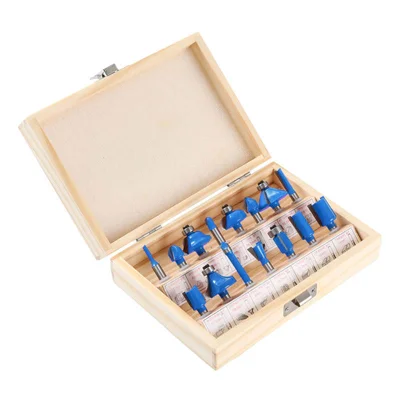
15-Piece Router Bit Set
Multi-size starter kit with carrying case
View on Alibaba →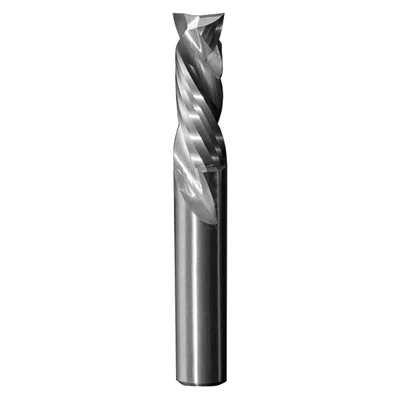
Compression Spiral Bits
Clean edges on plywood & MDF
View on Alibaba →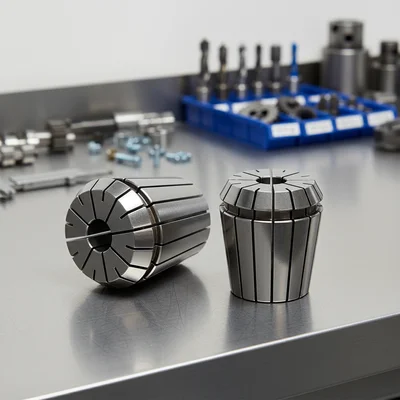
ER Collet Set
Precision holding, zero runout
View on Alibaba →As an Alibaba affiliate partner, we earn from qualifying purchases at no cost to you.