Break-even Point Calculator
Enter your fixed costs, variable cost per unit, and selling price — instantly find how many units you need to break even, plus contribution margin, margin of safety, and profit projections.
Free Tool · Break-even Units · Revenue · Margin of Safety · Scenario TableRent, equipment leases, salaried labor, insurance, depreciation — costs that stay the same regardless of how many units you produce.
Raw materials, direct labor, packaging, per-unit shipping — costs that increase each time you produce one more unit.
The price your customer pays. Use a weighted average price if you sell multiple SKUs at different price points.
Enter your expected or current sales volume to see your margin of safety and profit or loss at that level.
How many units you need to sell to hit a specific profit goal — calculated separately from the break-even point.
| Cost & Contribution Summary | |
| Total fixed costs | — |
| Variable cost per unit | — |
| Selling price per unit | — |
| Contribution margin per unit | — |
| Contribution margin ratio | — |
| Break-even Point | |
| Break-even units | — |
| Break-even revenue | — |
| Profit at BEP | — |
Click a benchmark to pre-fill the calculator with a typical cost structure for that industry.
Compare break-even points across multiple products, pricing strategies, or cost structures side by side. Each row calculates independently.
| Scenario / Product | Fixed Cost ($) | Var/Unit ($) | Price ($) | BEP Units | BEP Revenue | CM/Unit |
|---|
What Is Break-even Analysis and How Does It Work?
The break-even point is the sales volume at which total revenue exactly equals total costs — no profit, no loss. The core concept is the Contribution Margin (CM): the difference between your selling price and variable cost per unit. Every unit sold contributes its CM toward covering fixed costs. Once cumulative CM equals your total fixed costs, you've broken even. Every unit sold after that generates pure profit.
1 Contribution Margin
The CM is what remains after subtracting variable costs from the selling price. A higher CM means you reach break-even faster and generate more profit per unit beyond it.
2 Break-even Units
The minimum number of units you must sell for revenue to cover all costs. Divide total fixed costs by the contribution margin per unit.
3 Break-even Revenue
Expressed in dollars rather than units. Useful when you sell multiple SKUs at different price points. Divide fixed costs by the CM Ratio.
4 Margin of Safety
How far your actual sales sit above the break-even point. It tells you how much sales can drop before you start losing money — a critical risk gauge.
1. Misclassifying semi-variable costs — utilities, supervisory labor, and freight often have both fixed and variable components. Split them correctly or your BEP will be off.
2. Using the wrong average price — if you sell multiple products at different prices, calculate a weighted average CM Ratio and use BEP Revenue instead of BEP Units.
3. Treating BEP as the goal — break-even means zero profit. Add your target profit to fixed costs before dividing: (Fixed Costs + Target Profit) ÷ CM = units needed to actually win.
4. Forgetting to update when costs change — material prices, wages, and rent all shift over time. A BEP calculated a year ago may be significantly understated today. Review it every quarter.
Frequently Asked Questions
Related Business & Finance Tools
Top Picks for CNC Router Tooling
Professional-grade carbide tools ready to ship. Click any product to view details and pricing.

15-Piece Router Bit Set
Multi-size starter kit with carrying case
View on Alibaba →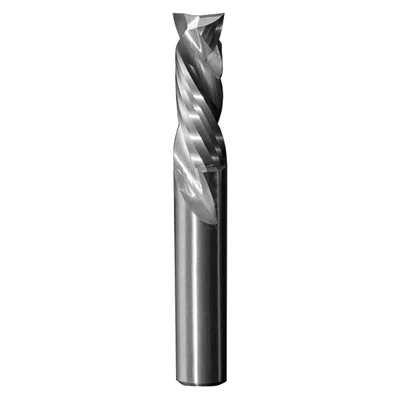
Compression Spiral Bits
Clean edges on plywood & MDF
View on Alibaba →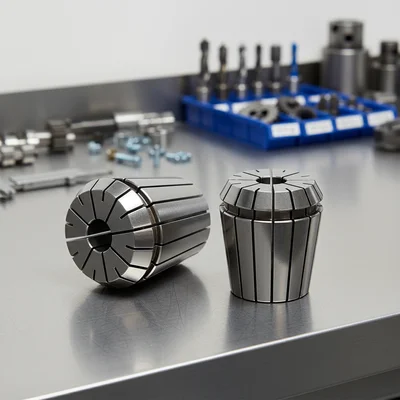
ER Collet Set
Precision holding, zero runout
View on Alibaba →As an Alibaba affiliate partner, we earn from qualifying purchases at no cost to you.