Downtime Cost Calculator
Quantify the real financial cost of every machine stoppage — machine running cost, idle labor, and lost production revenue — so you know exactly what unplanned downtime is costing your operation.
Free Tool · Downtime Cost · OEE · Preventive Maintenance · Production LossTotal elapsed time from machine stop to first good part running again — includes fault diagnosis, waiting for parts/technician, repair, restart, and re-qualification.
Depreciation, maintenance amortization, tooling, and energy continue during downtime. Typical range: $20–$150/hr depending on equipment.
Operator(s) remain on the clock during downtime. Use the fully burdened rate. If operators can be redeployed, enter 0 or a partial rate.
How many operators are affected and cannot be productively redeployed during this downtime event.
Standard output rate for this machine. Used to calculate units lost and potential revenue missed. Leave at 0 to skip.
Selling price or contribution margin per unit. Used to estimate lost revenue opportunity. Leave at 0 to skip.
How often does this type of downtime event typically occur? Used to project annual cost impact. E.g. 2 events/month = 24/year.
The True Cost of Downtime Is Almost Always Underestimated
When a machine goes down, most managers mentally note the repair cost and move on. But the financial impact runs much deeper. Three cost streams run simultaneously the moment production stops: the machine continues accumulating its fixed cost, idle operators stay on the payroll, and every minute represents units that will never be made. When you project these across recurring downtime events, the annual figure is often a shock — and the business case for preventive maintenance becomes undeniable.
Idle Labor Cost = Operator Wage × No. of Operators × Downtime Hours
Direct Downtime Cost = Machine Cost + Idle Labor Cost
Units Lost = Production Rate (units/hr) × Downtime Hours
Lost Revenue = Units Lost × Revenue per Unit
Total Downtime Cost = Direct Downtime Cost + Lost Revenue
Annual Impact = Total Downtime Cost × Events per Year
🔴 Machine Cost — The Silent Meter
Depreciation, maintenance amortization, lease payments, and energy draw continue whether the machine is running or not. A $75/hr machine rate means you are spending $1.25 every minute the machine is stopped — producing nothing. On expensive equipment, this alone can justify a preventive maintenance program.
🔵 Idle Labor — Paying for Zero Output
Operators remain on the payroll during downtime. In many operations, they cannot be easily redeployed and stand idle waiting for the machine to restart. Every idle labor hour is a fully burdened cost with zero corresponding output — a pure loss that many cost reports fail to capture explicitly.
🟣 Lost Production — The Opportunity Cost
Every hour of downtime is an hour of production that is permanently lost. Unlike a slower day, downtime cannot be "made up" on the same shift — the capacity is simply gone. Multiply units lost by your margin per unit to see the revenue that walked out the door. This is often the largest single component of downtime cost.
🟢 The Preventive Maintenance Business Case
Once you know your downtime cost per event and how often it occurs, the annual figure becomes a compelling argument for investment. If recurring downtime costs $60,000/year, a $15,000 preventive maintenance program that eliminates 70% of those events pays back in less than four months. Quantifying downtime is the foundation of that calculation.
The figures here represent the direct, quantifiable costs of downtime. Real-world downtime often carries additional indirect costs: overtime premiums to recover lost output on later shifts, expedite fees for rush material or subcontracting, customer penalties for late delivery, emergency repair costs (parts at full price, overtime for technicians, third-party call-out fees), and the long-term cost of customer relationship damage from missed commitments. The true cost of downtime is always higher than the direct cost alone.
3 Worked Examples
Downtime: 3 hours | Machine rate: $80/hr | 1 operator @ $30/hr
Machine cost: $80 × 3 = $240 | Idle labor: $30 × 3 = $90
Direct downtime cost: $330
Production rate: 25 parts/hr → 75 units lost @ $18 sell price = $1,350 lost revenue
This event occurs ~30×/year → Annual impact: $50,400
Downtime: 4.5 hours | Machine rate: $95/hr | 2 operators @ $25/hr
Machine cost: $95 × 4.5 = $427.50 | Idle labor: $25 × 2 × 4.5 = $225
Direct downtime cost: $652.50
Production rate: 120 parts/hr → 540 units lost @ $3.50/unit = $1,890 lost revenue
Occurs ~12×/year → Annual impact: $30,510
Downtime: 90 minutes (1.5 hrs) | Machine rate: $30/hr | 6 operators @ $22/hr
Machine cost: $30 × 1.5 = $45 | Idle labor: $22 × 6 × 1.5 = $198
Direct downtime cost: $243
Production rate: 60 assemblies/hr → 90 units lost @ $25 = $2,250 lost revenue
Occurs ~48×/year → Annual impact: $119,016
Common Downtime Causes & Typical Duration
| Downtime Category | Typical Duration | Typical Frequency | Primary Prevention Method |
|---|---|---|---|
| Unplanned mechanical breakdown | 1 – 8 hrs | Weekly – Monthly | Preventive / predictive maintenance |
| Tool breakage / wear-out | 15 min – 2 hrs | Daily – Weekly | Tool life monitoring, scheduled replacement |
| Electrical / control fault | 30 min – 6 hrs | Monthly | Electrical PM, control system upgrades |
| Material shortage / no stock | 30 min – 4 hrs | Weekly | Inventory buffers, supplier lead time management |
| Quality hold / rework loop | 30 min – 3 hrs | Weekly | In-process SPC, first-off inspection |
| Operator absence / no coverage | Full shift (8 hrs) | Monthly | Cross-training, flexible staffing |
| Planned maintenance (scheduled) | 2 – 16 hrs | Monthly – Quarterly | Planned windows, SMED for PM tasks |
Frequently Asked Questions
Planned downtime is scheduled in advance: preventive maintenance, tool changes, mold swaps, operator breaks, and shift handovers. Because it is planned, resources can be pre-staged and it generally takes less total time than the equivalent unplanned event. Planned downtime still has a cost, but it is typically much lower than unplanned downtime for the same task.
Unplanned downtime (breakdowns or stoppages) is a surprise. Recovery takes longer because technicians must diagnose before repairing, parts may not be in stock, and the event cascades into schedule disruption, overtime, and potentially customer impact. Studies consistently show that reactive maintenance costs 3–5× more than the equivalent preventive task.
This calculator applies to both — but the financial urgency is greatest for unplanned events, which is where preventive maintenance investment delivers the clearest ROI.
It depends on the purpose of your calculation:
- For internal cost tracking and maintenance budgeting: Use direct costs only (machine rate + idle labor). These are the costs you actually incur regardless of whether you recover lost production.
- For building the business case for preventive maintenance or equipment investment: Include lost revenue. This is the most compelling number for management and accurately represents the full economic impact of the stoppage.
- For customer contract disputes or insurance claims: Lost contribution margin is the relevant figure — though you may need to demonstrate the order was firm and the loss was directly caused by the downtime.
Note that "lost revenue" is better thought of as lost contribution margin — revenue minus the variable costs you would have incurred to produce those parts. If you can make up lost production on overtime, the overtime premium cost replaces the lost revenue figure.
OEE is a composite metric: Availability × Performance × Quality. Downtime cost is the financial translation of OEE's Availability component — the time the machine was not available due to stops and breakdowns.
- Availability = Actual Production Time ÷ Planned Production Time. Every hour of downtime reduces Availability.
- Performance captures speed losses — running slower than the ideal rate.
- Quality captures scrap and rework — parts made but not saleable.
An OEE of 85% (often cited as world-class for discrete manufacturing) means 15% of potential output is being lost across these three categories. Downtime cost quantifies the Availability portion of that 15% in dollars, making it actionable for maintenance and operations leaders who need financial justification for improvement initiatives.
The business case follows a simple ROI logic:
- Step 1 — Quantify current downtime cost: Use this calculator to find the cost per event, then multiply by annual frequency.
- Step 2 — Estimate PM cost: Get quotes for the PM tasks that would prevent those failures — parts, labor, and production time for the PM window.
- Step 3 — Estimate reduction in downtime: A well-designed PM program typically reduces unplanned downtime by 50–75% for the failure modes it targets.
- Step 4 — Calculate payback: Payback period = PM program cost ÷ Annual downtime savings. Under 12–18 months is almost always justified.
Example: Recurring hydraulic failures cost $2,500/event × 10 events/year = $25,000/year. A PM program costs $8,000/year. If it eliminates 70% of failures: savings = $17,500/year, net benefit = $9,500/year, payback = 10 months.
MTBF (Mean Time Between Failures) is the average time between failure events on the same piece of equipment. Higher MTBF = more reliable equipment. MTTR (Mean Time To Repair) is the average time to restore the machine after a failure — from stoppage to first good part running. This is what you enter as "downtime duration" in this calculator.
Together they define availability:
- Availability = MTBF ÷ (MTBF + MTTR)
- Example: MTBF = 200 hrs, MTTR = 4 hrs → Availability = 98%
- Example: MTBF = 40 hrs, MTTR = 8 hrs → Availability = 83.3%
You can attack downtime from two directions: Increase MTBF (prevent failures through preventive maintenance, better procedures, equipment upgrades) or reduce MTTR (recover faster through faster diagnosis, spare parts availability, technician skill development, standardized repair procedures). Both levers directly reduce the downtime cost calculated by this tool.
Related Manufacturing Tools
Top Picks for CNC Router Tooling
Professional-grade carbide tools ready to ship. Click any product to view details and pricing.
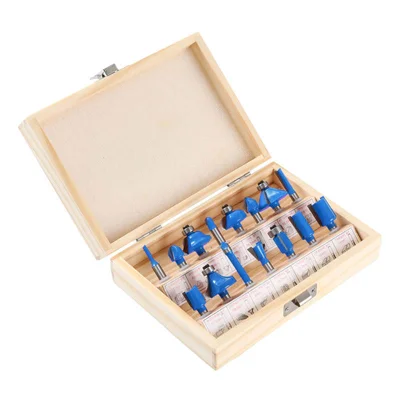
15-Piece Router Bit Set
Multi-size starter kit with carrying case
View on Alibaba →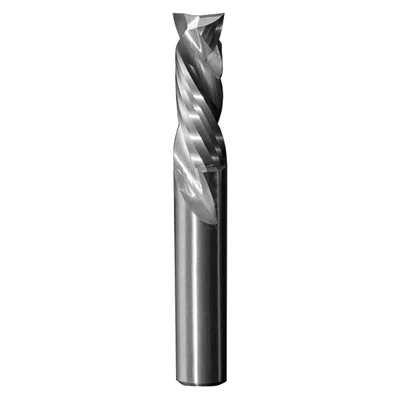
Compression Spiral Bits
Clean edges on plywood & MDF
View on Alibaba →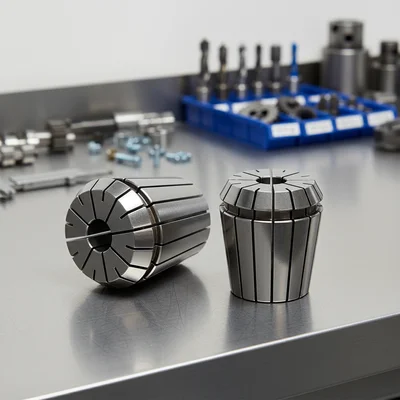
ER Collet Set
Precision holding, zero runout
View on Alibaba →As an Alibaba affiliate partner, we earn from qualifying purchases at no cost to you.