Sheet Metal Weight Calculator
Calculate the weight of steel, aluminum, or stainless steel sheet by gauge, dimensions, and quantity. Instant results in pounds and kilograms — no signup required.
Free Tool · Steel · Aluminum · Stainless · Imperial & MetricEach material uses its own gauge standard and density.
Manufacturer's Standard Gauge for steel
Type any custom thickness to override the selected gauge.
4×8 ft = 48×96 in
Select material & gauge,
enter dimensions,
then hit Calculate
How Sheet Metal Weight Is Calculated
Sheet metal weight is calculated from three inputs: dimensions (length × width × thickness), the material's density, and the number of sheets. The only complexity comes from the gauge system — gauge numbers are not linear, differ by material, and decrease as thickness increases.
1 Gauge System
Lower gauge = thicker sheet. A 10-gauge steel sheet (0.1345") is nearly 10× thicker than 30-gauge (0.0120"). Steel uses the Manufacturer's Standard Gauge; aluminum uses Brown & Sharpe. Never mix gauge charts between materials.
2 Material Density
Density is the key multiplier. Carbon steel (0.2836 lb/in³) is roughly 3× heavier than aluminum (0.098 lb/in³) at the same gauge. Stainless 304 is slightly denser at 0.290 lb/in³.
3 Weight Formula
Multiply volume by density. Volume = length × width × thickness (all in inches). The result is in pounds. Multiply by 0.4536 to convert to kilograms.
4 Why It Matters
Accurate weight drives shipping cost estimates (LTL rates are per 100 lb), structural load planning, forklift capacity checks, and material cost estimation for quoting jobs.
LTL freight in the U.S. is quoted per 100 lb (CWT). A standard pallet of 10 sheets of 16-gauge carbon steel (4×8 ft) weighs approximately 800 lb — within typical forklift capacity but at the upper limit of some lift-gate delivery services. Always verify total pallet weight before scheduling delivery. For orders over 2,000 lb, request a full truckload (FTL) quote — rates are typically 30–50% lower per pound.
Gauge Reference Chart — Steel, Stainless & Aluminum
Common gauges used in U.S. fabrication shops. All thickness values in decimal inches per ASTM / Manufacturer's Standard Gauge (steel) and Brown & Sharpe (aluminum). Steel lb/ft² is for carbon steel — multiply by 0.345 for aluminum, or 1.022 for stainless 304.
| GA | Carbon Steel (in) | Galvanized (in) | Stainless 304 (in) | Aluminum 6061 (in) | Steel lb/ft² |
|---|---|---|---|---|---|
| 7 | 0.1793 | 0.1875 | 0.1875 | 0.1443 | 7.50 |
| 8 | 0.1644 | 0.1681 | 0.1719 | 0.1285 | 6.88 |
| 9 | 0.1495 | 0.1532 | 0.1563 | 0.1144 | 6.25 |
| 10 | 0.1345 | 0.1382 | 0.1406 | 0.1019 | 5.63 |
| 11 | 0.1196 | 0.1233 | 0.1250 | 0.0907 | 5.00 |
| 12 | 0.1046 | 0.1084 | 0.1094 | 0.0808 | 4.38 |
| 13 | 0.0897 | 0.0934 | 0.0938 | 0.0720 | 3.75 |
| 14 | 0.0747 | 0.0785 | 0.0781 | 0.0641 | 3.13 |
| 16 | 0.0598 | 0.0635 | 0.0625 | 0.0508 | 2.50 |
| 18 | 0.0478 | 0.0516 | 0.0500 | 0.0403 | 2.00 |
| 20 | 0.0359 | 0.0396 | 0.0375 | 0.0320 | 1.50 |
| 22 | 0.0299 | 0.0336 | 0.0313 | 0.0253 | 1.25 |
| 24 | 0.0239 | 0.0276 | 0.0250 | 0.0201 | 1.00 |
| 26 | 0.0179 | 0.0217 | 0.0188 | 0.0159 | 0.75 |
| 28 | 0.0149 | 0.0187 | 0.0156 | 0.0126 | 0.63 |
Frequently Asked Questions
Related Industrial Tools
Top Picks for CNC Router Tooling
Professional-grade carbide tools ready to ship. Click any product to view details and pricing.
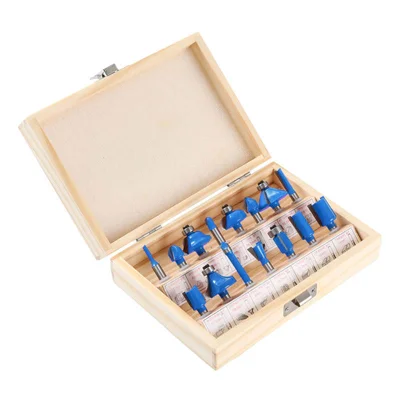
15-Piece Router Bit Set
Multi-size starter kit with carrying case
View on Alibaba →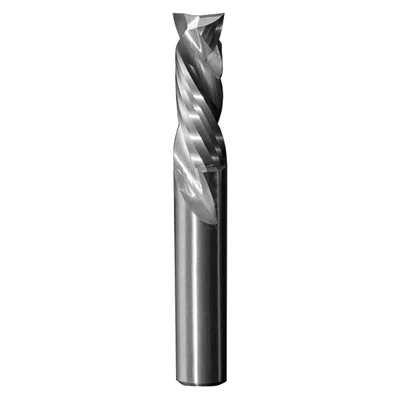
Compression Spiral Bits
Clean edges on plywood & MDF
View on Alibaba →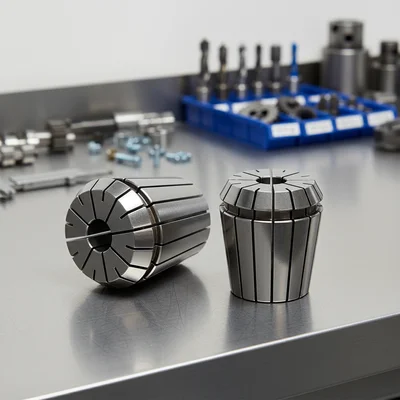
ER Collet Set
Precision holding, zero runout
View on Alibaba →As an Alibaba affiliate partner, we earn from qualifying purchases at no cost to you.