Electrical Load Calculator
Add your appliances to calculate total circuit load in watts and amps — and instantly see if your breaker can handle it safely per NEC guidelines.
Free Tool · NEC 80% Rule · 120V & 240VNo appliances added yet — click a chip above or add custom below.
Find wattage on the appliance label or in the owner's manual.
| Summary | |
| Total connected load | \u2014 |
| Total amps drawn | \u2014 |
| Breaker size | \u2014 |
| NEC 80% limit | \u2014 |
| Remaining safe capacity | \u2014 |
| Circuit status | \u2014 |
How Electrical Load Is Calculated
Every circuit breaker has a maximum rated amperage — but the National Electrical Code (NEC) requires that continuous loads never exceed 80% of that rating. A continuous load is any device expected to run for 3 hours or more. This safety margin prevents wire and breaker overheating. Exceeding it won't always trip the breaker immediately — but it causes conductor insulation to degrade over time, which is a leading cause of residential electrical fires.
1 Watts \u2192 Amps
Amperage is what actually heats wires and trips breakers. Convert watts to amps by dividing by circuit voltage. All appliances on the same circuit share its amp capacity.
2 80% NEC Rule
For continuous loads (running 3+ hours), NEC Article 210.20 limits safe load to 80% of breaker rating. A 20A breaker safely carries only 16A continuously \u2014 not 20A.
3 Circuit % Used
Divide your total amp draw by the breaker's rated amps. Below 80% is safe for continuous use. Between 80\u2013100% is a code violation for continuous loads. Over 100% will eventually trip the breaker.
4 Breaker Sizing
Standard residential breaker sizes: 15A (lighting), 20A (kitchen/bath outlets), 30A (dryer/A/C), 40\u201350A (range/EV). Each circuit should have only one purpose on 30A+ breakers.
Any appliance drawing more than 7.5 amps continuously (about 900W on 120V) should ideally be on its own dedicated circuit. This includes refrigerators, microwaves, dishwashers, garbage disposals, and window A/C units. Sharing high-draw appliances on a single circuit is the #1 cause of nuisance breaker trips and is often a code violation in kitchens and bathrooms under NEC 210.11(C).
Example Project Scenarios
Click any scenario to load it into the calculator and see the full breakdown instantly.
Kitchen Circuit
Appliances:
Microwave \u00b7 1,100W
Coffee Maker \u00b7 1,000W
Toaster \u00b7 900W
\u26a0 overloaded
Bedroom / Home Office
Appliances:
Window A/C \u00b7 1,200W
Desktop PC \u00b7 300W
Monitor \u00d72 \u00b7 120W
LED Lighting \u00b7 60W
\u26a0 near limit
Garage Workshop
Appliances:
Table Saw \u00b7 1,800W
Shop Vac \u00b7 900W
Work Lighting \u00b7 200W
\u2717 overloaded
Common Appliance Wattage Reference
Use these as starting points. Always check your appliance's nameplate label for the exact wattage \u2014 it's the only legally binding number for code calculations.
| Appliance | Typical Watts | Voltage | Dedicated Circuit? |
|---|---|---|---|
| Refrigerator | 100\u2013400W | 120V | Recommended |
| Central A/C (3-ton) | 3,000\u20135,000W | 240V | Required |
| Window A/C | 500\u20131,500W | 120V | Recommended |
| Electric Clothes Dryer | 4,000\u20136,000W | 240V | Required (30A) |
| Washing Machine | 350\u2013500W | 120V | Recommended (20A) |
| Electric Range / Oven | 6,000\u201312,000W | 240V | Required (40\u201350A) |
| Dishwasher | 1,200\u20132,400W | 120V | Required (20A) |
| Microwave | 600\u20131,200W | 120V | Required (20A) |
| Water Heater (electric) | 3,500\u20135,500W | 240V | Required (30A) |
| EV Charger (Level 2) | 7,200\u201311,500W | 240V | Required (40\u201360A) |
| Space Heater | 750\u20131,500W | 120V | Recommended |
| Hair Dryer | 1,200\u20131,875W | 120V | No (short use) |
| LED Lighting (per bulb) | 8\u201315W | 120V | No |
| Desktop Computer | 200\u2013400W | 120V | No |
| Table Saw | 1,500\u20132,000W | 120V | Recommended (20A) |
Frequently Asked Questions
Related Home & DIY Tools
Top Picks for CNC Router Tooling
Professional-grade carbide tools ready to ship. Click any product to view details and pricing.
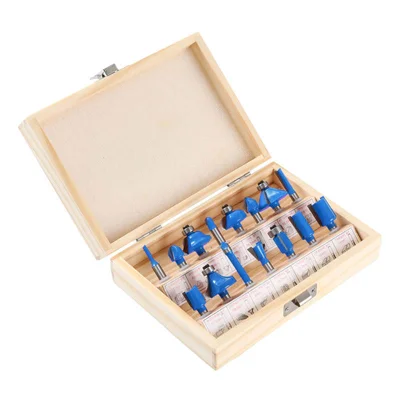
15-Piece Router Bit Set
Multi-size starter kit with carrying case
View on Alibaba →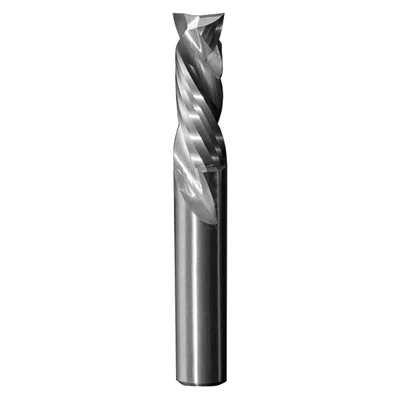
Compression Spiral Bits
Clean edges on plywood & MDF
View on Alibaba →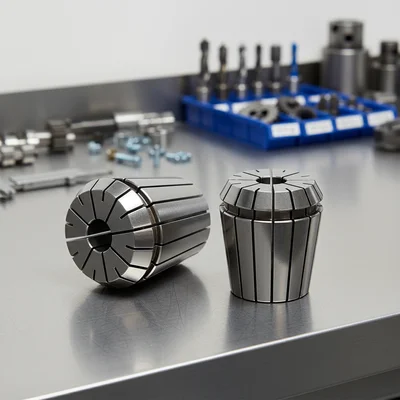
ER Collet Set
Precision holding, zero runout
View on Alibaba →As an Alibaba affiliate partner, we earn from qualifying purchases at no cost to you.