Overtime Labor Cost Calculator — Machine Work
Calculate total operator labor cost including overtime premium for machine-based production. Enter base wage, regular and OT hours, and your OT rate to see the full cost breakdown — built for US manufacturers managing shift coverage and job quoting.
Free Tool · US Manufacturing · Overtime Costing · FLSA ReferenceUS machine operator average: CNC ~$23–$28/hr, general machine ops ~$20–$26/hr. Use fully burdened rate for accurate job costing.
Standard US workweek is 40 hours. FLSA requires OT pay for hours beyond 40 per week for non-exempt hourly workers.
Hours beyond the regular workweek. Common OT scenarios: weekend shifts, extended runs, urgent order fulfillment.
Federal FLSA minimum: 1.5× for hours over 40/week. Some states (CA, AK) require 2× for daily hours over 12. Union contracts may vary.
Enter your wage, hours, and OT rate
then hit Calculate
How Overtime Labor Cost Is Calculated
Under the Fair Labor Standards Act (FLSA), US employers must pay non-exempt hourly machine operators at least 1.5× their regular wage for every hour worked beyond 40 in a workweek. Some states and union contracts require 2× (double time) for certain conditions. Here are the core formulas:
OT Pay = Base Wage × OT Rate × OT Hours
OT Premium = Base Wage × (OT Rate − 1) × OT Hours
Total Labor Cost = Regular Pay + OT Pay
1 Time-and-a-Half (1.5×)
The federal FLSA minimum for all non-exempt workers beyond 40 hours/week. If your operator earns $26/hr, their OT rate is $39/hr. This is the most common scenario in US manufacturing plants running extended or weekend shifts.
2 Double Time (2.0×)
Required in California after 12 hours in a single day, or on the 7th consecutive workday. Also common in union contracts for Sunday shifts or holidays. At $26/hr base, double time = $52/hr — a significant cost to budget for in production planning.
3 OT Premium Cost
The "true extra cost" beyond simply paying base wage for the same hours. For 1.5× OT, the premium is 0.5 × base rate per OT hour. This is the cost of your urgency — the extra dollars you pay per hour beyond what you would have paid at straight time.
4 Effective Blended Rate
Total labor cost ÷ total hours worked. Useful when comparing shift models — e.g., 10-hour days with 2 hours OT vs. two separate 8-hour shifts. A blended rate helps you spot which configuration is actually cheaper for your shop floor.
Overtime is one of the easiest labor costs to underestimate. On a 48-hour week at $26/hr (1.5× OT), total labor cost is $1,196 vs. $1,040 at straight time — that's a 15% increase. Multiply that by 10 operators and 52 weeks and you're looking at over $80,000 in unplanned annual OT cost. Always model OT into your job quotes upfront.
The FLSA requires OT at 1.5× for all non-exempt hourly workers past 40 hours/week. Some states impose stricter rules — California, Alaska, Colorado, and Nevada all have daily OT thresholds. Always apply the rule most favorable to the employee. Misclassifying workers or failing to pay OT can result in back wages, penalties, and legal exposure. Consult your HR/legal team for state-specific compliance.
3 Real-World Examples (US Machine Work)
Regular pay: $26 × 40 = $1,040
OT pay: $26 × 1.5 × 8 = $312
Total labor cost = $1,352 | OT premium = $104 | Effective rate = $28.17/hr
Regular pay: $24 × 40 = $960
OT pay: $24 × 2.0 × 10 = $480
Total labor cost = $1,440 | OT premium = $240 | Effective rate = $28.80/hr
Regular pay: $22 × 40 = $880
OT pay: $22 × 1.5 × 16 = $528
Total labor cost = $1,408 | OT premium = $176 | Effective rate = $25.05/hr
Typical OT Cost Impact — US Machine Operators
| Role | Base Wage Range | 1.5× OT Rate | 2.0× OT Rate | 8 hrs OT Cost (1.5×) |
|---|---|---|---|---|
| CNC Machinist | $23–$28/hr | $34.50–$42/hr | $46–$56/hr | $276–$336 |
| Injection Molding Operator | $23–$25/hr | $34.50–$37.50/hr | $46–$50/hr | $276–$300 |
| Press Brake / Stamping Op. | $20–$26/hr | $30–$39/hr | $40–$52/hr | $240–$312 |
| General Machine Operator | $18–$24/hr | $27–$36/hr | $36–$48/hr | $216–$288 |
| Assembly / Packaging | $16–$22/hr | $24–$33/hr | $32–$44/hr | $192–$264 |
Frequently Asked Questions
Related Manufacturing Tools
Top Picks for CNC Router Tooling
Professional-grade carbide tools ready to ship. Click any product to view details and pricing.
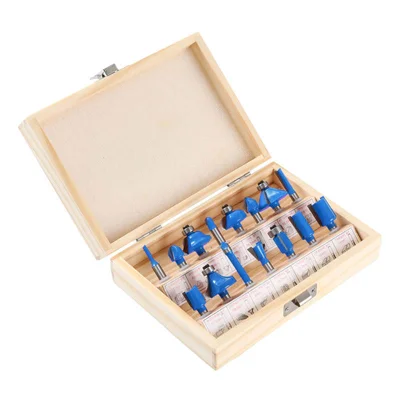
15-Piece Router Bit Set
Multi-size starter kit with carrying case
View on Alibaba →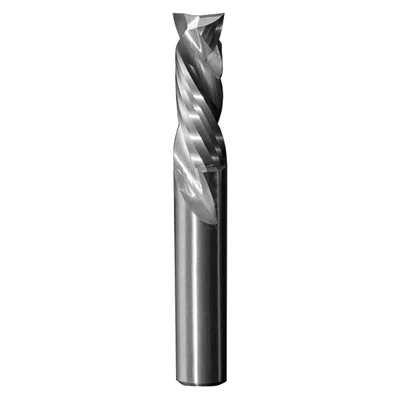
Compression Spiral Bits
Clean edges on plywood & MDF
View on Alibaba →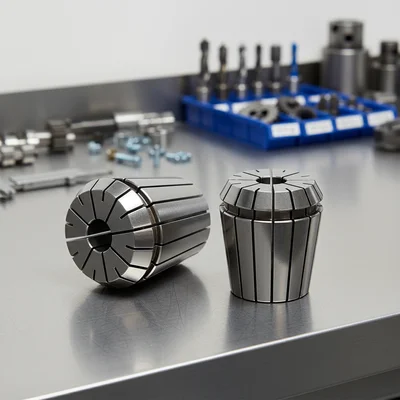
ER Collet Set
Precision holding, zero runout
View on Alibaba →As an Alibaba affiliate partner, we earn from qualifying purchases at no cost to you.