Machine Depreciation Calculator
Calculate annual depreciation using straight-line or MACRS (US tax) method. Shows book value over time and annual tax deduction estimate for equipment and machinery.
Free Tool · Straight-Line & MACRS · IRS Pub. 946 · Full ScheduleInclude purchase price + shipping + installation costs. This is your depreciable basis per IRS rules.
Estimated resale/scrap value at end of useful life. MACRS ignores salvage value — depreciate full cost to $0 per IRS rules.
Used for straight-line only. For MACRS, useful life is set by IRS property class (see below).
The schedule will highlight this year's deduction in amber.
| Year | Deduction ($) | Accum. Depr. ($) | Book Value ($) |
|---|
| Inputs Used | |
| Purchase price (cost basis) | — |
| Salvage value | — |
| Depreciable basis | — |
| Method | — |
| Recovery / useful life | — |
| Year placed in service | — |
| Tax Estimate | |
| Year 1 deduction | — |
| Tax year highlighted | — |
| That year's deduction | — |
| Accum. depr. end of that year | — |
| Book value end of that year | — |
How Machine Depreciation Is Calculated
Depreciation spreads the cost of business equipment over its useful life, reducing taxable income each year. The IRS requires most U.S. businesses to use MACRS (Modified Accelerated Cost Recovery System) for federal tax returns, while straight-line is commonly used for financial reporting (GAAP/book purposes). Understanding both methods helps you plan cash flow, equipment purchases, and tax strategy.
1 Straight-Line Method
The simplest method — divides the depreciable cost (purchase price minus salvage value) equally over the asset's useful life. Every year produces the same deduction. Preferred for financial reporting and accounting books.
2 MACRS Method (US Tax)
The IRS-required method for most U.S. business assets (IRS Pub. 946). Uses declining balance depreciation — front-loaded deductions in early years, automatically switching to straight-line when that produces a larger deduction. Salvage value is ignored; depreciate full cost to $0.
3 Book Value & Tax Timing
Book value is the remaining undepreciated cost at the end of each year. MACRS front-loads deductions — you recover more cost early, reducing taxable income sooner. This timing benefit is why MACRS is preferred over straight-line for tax purposes.
For your tax return, you are generally required to use MACRS — it gives you larger deductions upfront, reducing taxable income sooner. For your financial statements (books), straight-line is typically preferred because it smooths out the expense evenly, giving a cleaner picture of profitability. Most businesses maintain two separate depreciation schedules for the same asset: one for taxes (MACRS) and one for books (straight-line). Always consult a qualified CPA or tax professional before filing Form 4562 — depreciation rules change annually and vary by asset type.
MACRS Property Classes — Common Equipment Recovery Periods
Under IRS Publication 946, every business asset is assigned to a recovery period class. Most machinery and equipment falls into the 5-year or 7-year class. The IRS uses a half-year convention — treating all property as placed in service at mid-year — so a "7-year" asset actually spans 8 tax years.
Straight-Line vs. MACRS — Method Comparison
| Factor | Straight-Line | MACRS (200% DB) | Best For |
|---|---|---|---|
| Annual Deduction | Equal every year | Front-loaded (larger early) | — |
| Salvage Value | Subtracted from basis | Ignored — depreciate to $0 | MACRS = more deductions |
| IRS Requirement | Optional (book/GAAP) | Required for US tax returns | MACRS for taxes |
| Convention | Full year or pro-rata | Half-year (default) | — |
| Year 1 (7-yr asset, $50K) | $6,429 | $7,145 (14.29%) | MACRS saves more tax Yr 1 |
| Complexity | Simple calculation | IRS table lookup required | SL easier for books |
| Form to File | Form 4562 (Part III) | Form 4562 (Part II) | Both reported same form |
MACRS GDS Percentage Tables (Half-Year Convention)
IRS-published depreciation percentages for common property classes under the General Depreciation System (GDS), half-year convention. Multiply your cost basis by the percentage for each year to find your annual deduction. Source: IRS Publication 946, Appendix A.
| Year | 3-Year | 5-Year | 7-Year | 10-Year | 15-Year | 20-Year |
|---|---|---|---|---|---|---|
| 1 | 33.33% | 20.00% | 14.29% | 10.00% | 5.00% | 3.750% |
| 2 | 44.45% | 32.00% | 24.49% | 18.00% | 9.50% | 7.219% |
| 3 | 14.81% | 19.20% | 17.49% | 14.40% | 8.55% | 6.677% |
| 4 | 7.41% | 11.52% | 12.49% | 11.52% | 7.70% | 6.177% |
| 5 | — | 11.52% | 8.93% | 9.22% | 6.93% | 5.713% |
| 6 | — | 5.76% | 8.92% | 7.37% | 6.23% | 5.285% |
| 7 | — | — | 8.93% | 6.55% | 5.90% | 4.888% |
| 8 | — | — | 4.46% | 6.55% | 5.90% | 4.522% |
| 9 | — | — | — | 6.56% | 5.91% | 4.462% |
| 10 | — | — | — | 6.55% | 5.90% | 4.461% |
| 11 | — | — | — | 3.28% | 5.91% | 4.462% |
| 12+ | — | — | — | — | See Pub. 946 | See Pub. 946 |
Frequently Asked Questions
Related Financial Tools
Top Picks for CNC Router Tooling
Professional-grade carbide tools ready to ship. Click any product to view details and pricing.

15-Piece Router Bit Set
Multi-size starter kit with carrying case
View on Alibaba →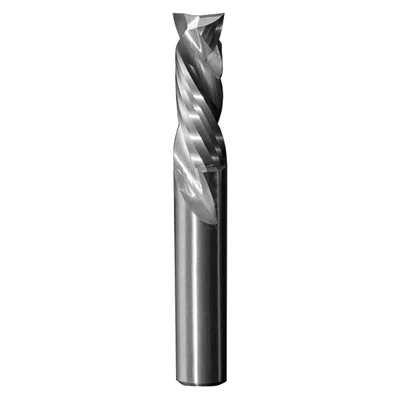
Compression Spiral Bits
Clean edges on plywood & MDF
View on Alibaba →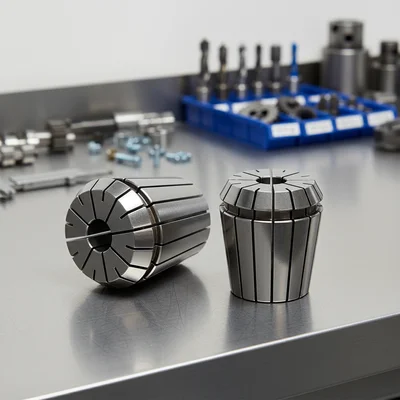
ER Collet Set
Precision holding, zero runout
View on Alibaba →As an Alibaba affiliate partner, we earn from qualifying purchases at no cost to you.