Cycle Time to Labor Cost Calculator
Convert production cycle time directly into labor cost per unit. Enter cycle time and hourly wage to see exact labor dollars per part — essential for manufacturers quoting jobs.
Free Tool · US Manufacturing · Labor Costing · Cycle Time AnalysisTotal time to produce one part (including load/unload). Common range: CNC 1\u201310 min, Injection 0.2\u20132 min, Assembly 0.5\u20135 min. To convert seconds, divide by 60 (e.g. 45 sec = 0.75 min).
Average US manufacturing operator wage: $22\u2013$30/hr (CNC ~$23\u2013$28, Injection ~$23\u2013$25). Use fully burdened rate to include benefits and payroll taxes.
How Cycle Time Converts to Labor Cost
In US manufacturing, direct labor cost per unit is one of the most important variables for accurate quoting and profitability. The formula is simple but powerful:
Parts per Hour = 60 \u00f7 Cycle Time (minutes)
1 Cycle Time
Includes machining, molding, handling, and any waiting. Even small reductions (e.g., 30 seconds) can save thousands per year in high-volume runs.
2 Hourly Wage
Use fully burdened rate (base wage + benefits + taxes). US averages: CNC operators ~$23\u2013$28/hr, general machine operators ~$20\u2013$26/hr.
Reducing cycle time by just 10% can drop labor cost per part by the same percentage. Track actual floor cycle times (not theoretical) and focus on bottlenecks \u2014 this is often the fastest way to improve margins without cutting wages.
3 Real-World Examples (US Manufacturing)
Cycle time = 4.5 minutes | Operator wage = $26/hr
Labor cost per part = $1.95 | Parts per hour \u2248 13.3
Cycle time = 45 seconds (0.75 min) | Operator wage = $24/hr
Labor cost per part = $0.30 | Parts per hour = 80
Cycle time = 2.8 minutes | Operator wage = $22/hr
Labor cost per part = $1.03 | Parts per hour \u2248 21.4
Typical US Manufacturing Values
| Process | Typical Cycle Time | Avg. Operator Wage | Labor Cost per Part (example) |
|---|---|---|---|
| CNC Milling / Turning | 2\u20138 min | $23\u2013$28 | $1.15\u2013$3.73 |
| Injection Molding (1 cavity) | 0.3\u20131.5 min | $23\u2013$25 | $0.12\u2013$0.63 |
| Press Brake / Stamping | 0.5\u20133 min | $20\u2013$26 | $0.17\u2013$1.30 |
| Manual Assembly | 1\u20135 min | $18\u2013$24 | $0.30\u2013$2.00 |
Frequently Asked Questions
Related Manufacturing Tools
Top Picks for CNC Router Tooling
Professional-grade carbide tools ready to ship. Click any product to view details and pricing.
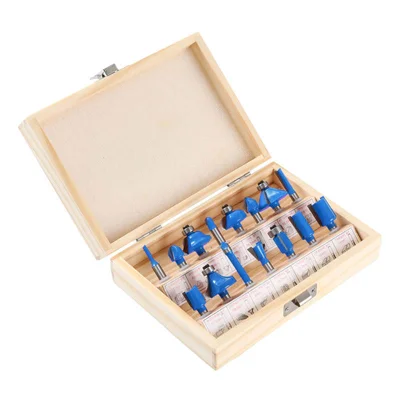
15-Piece Router Bit Set
Multi-size starter kit with carrying case
View on Alibaba →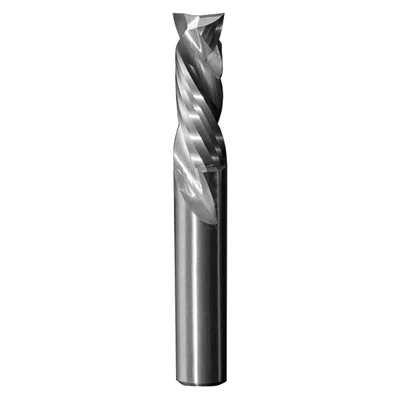
Compression Spiral Bits
Clean edges on plywood & MDF
View on Alibaba →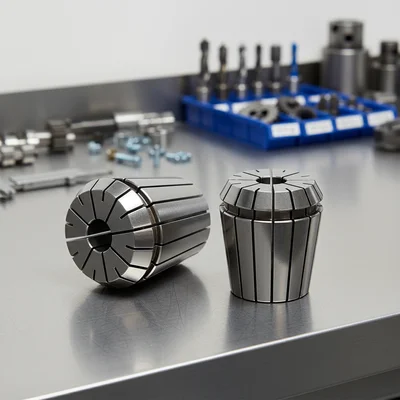
ER Collet Set
Precision holding, zero runout
View on Alibaba →As an Alibaba affiliate partner, we earn from qualifying purchases at no cost to you.