Carpet Roll Calculator
Enter your room dimensions and roll width to instantly see total square footage, how many linear yards to order, cut waste, and seam count — before you head to the store.
Free Tool · 12 / 13.5 / 15 ft Rolls · Multi-Room12 ft is standard for most U.S. residential installs.
Add extra for pattern matching or stairways.
Leave blank to skip cost estimate. Typical range: $2–$9/sq ft installed (carpet + pad + labor).
No rooms added yet — add your first room below.
Measure wall-to-wall. The waste factor above already accounts for edge margins.
How Carpet Roll Calculations Work
Carpet is sold off a roll in a fixed width — most commonly 12 ft, but also 13.5 ft and 15 ft in the U.S. Unlike hardwood or tile, you can't rearrange individual pieces to minimize waste. Instead, installers cut parallel strips from the roll to cover each room, which means some overhang is inevitable whenever a room dimension doesn't line up perfectly with the roll width. Understanding this is the key to ordering the right amount — and avoiding costly re-orders.
🟢 Room Area
Start by measuring length × width for each room in feet. For L-shaped rooms, break into two rectangles. Always round up to the nearest half-foot and measure wall-to-wall.
🔵 Linear Footage
Determine how many widths (strips) are needed across the room. The roll length cut per strip equals the room length. Sum all strips to get total linear feet from the roll.
🟡 Cut Waste
Waste comes from roll-width overhang, end cuts for fitting, and pattern matching. Standard waste is 10% for plain rectangular rooms; 15–20% for complex layouts or patterned carpet.
🟣 Linear Yards
Retailers sell carpet in linear yards — the running length pulled from the roll at the chosen roll width. Convert your total linear feet by dividing by 3. Always round up to the next full yard.
A seam is wherever two strips of carpet meet. Seams are visible over time, especially in high-traffic areas and near windows where light grazes the surface. For any room 12 ft wide or less, a standard 12 ft roll covers it seamlessly in one strip. For rooms 12–15 ft wide, a 15 ft roll may eliminate the seam entirely. The extra cost of the wider roll is almost always worth it compared to the labor and appearance issues of a seam running through the middle of your living room.
3 Example Project Scenarios
Click any scenario to load it into the calculator and see the full breakdown instantly.
Master Bedroom
Rooms: Master Bedroom 14×16 ft, Walk-in Closet 6×8 ft
1 seam in bedroom
Living Room + Hallway
Rooms: Living Room 18×22 ft, Hallway 4×14 ft
seamless living room
Whole-Floor Plan
Rooms: Bedroom 1 12×14 ft, Bedroom 2 11×13 ft, Office 10×12 ft
3 rooms + 15% waste
Common Carpet Type Reference
Use this as a starting point when choosing carpet style and estimating waste. Always get a written quote from your retailer that specifies linear yards.
| Carpet Type | Typical Cost (installed) | Best For | Pattern Waste |
|---|---|---|---|
| Berber / Loop Pile | $5.00–$7.50/sq ft | High-traffic, basements | Low 5–10% |
| Cut Pile Textured | $4.50–$6.00/sq ft | Living rooms, bedrooms | Low 5–10% |
| Plush / Saxony | $6.00–$8.00/sq ft | Bedrooms, formal areas | Low 5–10% |
| Frieze / Shag | $6.50–$9.00/sq ft | Casual living areas | Low 5–10% |
| Pattern / Cut & Loop | $7.00–$9.50/sq ft | Dining rooms, stairs | High 15–20% |
| Wool / Natural Fiber | $10.00–$21.00/sq ft | Luxury, low-allergen | Med 10–15% |
| Carpet Tiles | $3.00–$9.00/sq ft | Commercial, basements | Minimal <5% |
Frequently Asked Questions
Measure each room at its widest and longest points, wall-to-wall. Do not subtract for closets or alcoves — include them. Round each measurement up to the nearest half-foot. For L-shaped rooms, divide the space into two rectangles, calculate each, and add them together. Add this calculator's waste factor instead of trying to pad your measurements manually — double-counting leads to over-ordering.
Linear yards (or linear feet) describe the running length of carpet unrolled from the bolt — not the area. Because carpet rolls come in a fixed width (12 ft, 13.5 ft, or 15 ft), retailers charge for how much length they cut from the roll at that width. For example, if you need a 20 ft long cut from a 12 ft wide roll, you're buying roughly 6.7 linear yards (20 ft ÷ 3). Understanding linear yards is the single most important concept for accurately budgeting your carpet project and avoiding surprises at the register.
Because carpet rolls come in fixed widths, you will almost always have overhang that must be trimmed and discarded. If your room is 10 ft wide but the roll is 12 ft, the entire 2 ft overhang along the length of the room is waste. You can't piece those scraps together — that would create a seam in the middle of your floor, which is both unattractive and a tripping hazard. Additionally, installers need several inches of extra carpet at each edge to stretch and tuck under baseboards. This is why the industry standard is to add at least 10% on top of room square footage when ordering.
The goal is to minimize seams. First, note which direction you want carpet to run (typically parallel to the longest wall or toward the main source of natural light, so seams fall away from sight lines). Then choose the roll width that covers your room's perpendicular dimension in as few strips as possible. A 12 ft roll is right for any room up to 12 ft wide. A 15 ft roll works for rooms up to 15 ft wide with no seam. Run this calculator with different roll widths to compare linear yard counts and pick the most efficient option.
Padding (underlayment) is measured and ordered separately from carpet. Use the same square footage calculated here — padding is sold by the square foot or square yard and installed wall-to-wall under the carpet. The most common residential choice is rebonded foam at 3/8″–7/16″ thickness and 6–8 lbs. density. Never skimp on padding — quality padding extends carpet life by 50% or more, improves comfort underfoot, and provides noise insulation.
Running short of carpet mid-install is one of the costliest mistakes in a flooring project. Carpet dye lots vary between production runs — if you order a second batch, the color may not match perfectly, even if it's the same product code. You'd face a visible color mismatch seam, or have to replace all the carpet. Always err on the side of ordering slightly more. Any leftover carpet can be bound into area rugs, used for closets, stored for future repairs, or donated. A short carpet order can easily cost more to fix than the entire original project.
Related DIY Tools
Top Picks for CNC Router Tooling
Professional-grade carbide tools ready to ship. Click any product to view details and pricing.
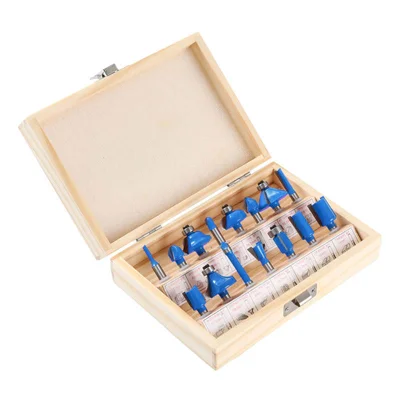
15-Piece Router Bit Set
Multi-size starter kit with carrying case
View on Alibaba →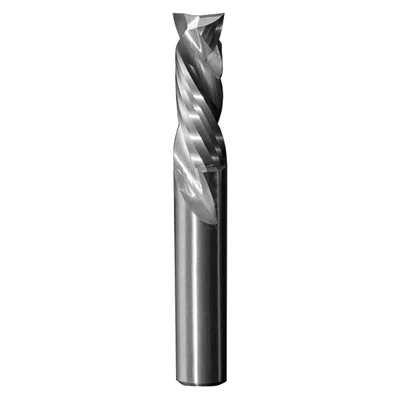
Compression Spiral Bits
Clean edges on plywood & MDF
View on Alibaba →
ER Collet Set
Precision holding, zero runout
View on Alibaba →As an Alibaba affiliate partner, we earn from qualifying purchases at no cost to you.