Steam Properties Calculator
Look up saturated steam properties instantly — saturation temperature, latent heat, enthalpy, specific volume, and density — by pressure (psig) or temperature (°F). Full interactive reference table included.
Free Tool · BTU/lb · ft³/lb · psig ↔ °F · Full Steam TableEnter gauge pressure (psig). Range: 0–3,000 psig. Common plant pressures: 15, 30, 50, 100, 125, 150, 200, 300 psig.
Results update live as you type. Values interpolated from ASME steam tables.
| Conditions | |
| Gauge pressure (psig) | — |
| Absolute pressure (psia) | — |
| Saturation temperature | — |
| Enthalpy | |
| Liquid enthalpy (hf) | — |
| Latent heat / evaporation (hfg) | — |
| Vapor enthalpy (hg) | — |
| Volume & Density | |
| Sat. vapor specific volume (vg) | — |
| Sat. liquid specific volume (vf) | — |
| Steam density (1/vg) | — |
| Practical Values | |
| Steam flow for 1,000,000 BTU/hr | — |
| Condensate returned per 1,000 lb/hr steam | — |
| Boiler rating (1 BHP = 34.5 lb/hr steam) | — |
| Source | ASME Steam Tables (interpolated) |
The amber dot shows your current steam condition on the saturation curve. The blue region is two-phase (wet steam). Above the curve to the right is superheated steam. The critical point at 3,206 psia (3,191 psig) / 706°F is where liquid and vapor become indistinguishable.
Full Saturated Steam Table — Imperial Units
All values from ASME steam tables. Pressure in psig, temperature in °F, enthalpy in BTU/lb, specific volume in ft³/lb. Click any row to load those values into the calculator above.
| Pressure (psig) | Sat. Temp (°F) | Latent Heat hfg (BTU/lb) | Liquid hf (BTU/lb) | Vapor hg (BTU/lb) | Spec. Volume vg (ft³/lb) |
|---|
Understanding Steam Properties
Steam tables are the fundamental reference for every boiler, heat exchanger, steam trap, and process calculation in industry. Understanding what each property means — and how they relate — is essential for sizing equipment, calculating energy balances, and troubleshooting steam system problems.
1 Latent Heat (hfg)
The energy required to convert 1 lb of boiling water into 1 lb of steam at the same pressure, without any temperature change. This is the "working energy" of steam — the BTUs delivered to your process when steam condenses back to water.
2 Enthalpy (hf and hg)
Total heat content above 32°F. hf is the enthalpy of saturated liquid (hot water at boiling point). hg is the enthalpy of saturated steam vapor. hg = hf + hfg.
3 Specific Volume (vg)
Volume occupied by 1 lb of saturated steam vapor. Critical for sizing steam pipes, traps, and pressure vessels. As pressure rises, steam becomes denser — vg decreases rapidly. Low-pressure steam is much "fluffier" than high-pressure steam.
4 psig vs. psia
Gauges in the plant read psig (gauge pressure — above atmospheric). Steam tables use psia (absolute pressure). Always add 14.7 psi when looking up steam table values. This calculator handles the conversion automatically.
Frequently Asked Questions
Related Industrial Tools
Top Picks for CNC Router Tooling
Professional-grade carbide tools ready to ship. Click any product to view details and pricing.
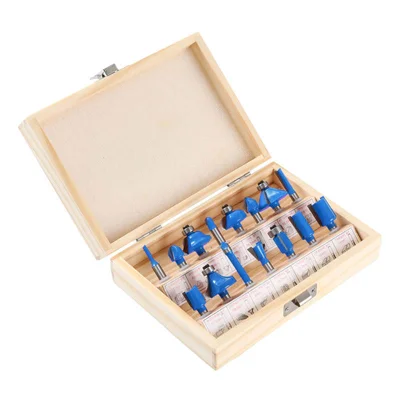
15-Piece Router Bit Set
Multi-size starter kit with carrying case
View on Alibaba →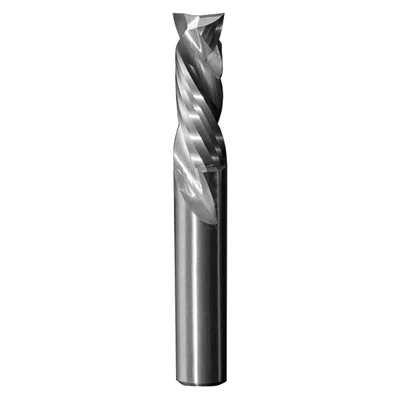
Compression Spiral Bits
Clean edges on plywood & MDF
View on Alibaba →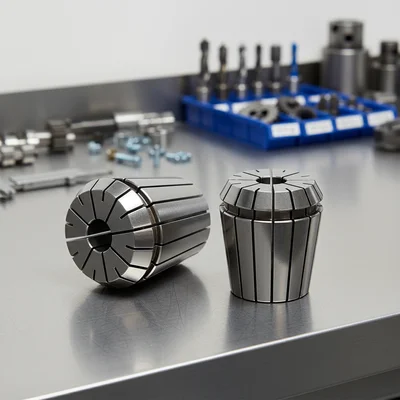
ER Collet Set
Precision holding, zero runout
View on Alibaba →As an Alibaba affiliate partner, we earn from qualifying purchases at no cost to you.