Cooling Tower Heat Rejection Calculator
Calculate heat rejection (BTU/hr & tower tons), approach temperature, range, evaporation loss, and makeup water requirement for industrial process cooling towers. Imperial units.
Free Tool · BTU/hr · Tower Tons · Approach Temp · Makeup Water GPMProcess cooling: enter actual hot/cold water temps from your heat exchanger or process cooler.
T₁ = water entering tower (hot from process). T₂ = water leaving tower (cold to process). Typical range: 10–15°F for process, 10°F standard for HVAC.
Total condenser water or process cooling water flow through the tower.
Design wet-bulb for your region. Common US values: Gulf Coast 82°F, Southeast 78°F, Midwest 75°F, Southwest 70°F, Pacific NW 65°F. Use 99.6% ASHRAE value for your city.
Higher COC = less blowdown water wasted = better water efficiency. Typical industrial target: 4–6 COC.
Glycol reduces heat capacity — the correction factor adjusts BTU/hr accordingly.
| Heat Rejection | |
| Heat duty Q | — |
| Tower tons (Q ÷ 15,000) | — |
| Refrigeration tons (Q ÷ 12,000) | — |
| Fluid correction factor | — |
| Temperature Analysis | |
| Hot water in (T₁) | — |
| Cold water out (T₂) | — |
| Cooling range (T₁ − T₂) | — |
| Design wet-bulb (WB) | — |
| Approach (T₂ − WB) | — |
| Approach assessment | — |
| Water Balance | |
| Circulating flow | — |
| Evaporation loss | — |
| Blowdown (COC) | — |
| Drift loss (est.) | — |
| Total makeup water | — |
| Annual makeup (gal/yr) | — |
| Inputs | |
| Mode | — |
| Flow / fluid | — |
| Cycles of concentration | — |
The tower rejects heat by evaporating a small fraction of the circulating water (~1% per 10°F range). The approach temperature — how close T₂ gets to wet-bulb — determines tower efficiency. A smaller approach requires a larger, more expensive tower.
How Cooling Tower Heat Rejection Works
A cooling tower rejects heat by evaporating a small percentage of the circulating water into the airstream. For every gallon that evaporates, it carries away approximately 1,000 BTU of heat — far more efficient than sensible cooling alone. This is why cooling towers can cool water to within 5–10°F of the wet-bulb temperature, a thermodynamic limit that no dry cooler or air-cooled heat exchanger can match.
1 Heat Rejection (BTU/hr)
The fundamental equation uses GPM flow, temperature range, and the 500 constant (8.33 lb/gal × 60 min/hr × Cp=1.0). For glycol mixtures, multiply by the fluid correction factor.
2 Tower Tons vs. Refrig. Tons
A refrigeration ton = 12,000 BTU/hr (heat removed from chilled space). A tower ton = 15,000 BTU/hr — 25% higher to account for the chiller compressor's heat of compression that the tower must also reject.
3 Approach Temperature
Approach = T₂ − Wet Bulb. This is the most critical tower design parameter. A 5°F approach requires a much larger (more expensive) tower than a 10°F approach. Never design for less than 5°F approach in most US climates.
4 Water Balance
Makeup water replaces three losses: evaporation (~1% per 10°F range), blowdown (to control mineral concentration), and drift (mist carry-off, ~0.001–0.002% of flow with modern drift eliminators).
The single most common cooling tower sizing error in industrial plants is using refrigeration tons (12,000 BTU/hr) instead of tower tons (15,000 BTU/hr) when selecting a cooling tower for a chiller application. If you size a tower for 100 refrigeration tons but the chiller produces 100 tons of cooling plus 25 tons of compressor heat, your tower is undersized by 25% before it starts running. Always size the cooling tower at 125% of the chiller's nameplate refrigeration tons, or use tower tons directly from the calculator above.
Worked Examples — 3 Real Industrial Scenarios
Tower: 67 tons · Approach: 9°F
Makeup: ~3.5 GPM
Tower: 400 nominal tons
Approach: 7°F
Tower: 400 tons · Approach: 5°F
Makeup: ~35 GPM
Approach Temperature Guide by Application
| Application | Typical Range °F | Design Approach °F | Tower Selection Note |
|---|---|---|---|
| HVAC / Chiller (commercial) | 10°F | 7–10°F | Standard counterflow, 1.0–1.2 GPM/ton |
| Industrial process cooling | 10–15°F | 7–12°F | Counterflow or crossflow, depends on space |
| Injection molding | 12–18°F | 8–12°F | Higher flow, moderate approach acceptable |
| Hydraulic oil cooling | 15–25°F | 10–15°F | Larger range, smaller tower possible |
| Data center cooling | 8–10°F | 5–7°F | Aggressive approach — premium tower required |
| Power plant condenser | 12–20°F | 8–15°F | Very large towers, natural draft at >45,000 GPM |
Frequently Asked Questions
Related Industrial Tools
Top Picks for CNC Router Tooling
Professional-grade carbide tools ready to ship. Click any product to view details and pricing.
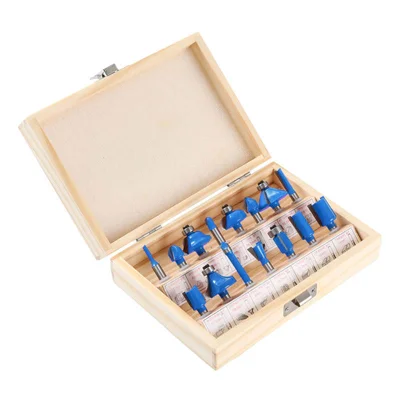
15-Piece Router Bit Set
Multi-size starter kit with carrying case
View on Alibaba →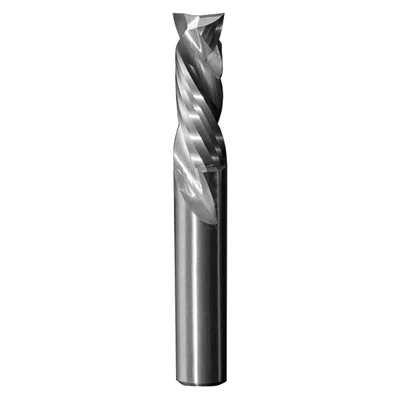
Compression Spiral Bits
Clean edges on plywood & MDF
View on Alibaba →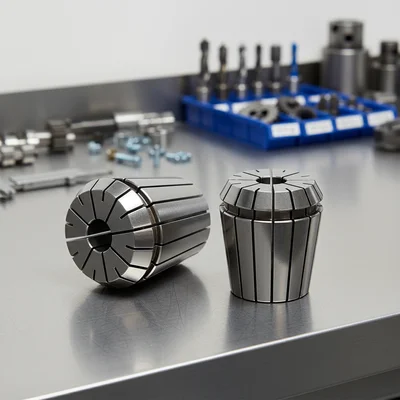
ER Collet Set
Precision holding, zero runout
View on Alibaba →As an Alibaba affiliate partner, we earn from qualifying purchases at no cost to you.