CNC Machine
Best Digital Calipers for Machinists: How to Choose the Right One
Not sure which digital caliper is right for your shop? This guide breaks down the specs that actually matter — accuracy, IP rating, and tier — so you buy smart, not just cheap.If you've ever had a part fail QC because of a bad measurement — you already know what's at stake. A digital caliper is one of the most-used tools on any shop floor, yet it's one of the most commonly purchased on impulse, without much thought. The result is usually one of two problems: overpaying for brand prestige you don't actually need, or buying a budget unit that drifts 0.005" by noon and costs you real money in scrap.
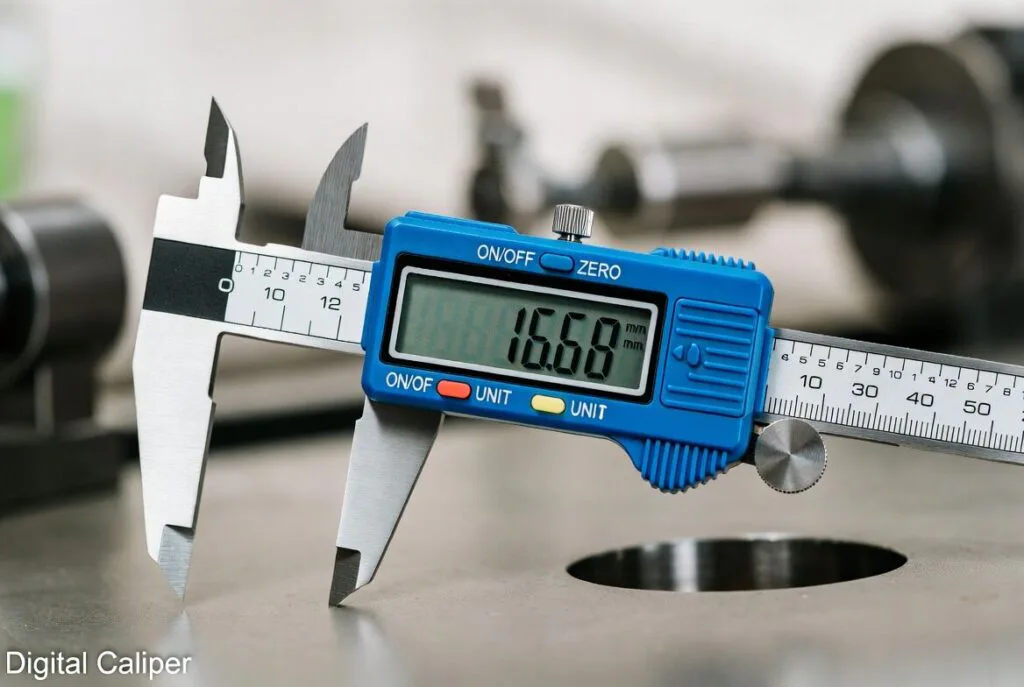
This guide is written for working machinists, CNC operators, quality technicians, and shop supervisors who need to make a smart buying decision. We'll break down what specs actually matter, walk through the three performance tiers worth considering, and link you directly to equipment marketplaces so you can check current selection and real pricing without any confusion.
Note: We don't list prices in this article. market prices shift constantly and we refuse to mislead you with numbers that expired last week. Every link goes directly to equipment marketplaces where you'll see live, accurate pricing.
Why Your Caliper Choice Actually Matters
A digital caliper is not a glamour tool. But in a production environment, it touches every single part that goes out the door — and a tool that reads consistently wrong is often more dangerous than one that reads obviously broken.
The market is flooded. Search "digital caliper" from equipment suppliers and you'll find hundreds of listings, many sharing identical OEM internals under different brand names at very different prices. Some are perfectly adequate. Some will read consistently enough to feel accurate right up until they cost you a batch of aluminum stock and a customer relationship.
If you use our CNC Feed Rate Calculator or Press BrakeTonnage Calculator regularly, you already know that the math only works when your inputs are accurate. Your caliper is the first point of data in any measurement chain — garbage in means garbage out.
The Specs That Actually Matter
Resolution vs. Accuracy — Know the Difference
This is the single most misunderstood spec in caliper marketing, and budget brands exploit it constantly.
Resolution is the smallest increment the display can show. Most digital calipers advertise 0.0005" (0.01mm) resolution, and almost all of them deliver exactly that — it's cheap to put on a display.
Accuracy is whether that reading is actually true. A budget unit might display 0.4995" when the actual measurement is 0.501". The display looks precise. The measurement is wrong.
For professional machining work, you want accuracy of ±0.001" (±0.02mm) across the full measuring range — not just at zero, not just in the middle of the scale, but across the full range. Cheaper instruments tend to drift near the ends of their travel where it's hardest to test casually.
Verified brands like Mitutoyo and Starrett publish traceable accuracy specs you can actually trust. Many budget brands list accuracy claims measured at zero jaw closure only, which is essentially meaningless for real production work.
IP Rating: How Much Does Your Shop Abuse Tools?
IP (Ingress Protection) ratings tell you how well the caliper handles coolant, oil mist, and dust — the standard enemies of shop electronics.
- No IP rating: Fine for inspection rooms and clean toolroom environments. Not suitable near CNC machines running coolant.
- IP54: Splash-resistant. Handles incidental coolant contact and oily hands. Good for most shop environments.
- IP67: Submersible. Overkill for most machinists, but genuinely useful if you're measuring parts straight off a wet machine.
If your caliper never gets near a lathe, IP rating is mostly irrelevant. If it sits on the ledge of a machining center, IP54 is the minimum worth considering.
Absolute Scale vs. Standard Zero
Standard digital calipers need to be zeroed every time you turn them on. This sounds minor until you're mid-job, forget to zero, and take three measurements before realizing they're all off by 0.032".
Absolute scale technology — used by Mitutoyo in their AOS line — remembers the true zero position even after the unit is switched off. You turn it on and it's already reading correctly. For production environments where the caliper gets picked up and put down dozens of times per shift, this is a genuine workflow improvement, not a marketing gimmick.
Jaw Material: Stainless Steel vs. Carbide-Tipped
Standard stainless steel jaws handle aluminum, steel, plastic, and wood without issue. Carbide-tipped jaws are worth considering if you're regularly measuring hardened parts or abrasive sintered materials — carbide resists wear significantly longer and keeps your measurements accurate as the instrument ages. For most machinists doing general work, standard stainless is adequate.
Data Output (SPC)
Some professional-grade calipers include a data port — typically compatible with Mitutoyo's SPC standard — that lets you push measurements directly to a computer or data logger with a button press. If your shop runs Statistical Process Control or needs measurement traceability for ISO or AS9100 compliance, this matters. If you're a job shop machinist doing general work, you probably don't need it yet.
What Doesn't Matter as Much as Marketing Suggests
- Display size: All modern calipers have readable displays. Not a real differentiator.
- Number of "measurement modes": All calipers measure OD, ID, depth, and step. Brands that list "4 measurement modes" as a feature are padding the listing with things every caliper already does.
- Color: Not a spec. Ignore it.
The Three Tiers Worth Knowing
Rather than recommending specific model numbers that get discontinued year to year, here's how to think about the market in terms of tiers — each with a clear use case and a direct supplier information to browse current options.
Tier 1 — Budget / General Use
This tier covers calipers used by hobbyists, woodworkers, students, and machinists who need a secondary instrument for rough checks. Stainless steel units, decent displays, standard accuracy claims, typically no IP rating.
They are not suitable as a primary instrument in a production environment. Jaw accuracy over the full scale is inconsistent and hard to verify without gauge blocks. That said, plenty of experienced machinists keep one in their toolbox for quick checks on noncritical dimensions — because it doesn't matter if it takes a chip or gets misplaced.
What to look for: stainless steel body, ±0.001" claimed accuracy, auto-off feature, and a significant number of genuine verified reviews.
→ BrowseBudget Digital Calipersfrom equipment suppliers
Tier 2 — Mid-Range / Everyday Shop Use
This is where the market gets genuinely interesting. At mid-range price points you start to see IP54-rated instruments, better consistency in accuracy across the full scale, and some models with SPC data ports. Brands like iGaging, Fowler, and Insize operate in this space and carry solid reputations in the machining community for delivering real value without the full premium price.
For a small job shop, a craftsman doing precision woodworking, or a CNC operator who needs a reliable daily-use instrument without the top-tier cost, this tier is often the right answer.
What to look for: IP54 rating, verified ±0.001" accuracy across the full scale, a recognized brand — not a generic relabeled unit.
→ BrowseMid-Range IP54 Digital Calipersfrom equipment suppliers
Tier 3 — Professional Grade (Mitutoyo / Starrett)
This is where the machining community stops debating and starts agreeing. Mitutoyo's AOS line and Starrett's precision instruments have been the professional standard for decades — not because of marketing, but because they earn it through consistent performance in real shop environments, year after year.
The Mitutoyo 500-series in particular is the most-cited recommendation across professional forums like Practical Machinist. The reasons are consistent: the absolute scale works reliably, the accuracy is verifiable and holds up over years of heavy use, and the build quality is genuinely different from what you find at lower price points. These are instruments you buy once and they outlast the machine you're measuring parts for.
Starrett occupies a similar position for US-made precision tooling. If buying American-manufactured instruments matters to your shop or your customers, Starrett delivers on that consistently.
Who needs Tier 3: QC departments, shops with ISO/AS9100 requirements, precision machinists working to tight tolerances every day, and anyone who uses a caliper hard across every shift and needs it to stay accurate for years.
→ Browse Starrett Precision Calipers from equipment suppliers
Digital vs. Dial vs. Vernier — Which Type Fits Your Work?
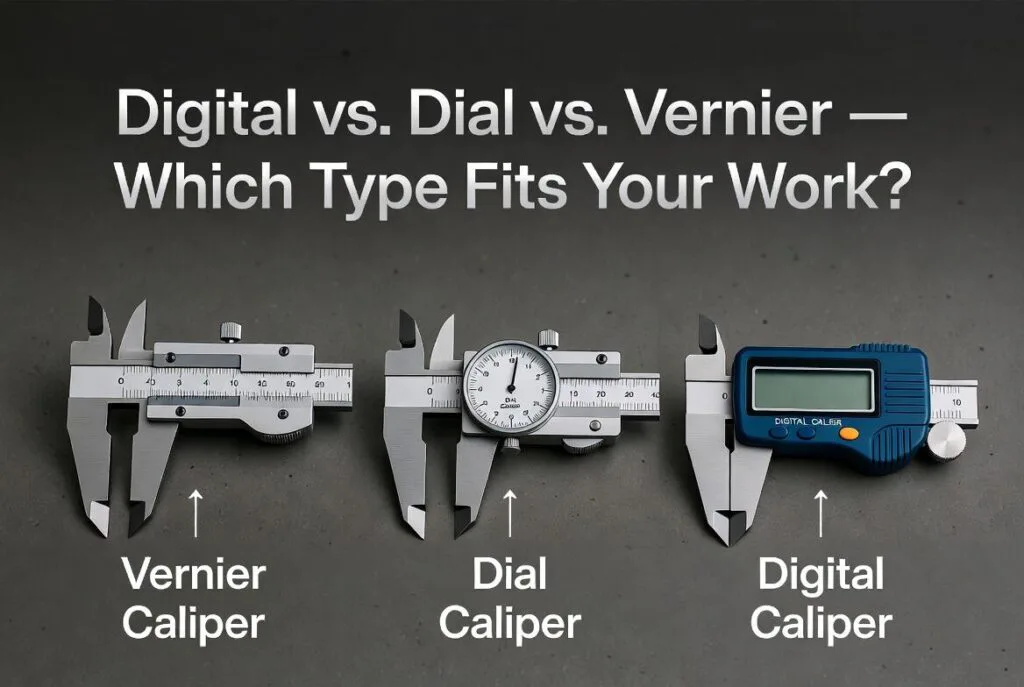
Digital Calipers
The dominant choice for most modern shops. Fast to read, easy to zero, switchable between inch and metric instantly, and compatible with data output systems. The weakness is electronics — they fail in wet environments without adequate IP protection, and a dead battery at the wrong moment is a real problem. Keep a spare CR2032 in your toolbox.
Dial Calipers
No battery required — a real advantage. The analog dial is easy to read and doesn't suffer from electronic failure modes. Dial calipers from Starrett and Brown & Sharpe are well regarded for durability and long-term accuracy. The limitation is single unit system — you buy an inch model or a metric model, not both.
Many experienced machinists prefer a dial caliper as their primary shop instrument and keep a digital for quick metric/inch conversions. There's nothing wrong with this approach.
→ BrowseDial Calipersfrom equipment suppliers
Vernier Calipers
No battery, no electronics, excellent traceable accuracy. The downside is speed — reading a vernier scale correctly requires training and attention, and in a production environment where throughput matters, they're significantly slower than digital or dial. Excellent teaching tools, but largely replaced in most shops by digital and dial instruments.
How to Evaluate a Caliper When It Arrives
Run these checks when your instrument arrives. Takes five minutes and tells you immediately whether you received a good unit.
Check Zero: Close the jaws with light, consistent pressure. The display should read exactly 0.0000". If it doesn't, the instrument has a defect. Do not accept a caliper that won't zero properly out of the box.
Check Jaw Parallelism: Close the jaws against a known flat surface. Both jaw faces should make full, even contact. Light leaking through one side means the jaws aren't parallel — this produces consistent measurement errors.
Check Mid-Range Accuracy: If you have gauge blocks, measure a known standard around 2–3 inches (50–75mm). Budget calipers often read correctly near zero but drift in the middle of their range.
Check Slide Smoothness: The slide should move without binding or lateral play. Grinding or clicking is a defect.
Check the Lock Screw: Should hold the reading firmly without creeping. If jaws move after locking, the caliper isn't suitable for production use.
Caliper Maintenance: What Keeps an Instrument Accurate Long-Term
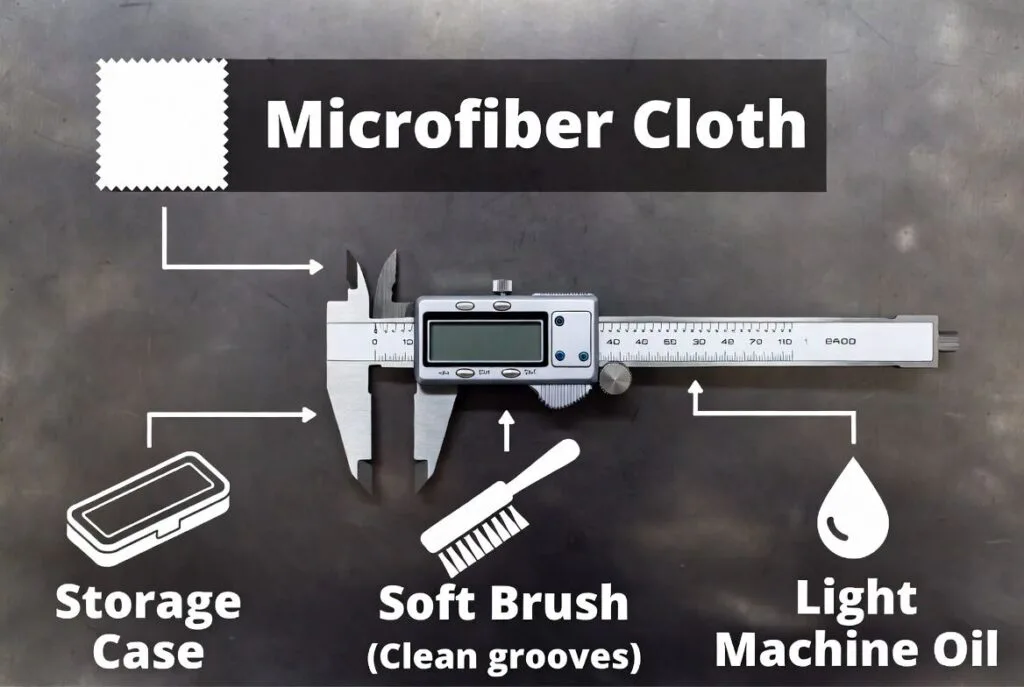
Cleaning: Wipe the measuring faces and beam with a lint-free cloth lightly oiled with instrument oil after use. Coolant, cutting fluid, and aluminum dust accelerate wear on the measuring surfaces. Five seconds of wiping extends the instrument's accurate life significantly.
Storage: Always store with a small gap between the jaws — never fully closed. Storing closed tight can put tension on the jaw faces and distort zero over time. Use the case it came with.
Battery: Remove the battery if the caliper won't be used for an extended period. Battery leakage is the most common cause of premature failure on otherwise good instruments.
Calibration: For shops with ISO or quality system requirements, calibrate on a regular schedule against certified gauge blocks. Heavy daily use warrants quarterly checks; lighter use can go annual. For shops without formal quality systems, verifying against gauge blocks a couple of times per year catches drift before it causes problems downstream.
Frequently Asked Questions
Is Mitutoyo really worth the price premium? For professional machinists using a caliper every day: consistently yes. The accuracy is verifiable, the absolute scale eliminates a common workflow error, and the instruments hold calibration under real shop conditions for years. For occasional use or a secondary instrument, the premium isn't justified. But if it's your primary measurement tool and you're using it hard every shift, the price difference pays for itself faster than most people expect.
What's the difference between a 6-inch and 8-inch caliper? A 6-inch (150mm) caliper handles the vast majority of machining measurements and is the standard for most shop work. An 8-inch adds range for larger parts without switching instruments. Unless you're regularly measuring parts over 5 inches, start with a 6-inch — it's lighter and easier to maneuver.
Can I use a digital caliper near my CNC machine? Yes, with the right model. IP54-rated minimum if it's going to live near coolant or mist. An unrated digital caliper used near a machining center will fail faster than you'd expect — coolant finds its way into everything.
How often should I replace my caliper? A quality caliper properly maintained doesn't have a fixed replacement schedule. Professional machinists routinely get 10–15 years or more from Mitutoyo or Starrett instruments. Budget calipers under hard use typically show drift or mechanical wear within 2–3 years. The replacement signal is calibration failure — when it can no longer be brought to spec against certified gauge blocks, it's time for a new one.
Do I need a caliper if I already have a micrometer set? They serve different purposes and you generally want both. A micrometer gives you higher accuracy for critical single-dimension measurements. A caliper gives you speed and flexibility — OD, ID, depth, and step with one tool. In a shop environment they complement each other rather than replace each other.
The Bottom Line
The spec that matters most is accuracy across the full scale — not resolution, not the number of display modes, not the color of the body.
If you're doing this professionally and using a caliper every day, mid-range to professional tier is where your money is well spent. If you're equipping a shop floor with multiple instruments, mix tiers: Mitutoyo or Starrett for the primary QC instrument, a solid mid-range for the general shop caliper that lives near the machine and takes the abuse.
Whatever you choose, verify it when it arrives and take care of it. A good caliper pays you back every single day.
→ Browse AllDigital Calipersfrom equipment suppliers
Related tools on TWC Industrial:
- CNC Cutting Speed & Feed Rate Calculator
- Press Brake Tonnage Calculator
- Sheet Metal Weight Calculator
- Machine Depreciation Calculator
Precision Measuring Tools
Essential instruments for tramming, alignment, and quality inspection.
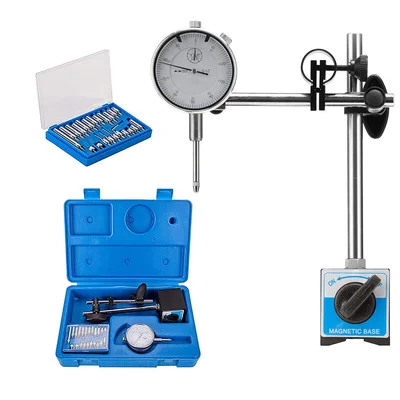
Dial Indicator + Magnetic Base
0–1" range, articulated arm, hands-free
View on Alibaba →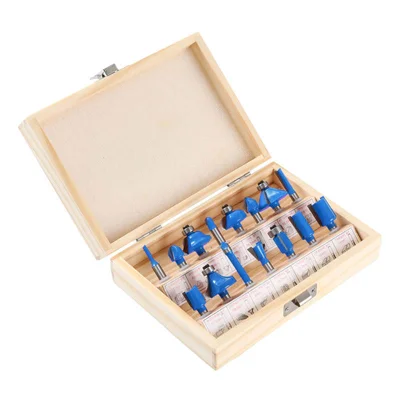
15-Piece Router Bit Set
Multi-size starter kit
View on Alibaba →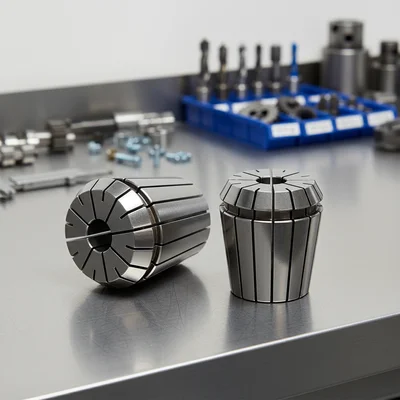
ER Collet Set
Precision tool holding
View on Alibaba →As an Alibaba affiliate partner, we earn from qualifying purchases at no cost to you.