Building Material Machinery
Why Your Circuit Breaker Keeps Tripping (It's Not the Breaker's Fault)
Breaker tripping on the same circuit? The problem is usually overload, not the breaker. Learn the 80% rule and how to calculate your actual electrical load.If your breaker trips repeatedly on the same circuit, the instinct is to replace it. Nine times out of ten, that's the wrong move — and an unnecessary expense. The real problem is almost always an overloaded circuit, and the fix starts with understanding how much electrical load you're actually running.
This post walks through the most common mistakes people make when estimating electrical loads, and how to avoid them before they become costly problems.
The Most Common Mistake: Guessing by Appliance Count
Most people think a 20-amp circuit can handle "about four or five things." That logic doesn't hold up once you look at the actual numbers.
A single space heater running at 1,500 watts draws 12.5 amps on a 120V circuit. Add a desktop computer (300W / 2.5A) and a laser printer that spikes to 900W when printing (7.5A), and you're already at 22.5 amps — past the 80% continuous load threshold that the NEC recommends for circuit sizing, and dangerously close to the breaker's limit.
The number of devices doesn't tell you anything useful. The wattage does.
The 80% Rule — Why It Matters More Than You Think
The National Electrical Code doesn't say you can run a 20-amp circuit at 20 amps. For continuous loads (anything running for 3 hours or more), the working limit is 80% of breaker capacity. That means:
- 15-amp breaker → 12 amps usable
- 20-amp breaker → 16 amps usable
- 30-amp breaker → 24 amps usable
This isn't a recommendation — it's a code requirement. Ignoring it is how circuits get damaged quietly over time: insulation degrades, connections loosen, and eventually something fails.
Where People Go Wrong with Workshop and Garage Circuits
Home workshops are where overloaded circuits cause the most problems, because the equipment draws more than people expect:
| Tool | Typical Draw |
|---|---|
| Table saw (10") | 15–18A at startup |
| Air compressor (1.5 HP) | 14A running / 22A startup |
| Shop vac | 6–10A |
| LED shop light (4-tube) | 2–3A |
Running a table saw and an air compressor on the same 20-amp circuit is a recipe for nuisance tripping — or worse, a breaker that trips slowly instead of fast, which means the wiring is running hot for longer before it cuts out.
The fix is simple: calculate first, then decide whether to dedicate circuits or upgrade the service. Guessing and hoping is what leads to rewiring jobs that cost far more than the calculation would have.
Industrial and Commercial Settings: Demand Factors Change Everything
In residential wiring, you often calculate each load at 100%. In commercial and light industrial work, the NEC allows demand factors — adjustments that recognize not every load runs at full capacity simultaneously.
For example, a commercial kitchen with 10 appliances totaling 80 kVA doesn't require 80 kVA of service capacity. NEC Table 220.56 lets you apply a demand factor as low as 65% for larger kitchen equipment counts, bringing the calculated demand to 52 kVA.
Getting this wrong in either direction is a problem. Overestimate and you overbuild — unnecessary cost. Underestimate and you have an undersized service that fails on the busiest day of the year.
How to Actually Do This Calculation
You need four things:
- Voltage of the circuit (120V, 208V, 240V, 480V)
- Amperage or wattage of each load (check the nameplate, not the spec sheet)
- Whether the load is continuous (3+ hours) or intermittent
- Whether demand factors apply (commercial/industrial only)
From there, the math is straightforward:
Amps = Watts ÷ Volts For continuous loads, multiply the result by 1.25 before comparing to breaker capacity.
If you're working through a real circuit or panel calculation and want to avoid doing this by hand, the Electrical Load Calculator at TWC Industrial handles the formula and lets you work through multiple loads quickly — useful for checking your math before committing to a wiring layout.
When to Call a Licensed Electrician
This post covers planning-level calculations. For any work that involves:
- Modifying your service entrance or main panel
- Adding a subpanel
- Pulling permits
- Three-phase systems
You need a licensed electrician to verify the numbers and sign off on the work. A load calculation is the starting point, not the endpoint.
The Short Version
Don't replace a tripping breaker until you've added up the actual wattage on that circuit. Use the 80% rule for anything running continuously. Check nameplate ratings, not marketing specs. And if the numbers tell you the circuit is undersized, rewire before something forces the issue.
A ten-minute calculation now beats a service call later.
The formula references in this post are based on NEC Article 220. Always verify calculations with a licensed electrical professional and your local authority having jurisdiction before performing permitted work.
Top Picks for CNC Router Tooling
Professional-grade carbide tools ready to ship. Click any product to view details and pricing.
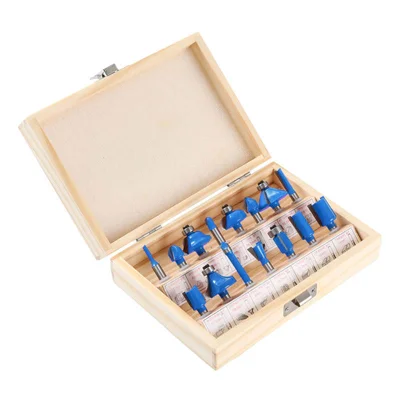
15-Piece Router Bit Set
Multi-size starter kit with carrying case
View on Alibaba →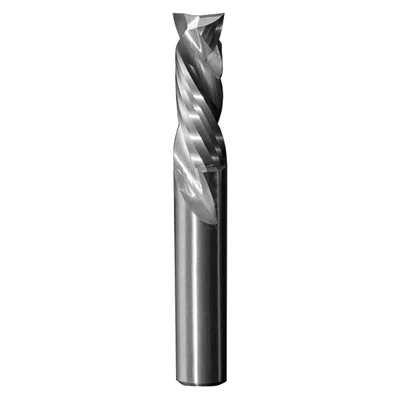
Compression Spiral Bits
Clean edges on plywood & MDF
View on Alibaba →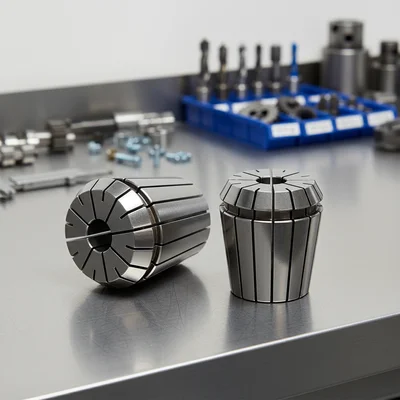
ER Collet Set
Precision holding, zero runout
View on Alibaba →As an Alibaba affiliate partner, we earn from qualifying purchases at no cost to you.