CNC Router Bits and Tool Selection · KB-037
CNC Cutting Length vs Reach: Avoiding Shank and Holder Collisions
Distinguish flute length, neck clearance, overall length and projection before selecting a long-reach cutter for deep CNC features.
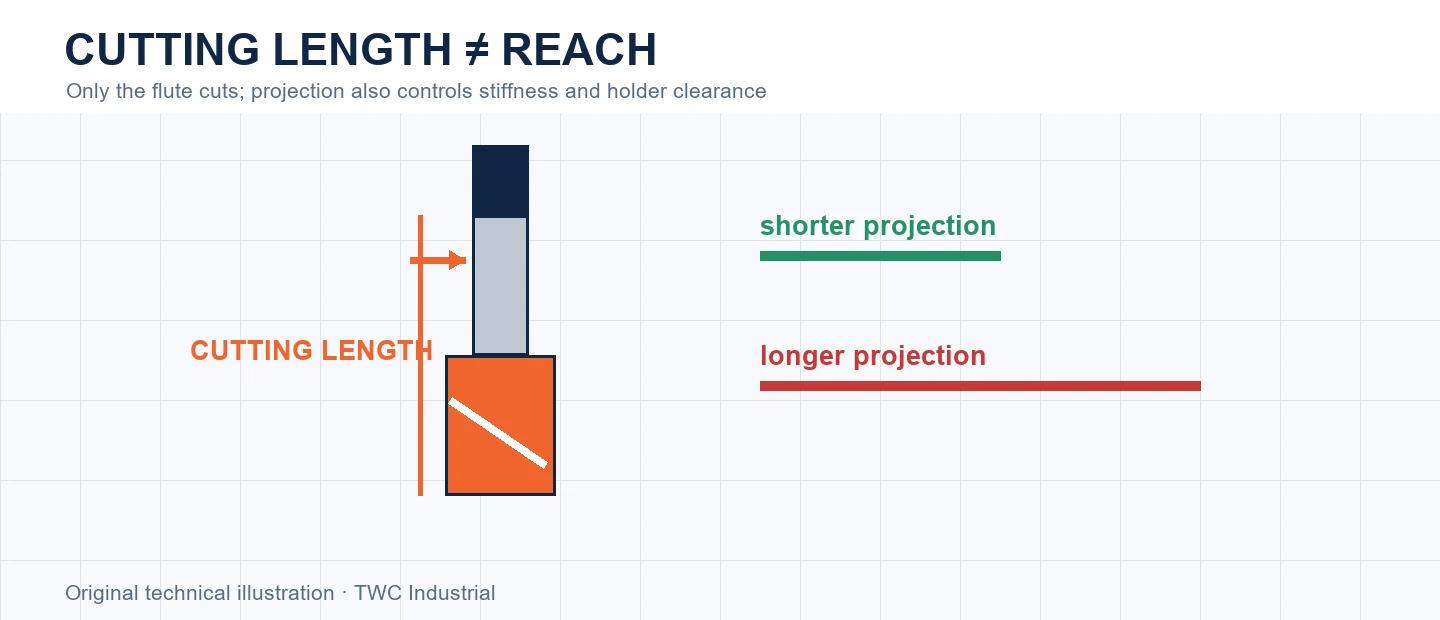
A long cutter is not automatically a long-reach solution. Cutting length describes usable flute, reach depends on neck and holder geometry, and projection is how far the installed tool extends. Each affects collision risk and stiffness differently.
Understand the physical relationship
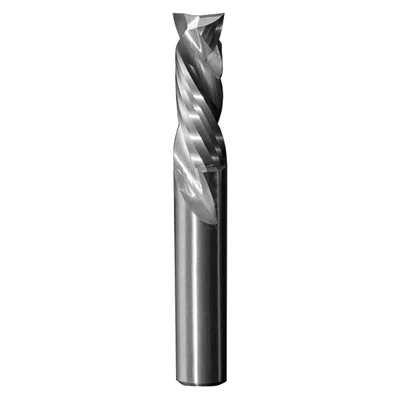
Only documented cutting edges should contact material. A relieved neck may pass a wall where a full-diameter shank cannot, but its limits come from the manufacturer. Extending a standard tool farther does not create more flute and increases leverage on the tool and spindle.
Connect geometry to the cut
Deep features require review at the top, wall and bottom. The tool tip may reach the floor while the collet nut strikes the stock. A longer setup can deflect, chatter or produce taper. Deep pockets also complicate chip evacuation.
Choose for the complete application
Choose the shortest, stiffest setup that clears the verified envelope. Check machine Z travel at clearance and depth. Simulate holder geometry and inspect entry paths because a safe final position does not prove the approach is clear.
Run a controlled comparison
Cut representative geometry in the intended material before committing valuable stock. Hold tool identity, projection, workholding and origin constant while changing one relevant variable. Record chips, sound, heat, edge condition and measured geometry. For cnc cutting length vs reach: avoiding shank and holder collisions, a completed path is not enough; the result must show that flutes cut the full depth while shank and holder remain clear. Keep the inspected coupon, photograph and CAM revision together.
Create a traceable tool record
Record manufacturer, part number, cutting diameter, shank, cutting length, flute form and measured projection. Add the tested material and operation rather than labeling the cutter only by color or drawer. Reach is a system property involving cutter, installation, holder, feature and machine travel. Do not transfer an unexplained offset or operating value to a visually similar tool.
Interpret the evidence before changing CAM
If the cut differs from expectation, separate tool geometry from machine calibration, material variation, workholding and engagement. Measure more than one feature and inspect whether error changes with depth, direction or time. A consistent size offset suggests a different investigation from a mark repeating once per revolution or heat appearing only in corners. For this topic, reach is a system property involving cutter, installation, holder, feature and machine travel. Correct the identified layer, repeat the controlled coupon and document the comparison instead of accumulating compensating settings whose purpose is no longer known.
Verify the full cutting envelope
Recalculate and simulate the cutter, shank and holder at the deepest feature, entry and retract. Confirm the physical tool matches the library and posted program. Review workholding, extraction, guarding and stop controls. A safe-looking centerline cannot prove the collet nut, dust shoe or released stock will remain clear.
Decision table
| Measure | Meaning | Risk |
| Cutting length | Usable flute | Shank rubbing |
| Neck reach | Clearance region | Strength limits |
| Projection | Installed extension | Deflection |
| Overall length | End-to-end size | Misread as reach |
Worked situation
A wall tapers only near the pocket bottom. Inspect whether the shank begins rubbing after flute length ends and reduce projection or select documented reach before changing wall offset.
Practical checklist
- Read dimensioned drawing.
- Measure installed projection.
- Model holder.
- Check evacuation.
Frequently asked questions
Can extra projection substitute for a long-reach tool?
No. It does not add cutting edge and may create unsafe retention or deflection.
Can a tool-library entry replace cutter documentation?
No. Confirm the exact cutter identity and manufacturer limits, then verify imported values for the actual machine and setup.
Can appearance alone prove a cutter is safe?
No. Isolate power before handling and inspect according to the cutter, collet, spindle and machine manufacturers’ procedures.
Sources and editorial use
Sources support the technical facts in this original explanation. Their text and images have not been republished.
- CNC Router Bit Selection Poster — Amana Tool
- The Router Way: Tool Selection and Chip Load — LMT Onsrud
- Woodworking eTool: Routers — U.S. Occupational Safety and Health Administration