CNC Router Fundamentals · KB-005
CNC Collets and Tool Runout: A Practical Setup Guide
Learn how collet size, cleanliness, tool insertion and the complete holding stack affect runout, finish and small-cutter life.
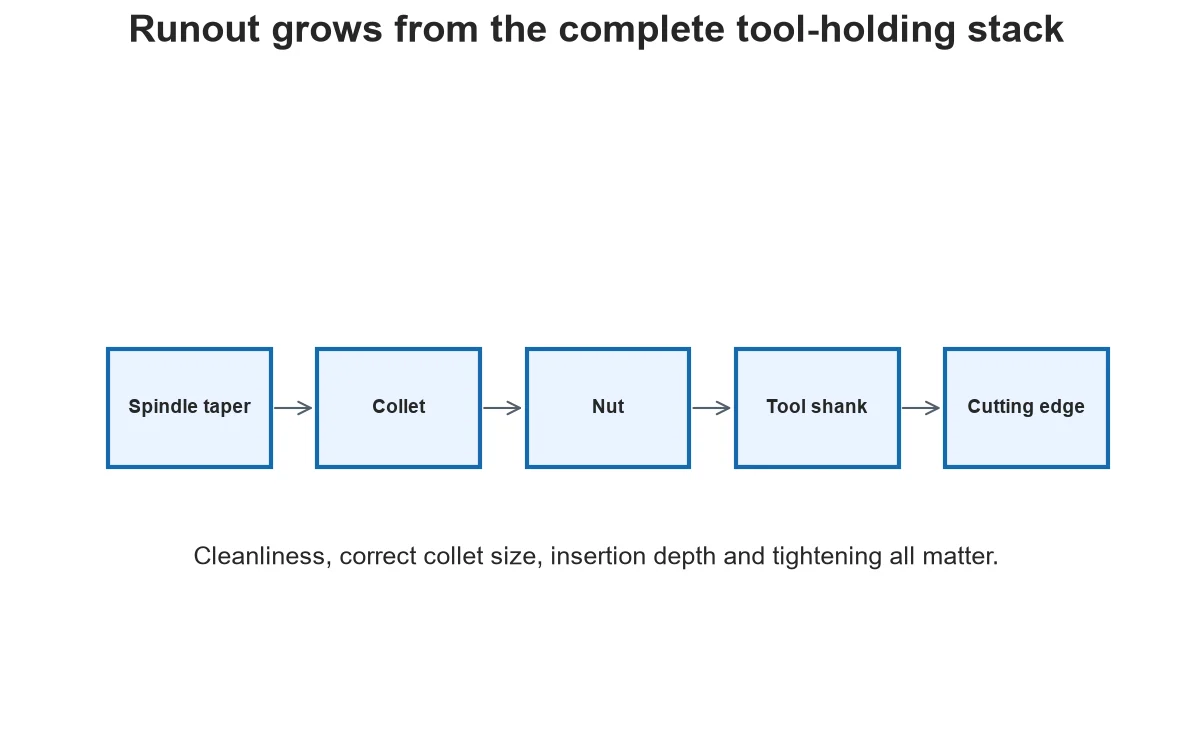
The cutter does not rotate directly from the motor; it is held through a stack of mating surfaces. Dust, a damaged collet, the wrong shank size or poor insertion can make the cutting edge orbit instead of rotating concentrically.
What runout changes
Runout makes one flute remove more material than the others. The overloaded edge can wear early, small tools can break and surface finish may show periodic marks even when programmed feed is correct.
Assembly discipline
Power down and isolate the machine. Remove chips from the taper, collet slots, nut and tool shank. Inspect for corrosion or raised damage. Seat the collet in the nut as designed, insert the shank sufficiently and tighten to the manufacturer's procedure.
Avoid poor insertion
Do not grip a cutter on the fluted section, and do not bottom the tool hard against an internal shoulder unless the holder design calls for it. Excessive projection increases bending and magnifies runout at the cutting edge.
A simple diagnostic
Measure a clean reference shank close to the holder and farther out, rotate and reseat components, then compare. Repeatability after reseating helps distinguish contamination, collet error, shank error and spindle error.
Separate total indicated runout from cutting performance
An indicator reading on a reference shank is a geometric observation, not a complete prediction of surface finish. Cutter manufacturing error, flute condition, spindle bearing behavior under speed and cutting force also matter. Measure close to the collet and farther out, rotate the spindle slowly by hand only under a safe isolated procedure, and repeat after reseating. If the high point follows the tool, suspect the shank or tool. If it remains at the spindle angle, inspect the collet, nut and spindle interfaces.
Treat the collet as a consumable precision component
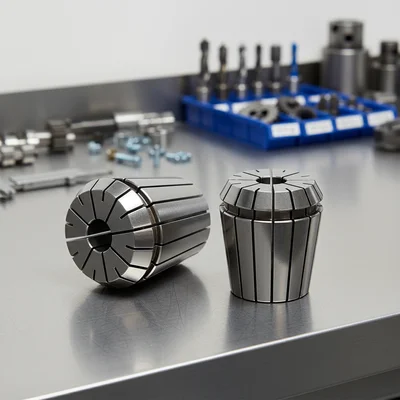
Collet slots collect fine dust and resin. Corrosion, a raised burr or repeated misuse can prevent even collapse. Store collets clean and protected, and avoid mixing nuts and collets when their systems require a specific assembly. A nominal quarter-inch shank is not interchangeable with six millimeters. The difference is small to the eye but large for a collet designed around a limited collapse range. Use the manufacturer's stated sizes and tightening procedure.
Control tool projection
Projection is the distance from the holder to the cutting region. Extra reach increases bending approximately much faster than many beginners expect and magnifies small angular errors. Use enough length to clear the job and fixture, but no more. Confirm that the collet grips a clean cylindrical shank rather than a transition or flute. For deep work, consider whether a longer flute or reduced holder clearance is actually suitable instead of pulling a standard cutter outward.
Decision table
| Finding | Possible source | Next controlled check |
| High near and far from collet | Taper, collet, nut or shank | Clean, reseat and substitute known reference |
| Low near, high farther out | Angular error or bent shank | Measure at multiple distances |
| Reading changes after every seat | Contamination or assembly | Inspect mating surfaces and procedure |
| Geometry looks good but finish is poor | Cutting edge, load or vibration | Inspect tool and cutting setup |
Worked situation
A 3 mm cutter breaks while larger cutters survive. Calculate the intended chip load, then measure runout relative to that chip thickness. Even a small absolute orbit can cause one flute to take most of the cut. Correct the holding problem before reducing feed until the tool rubs.
Practical checklist
- Isolate power before handling the tool.
- Match nominal collet and shank size.
- Clean and inspect every mating surface.
- Record projection and measured runout.
Frequently asked questions
Can a collet be overtightened?
Yes. Follow the holder manufacturer's torque and assembly guidance rather than using maximum force.
Why does runout matter more for small tools?
The same absolute error is a larger fraction of a small cutter's diameter and chip load.
Should worn collets be replaced?
Replace damaged, corroded or unreliable components rather than trying to tune around them.
Sources and editorial use
Sources support the technical facts in this original explanation. Their text and images have not been republished.
- Woodworking eTool: Routers — U.S. Occupational Safety and Health Administration
- Speeds and Feeds for New CNC Machinists — Autodesk Fusion