Machine Comparisons
Solenoid Valve vs Ball Valve for Industrial Use
Solenoid vs ball valve for industrial use: when to spec each, the hybrid setup smart plants use, and the 10-year cost math most engineers skip.Solenoid Valve vs Ball Valve
For Industrial Use
When to spec an electric solenoid, when to spec a manual ball valve, and the hybrid setup most plants quietly use to get the best of both — without burning out coils every six months.
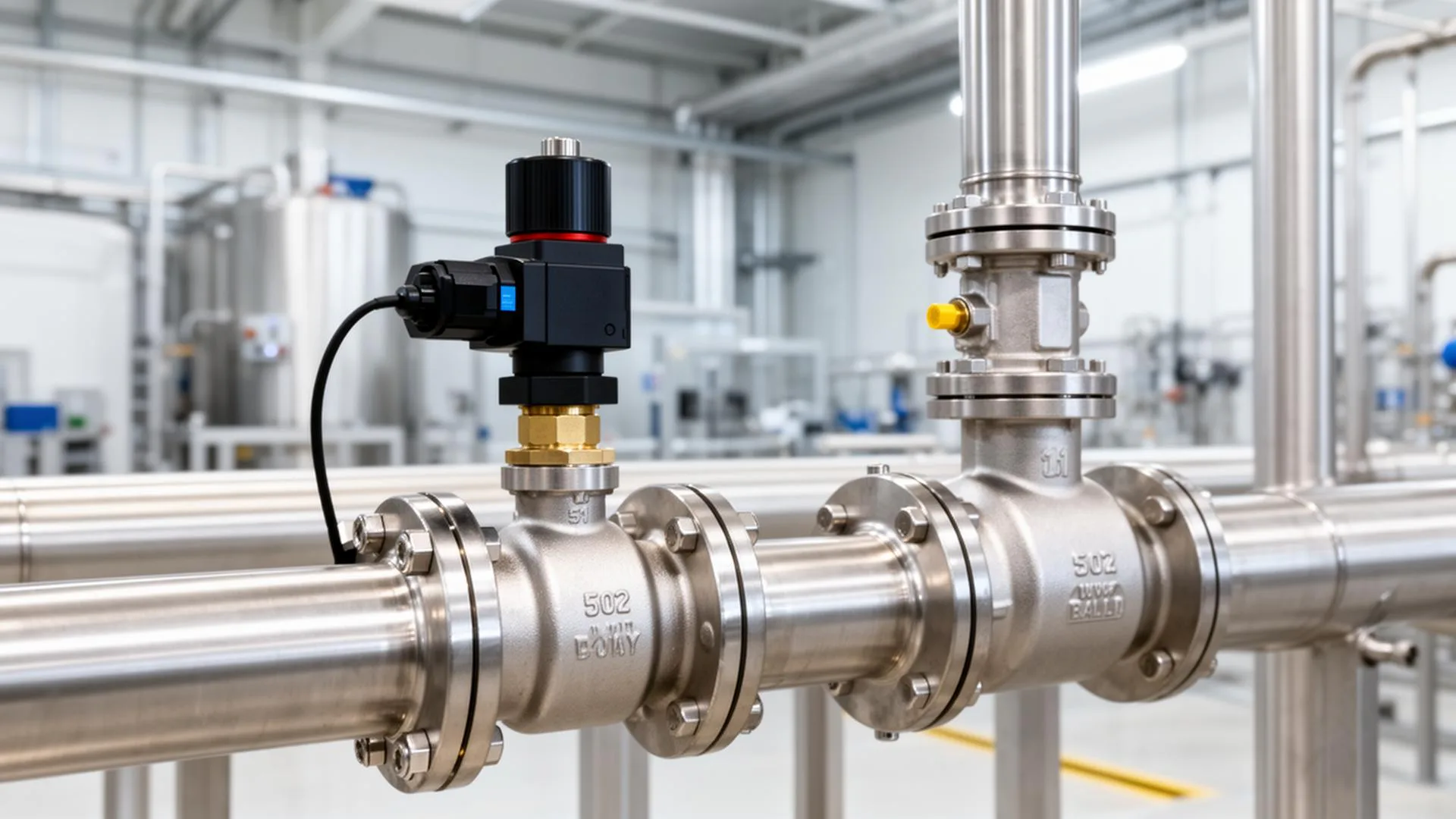
Solenoid valves are for automated, frequent on/off cycling — usually under 2" line size. Ball valves are for isolation, throttling-friendly shutoff, larger lines, and anywhere "click and forget" reliability matters more than electrical control. Most real plants use both, with a ball valve upstream of every solenoid as a manual isolator.
The solenoid vs ball valve industrial debate isn't really a debate — it's a misuse problem. Solenoids get installed where ball valves should go (and burn out under continuous duty), and ball valves get specified where automation was needed (and somebody ends up walking 200 feet every shift to crack one open). Both valves are excellent. Both are wrong in the other one's job.
This guide walks the actual selection criteria — pressure, media, cycle frequency, fail-safe behavior, line size, and total cost over 10 years — so you stop guessing and start specifying. It applies whether you're a maintenance lead replacing a failed unit, an engineer drawing a new P&ID, or a contractor sourcing parts for a build.
1. How Each Valve Actually Works
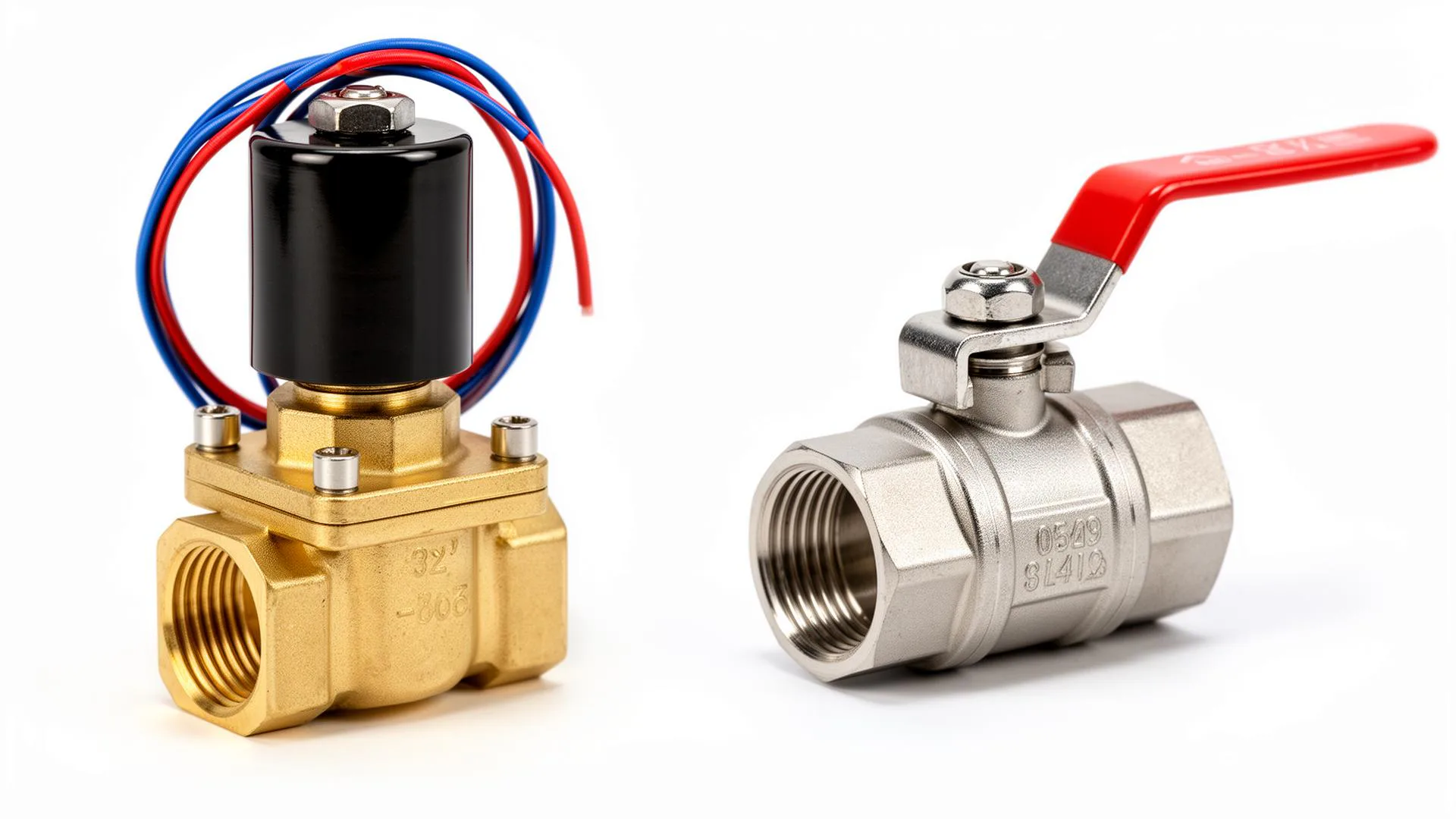
A solenoid valve is an electrically actuated on/off device. Apply voltage to the coil, magnetic force pulls a plunger off (or onto) a small orifice, and flow starts or stops in milliseconds. Most industrial solenoids are 2-way (on/off) or 3-way (diverter), in either direct-acting (works at zero pressure but limited to small orifices) or pilot-operated (uses line pressure to amplify force, allowing larger orifices but requiring a minimum pressure differential of typically 5 psi).
A ball valve is a quarter-turn manual (or actuated) shutoff. A bored stainless or brass ball rotates inside a seat — 90° from open to closed. No coil, no electronics, no pressure differential needed. You can throttle them in a pinch (though full-port balls are designed for full-open or full-closed, not flow regulation), and they handle slurries, viscous fluids, and dirty media that would clog a solenoid orifice in a week.
If you're sizing the line that feeds these valves, the TWC pipe pressure drop calculator and pump power & efficiency calculator let you confirm there's enough pressure drop budget left after the valve — solenoid pilot-operated units fail the moment you fall under their minimum differential.
2. Side-by-Side Spec Comparison
| Spec | Solenoid Valve | Ball Valve |
|---|---|---|
| Actuation | Electric (24V DC, 110/220V AC) | Manual lever, or actuated (electric/pneumatic) |
| Switching speed | 10–50 ms | ~1 sec manual; 2–10 sec actuated |
| Typical line size | ⅛" – 2" | ¼" – 12"+ (any size) |
| Pressure rating | Up to ~360 psi (varies by model) | Up to 6,000+ psi (high-pressure rated) |
| Flow capacity (Cv) | Lower — orifice-restricted | High — full-port = no restriction |
| Cycle life | ~1–10 million cycles (coil-limited) | ~50,000–250,000 cycles (seat-limited) |
| Dirty/viscous media | Poor — clogs orifice | Excellent — full bore |
| Power required | 5–30 W continuous when energized | Zero (manual) |
| Fail-safe behavior | NC = closes on power loss; NO = opens | Stays in last position |
| Typical unit cost | $25–$300 (industrial, ½") | $15–$200 (industrial, ½") |
Solenoid wins on speed and automation. Ball valve wins on flow, pressure, line size, and tolerance to bad media. Pick by which axis matters more for your application — not by which one is cheaper this week.
3. When to Use a Solenoid Valve
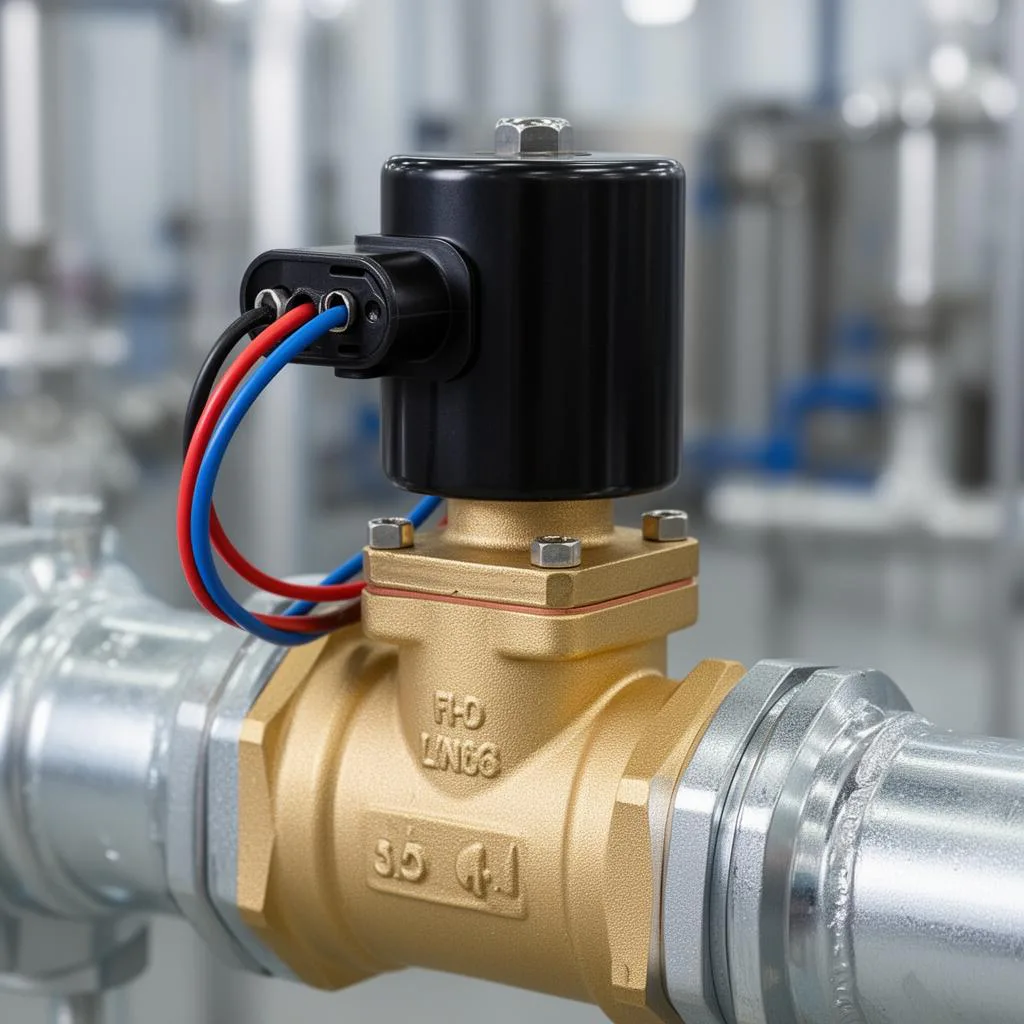
Solenoids exist for one reason: a PLC, timer, sensor, or operator panel needs to switch flow on or off without anyone walking up to the pipe. If your application doesn't need that, you don't need a solenoid — and you'll save 30–40% in initial cost plus all the future coil replacements by going with a manual ball.
Spec a solenoid when:
- Automated dosing or batching — chemical injection, water filling, lubricant dispensing on a CNC. Anywhere a controller needs precise on/off timing measured in milliseconds.
- Safety shutoff with fail-safe — gas trains, fuel lines, emergency drain. A normally-closed (NC) solenoid drops shut on power loss; a manual valve does nothing.
- High-frequency cycling — pneumatic pulse cleaning on baghouses, irrigation zones, vending equipment. Easily thousands of cycles per day, where any actuated ball valve would chew through its seats in months.
- Compact and remote — clean pneumatics, small water lines, equipment skids where you can run wire but not a control air line.
For most general-purpose ½" or ¾" automated water and air lines, a quality 24V DC unit will run for years if it's sized correctly. A standard ½" brass solenoid valve (12V/24V DC) runs $20–$50 and handles water, air, light oil, and most non-corrosive media to ~150 psi. For corrosive or food/pharma duty, step up to a stainless steel solenoid valve — Viton or EPDM seats depending on chemistry.
If you're switching AC voltage from a panel, a 110V AC normally-closed solenoid valve drops in directly without a separate DC power supply — the right choice for retrofits and small machine builds. And always keep a couple of replacement solenoid coils on the shelf, because the coil is what fails first — never the valve body.
Don't spec a solenoid when: you have dirty water, slurry, anything with particulates above ~200 microns, viscous fluids over ~50 cSt, or any application where the valve sits energized 24/7 (the coil heat will eventually cook it). For continuous-duty applications, switch to a motorized actuated ball valve — covered in the next section.
4. When to Use a Ball Valve
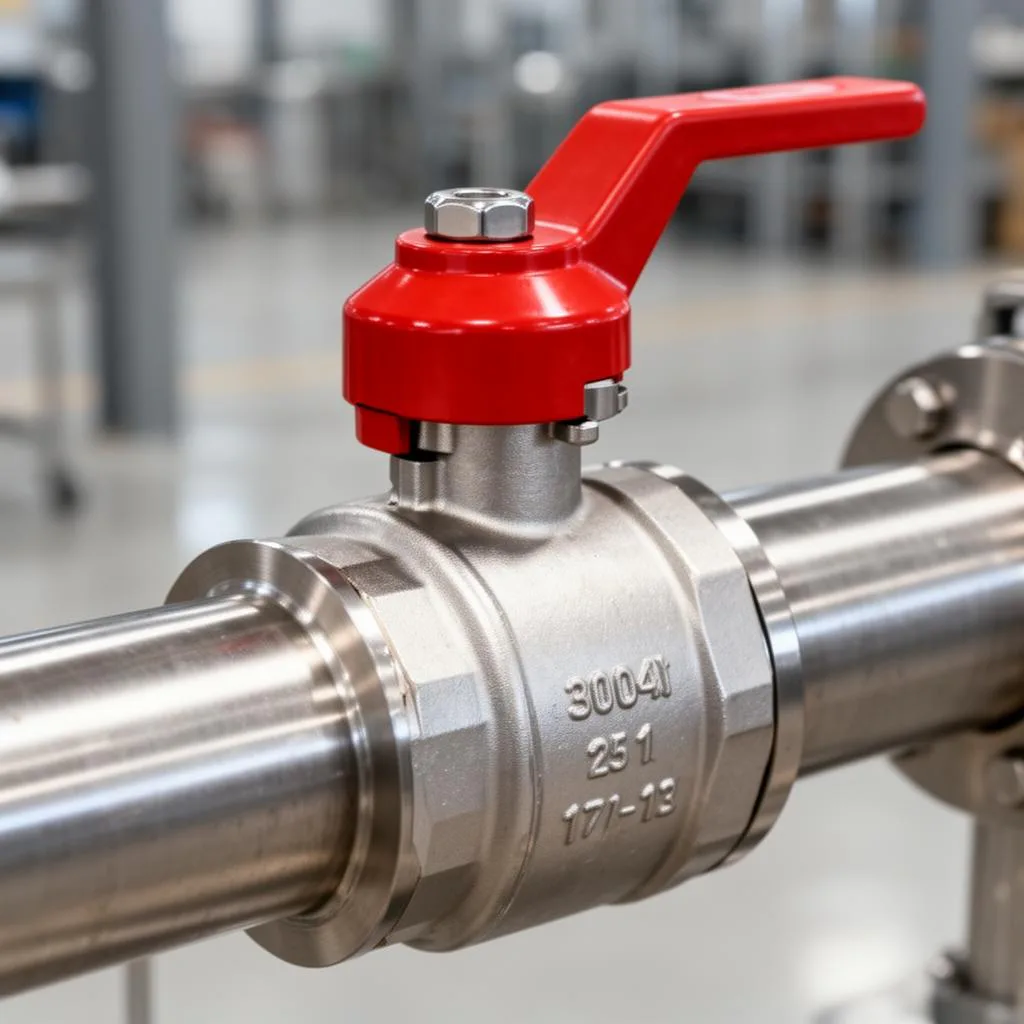
Ball valves are the workhorse of every industrial plant. They isolate, they shut off, they handle whatever the pipe is carrying, and they last for decades with zero electricity. The only question is whether you want a manual lever or an actuator on top — and that's a separate decision from "solenoid or ball."
Spec a ball valve when:
- Isolation and maintenance shutoff — every pump, every filter, every solenoid in the plant should have a ball valve upstream of it. This is the single most common use, and it's where the "ball valve before every solenoid" rule comes from.
- Larger line sizes (above 2") — pilot-operated solenoids exist up to 3" but they're expensive, fragile, and need consistent line pressure. A 3" or 4" ball valve, manual or actuated, is the obvious choice.
- High pressure or high temperature — anything above 250 psi or ~180°F really wants a metal-seated or PTFE-seated ball valve, not a solenoid.
- Dirty, viscous, or slurry media — the full-port bore is the only thing that won't clog. Solenoids will fail in a week on the same line.
- Infrequent operation — drain valves, sample ports, system isolations. If it gets touched twice a year, manual ball is correct. Adding electronics adds failure modes for no benefit.
For general industrial use, a 1" stainless steel full-port ball valve in 304 or 316 SS handles water, steam, oil, gas, and most chemicals at 1,000+ psi for under $40. For high-frequency duty cycles (the situation where solenoids fail), a motorized ball valve (24V actuated) gives you the same electrical control as a solenoid with 10× the cycle life on dirty media — and it's the right choice for any line larger than 1".
For high-pressure hydraulic and gas service, a high-pressure ball valve (6,000 psi rated) in forged stainless covers most hydraulic systems, test stands, and oilfield duty. Solenoids simply don't exist at these ratings.
For installation, never overlook the right tools — a poorly torqued ball valve leaks at the threads no matter how good the valve is. Keep a quality heavy-duty pipe wrench set and quality PTFE thread tape on the install cart, and use the plumbing pipe length calculator to spec your run before you cut anything.
5. The Hybrid Setup Most Plants Actually Use
Walk any well-run plant and look at any solenoid valve in the pipe rack. Within 18 inches upstream, you'll see a manual ball valve. There's a reason this is universal:
- Maintenance isolation — when the solenoid coil fails (and it will, eventually), you crack the ball closed, swap the solenoid in five minutes, and reopen. No system shutdown, no draining the line.
- Manual override — when the PLC is down, the panel is being rewired, or the controller is locked in a bad state, the ball valve gets you flow without electronics.
- Debris protection — pair the ball with an inline strainer and the solenoid downstream sees clean media. Coil life triples.
This isn't redundancy for the sake of it — it's recognition that the solenoid is the failure-prone part of the assembly and the ball is the one you can rely on at 3 AM. The combined cost is maybe $15 more than the solenoid alone, and it pays for itself the first time something breaks.
6. 10-Year Total Cost: The Honest Math
Sticker price tells you almost nothing about real cost. Here's a typical ½" line, automated cycling at moderate frequency (~1,000 cycles/day, water service):
| Cost Item | Solenoid Valve | Motorized Ball Valve |
|---|---|---|
| Initial unit cost | $45 | $95 |
| Install labor (½ hr) | $30 | $30 |
| Coil/motor replacements (10 yr) | 3 × $25 = $75 | 0–1 × $40 = $0–40 |
| Power consumption (energized 50% duty) | ~$45 (10 W avg) | ~$5 (motor only when actuating) |
| Service labor on failures | 3 × $50 = $150 | 0–1 × $50 = $0–50 |
| 10-year total | ~$345 | ~$170–220 |
Solenoids look cheaper Day 1 and end up more expensive Year 5. This is exactly why heavy-cycle automation has shifted toward motorized ball valves over the past decade — same control, far better long-haul economics. Solenoids still win when you need millisecond response (no actuated ball can match this) or when the line is small enough that a motorized ball is overkill.
7. Quick Selection Decision Tree
- Do you need automation? If no → ball valve, manual lever. Done.
- Need fast on/off (under 1 second)? → solenoid valve.
- Line larger than 2"? → motorized ball valve (solenoids get prohibitively expensive past 2").
- Cycling more than 500 times per day? → motorized ball valve (solenoid coils overheat under continuous duty).
- Dirty media, slurry, viscous fluid, or particulates? → ball valve. No exceptions.
- Pressure above 300 psi? → ball valve (or check the solenoid spec sheet very carefully).
- Need fail-safe close on power loss? → solenoid (NC) or motorized ball with spring return.
8. Bottom Line
Solenoid valves win on: millisecond switching, small line automation, fail-safe shutoff, low cost when sized correctly.
Ball valves win on: flow capacity, pressure rating, line size flexibility, dirty media tolerance, manual reliability, long-term cost on heavy cycling.
Smart plants use both: manual ball upstream of every solenoid for maintenance and override, motorized ball valves replacing solenoids on heavy-cycle automated lines, and dedicated solenoids reserved for the small-line, fast-switching applications they were built for.
The selection mistake we see most often isn't picking the wrong technology — it's picking solenoid because it was on the shelf, instead of asking whether the application actually needed electrical control at all. Half the failed solenoids in maintenance shops should never have been solenoids in the first place. Start with the question "does anything need to switch this without a hand on it?" and the rest of the spec falls out naturally.
Top Picks for CNC Router Tooling
Professional-grade carbide tools ready to ship. Click any product to view details and pricing.
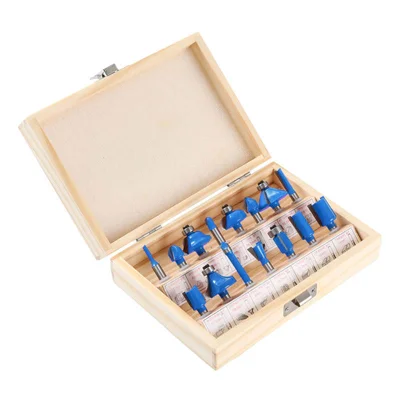
15-Piece Router Bit Set
Multi-size starter kit with carrying case
View on Alibaba →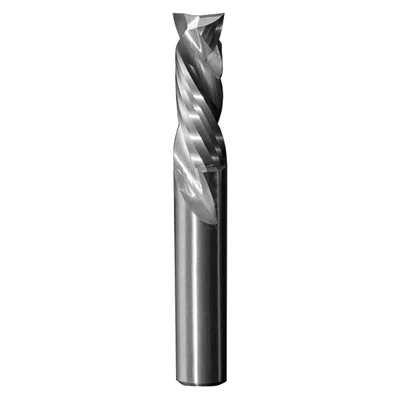
Compression Spiral Bits
Clean edges on plywood & MDF
View on Alibaba →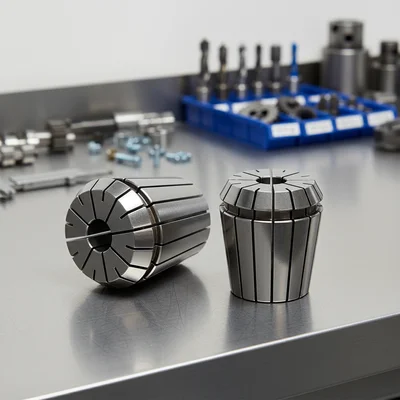
ER Collet Set
Precision holding, zero runout
View on Alibaba →As an Alibaba affiliate partner, we earn from qualifying purchases at no cost to you.