CNC Reaming Calculator
Calculate recommended spindle speed (RPM), feed rate (IPM), stock allowance per side, and cycle time for precision reaming. Covers HSS and carbide reamers across 14 common workpiece materials with hole tolerance guidance.
Free Tool · RPM & Feed · Stock Allowance · HSS & Carbide · H6/H7/H8 Tolerance · Inch & MetricH7 is most common for shaft/bearing fits. H6 requires more care with stock allowance and coolant.
| Reamer Parameters | |
| Reamer diameter | — |
| Reamer type | — |
| Workpiece material | — |
| Tolerance class | — |
| Speeds & Feeds | |
| Cutting speed (SFM) | — |
| Spindle speed (RPM) | — |
| Feed per revolution | — |
| Feed rate | — |
| Stock Allowance | |
| Stock allowance per side | — |
| Total stock on diameter | — |
| Pre-drill / bore diameter | — |
| Cycle | |
| Hole depth | — |
| Number of holes | — |
| Cycle time per hole | — |
| Total cycle time | — |
Reaming removes a small amount of stock (allowance per side) left from the pre-drill or boring operation. Too little stock causes chatter and poor finish; too much stock overloads the reamer and produces oversized holes.
How CNC Reaming Parameters Are Calculated
Reaming is a precision sizing operation — not a material removal operation. The reamer follows the existing hole geometry and removes only a thin layer of stock to bring the hole to final diameter with tight tolerance (H6–H8) and good surface finish (Ra 32–125 µin). Getting the stock allowance, speed, and feed right is critical: too little stock causes the reamer to rub and chatter; too much overloads the cutting edges and produces oversized, tapered holes.
1 Cutting Speed (SFM)
Reamers run at much lower speeds than drills or endmills — typically 25–40% of the drilling speed for the same material. Higher speeds cause the reamer to generate heat, which expands the tool and produces oversized holes. HSS reamers run slower; carbide reamers can run 2–3× faster.
2 Feed Rate
Reamers use a feed per revolution (IPR) that is much higher than drills — typically 3–5× the drilling feed for the same diameter. High feed rate prevents the reamer from "spinning in place" and rubbing. The IPM feed rate is IPR × RPM.
3 Stock Allowance
Stock allowance (per side) is the material left by the pre-drill or bore for the reamer to remove. It must be enough to allow all cutting edges to engage, but not so much that cutting forces exceed the reamer's design limits.
4 Tolerance Classes
ISO hole tolerance classes define the allowable deviation from nominal diameter. H7 is the most common — it fits standard bearing and shaft fits. H6 requires tighter process control. H8 is used for general clearance fits where some variation is acceptable.
Reversing a reamer (running it back out of the hole in reverse rotation) is the fastest way to destroy a precision reamer. The cutting edges are designed to cut in one direction only. Reversing causes them to drag across the newly finished bore surface, creating built-up edge, chipping the flutes, and ruining the hole finish. Always retract the reamer in the forward (cutting) direction — program G85 (boring/reaming cycle) rather than G73 (peck drill cycle). On manual machines, keep the spindle rotating forward while retracting by hand or use the quill.
Worked Examples
Stock/side = 0.0025"
Pre-drill = 0.4950"
Stock/side = 0.18mm
Pre-drill = 11.64mm
Stock/side = 0.0030"
Pre-drill = 0.7440"
Reaming Speed & Feed Reference Table
| Material | HSS SFM | Carbide SFM | Feed Factor (/in D) | Stock/Side Factor | Coolant |
|---|---|---|---|---|---|
| Aluminum 6061/7075 | 150–250 | 400–600 | 0.012–0.018 | 1.0–2.0% | Flood or air blast |
| Aluminum Cast | 100–180 | 300–500 | 0.010–0.015 | 0.8–1.5% | Flood or dry |
| Mild Steel 1018 | 40–60 | 120–180 | 0.004–0.007 | 0.4–0.7% | Flood (soluble oil) |
| Alloy Steel 4140 | 30–50 | 90–150 | 0.003–0.006 | 0.3–0.6% | Flood (sulfurized) |
| Free-Machining 12L14 | 60–80 | 180–240 | 0.006–0.009 | 0.5–0.8% | Flood |
| Stainless 304/316 | 25–40 | 75–120 | 0.003–0.005 | 0.3–0.5% | Heavy flood |
| Gray Cast Iron | 50–70 | 150–210 | 0.005–0.008 | 0.4–0.7% | Dry or air blast |
| Titanium Ti-6Al-4V | 15–25 | 45–75 | 0.002–0.004 | 0.2–0.4% | High-pressure flood |
| Inconel 718 | 10–20 | 30–60 | 0.0015–0.003 | 0.15–0.3% | Heavy flood |
| Copper / Brass | 70–100 | 210–300 | 0.007–0.010 | 0.6–1.0% | Dry or light oil |
Frequently Asked Questions
Related CNC Calculators
Top Picks for CNC Router Tooling
Professional-grade carbide tools ready to ship. Click any product to view details and pricing.
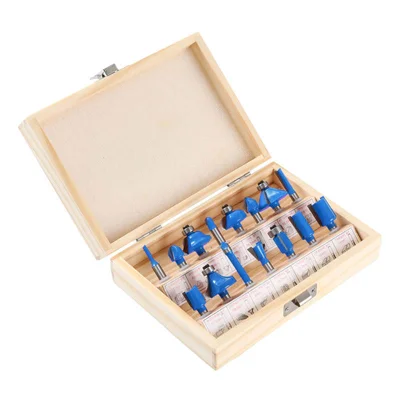
15-Piece Router Bit Set
Multi-size starter kit with carrying case
View on Alibaba →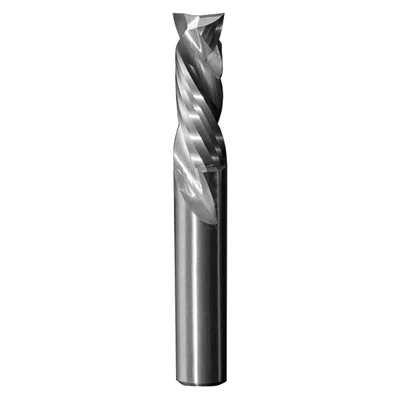
Compression Spiral Bits
Clean edges on plywood & MDF
View on Alibaba →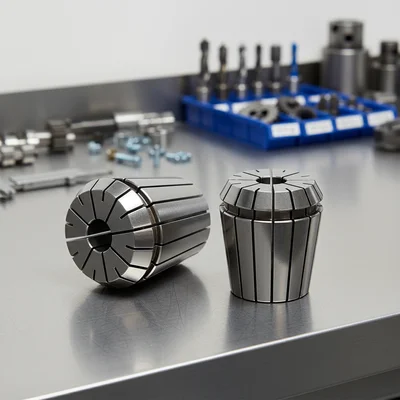
ER Collet Set
Precision holding, zero runout
View on Alibaba →As an Alibaba affiliate partner, we earn from qualifying purchases at no cost to you.