Machine Comparisons
Fiber Laser vs CO2 Laser: Which Should You Buy?
Fiber laser vs CO2 laser compared: cutting speed, materials, running cost, and ROI. A clear buyer's guide to help you pick the right machine.Fiber Laser vs CO2 Laser Which one should you actually buy? An honest, no-jargon comparison for shop owners.
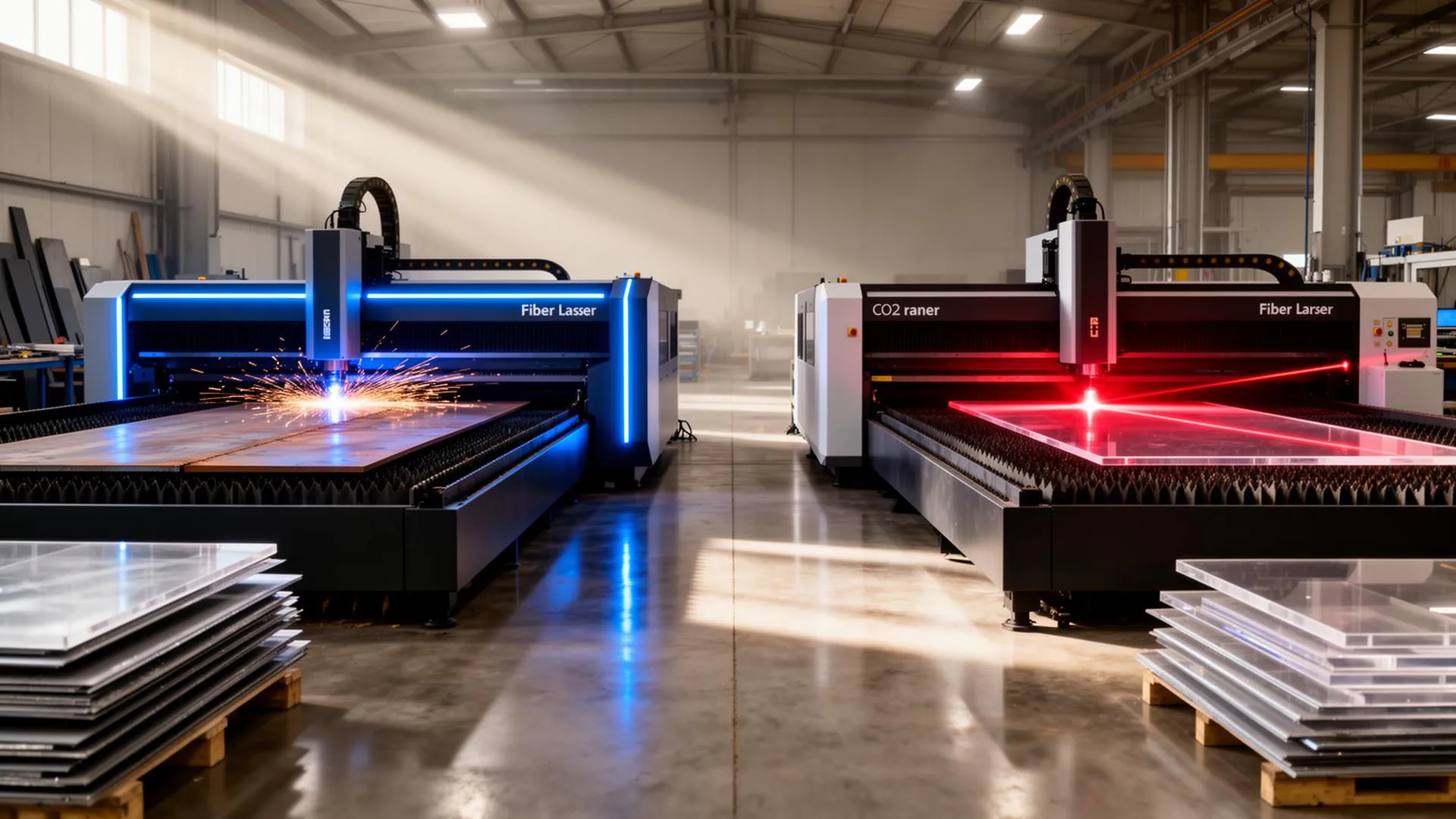
Fiber laser wins if you cut metal — period. CO2 laser wins for wood, acrylic, leather, fabric, and engraving work.
If you cut both, most shops today buy fiber first and keep an older CO2 for non-metal jobs. Read on for the numbers behind that decision.
Top recommendations before you read further
Fiber Laser Cutters
Stainless, mild steel, aluminum · Up to 20 mm cut
CO2 Laser Cutters & Engravers
Wood, acrylic, leather, glass, fabric
Desktop Laser Engravers
For makers & job shops getting started
What's actually different between these two technologies
Most articles describe how fiber and CO2 lasers work at a physics level. This one assumes you already know the basics and focuses on what matters when you're writing the check: which machine fits your material mix, your production volume, and your shop floor. If you're still mapping the broader CNC landscape first, start with our in-depth guide to the 5 main CNC machines.
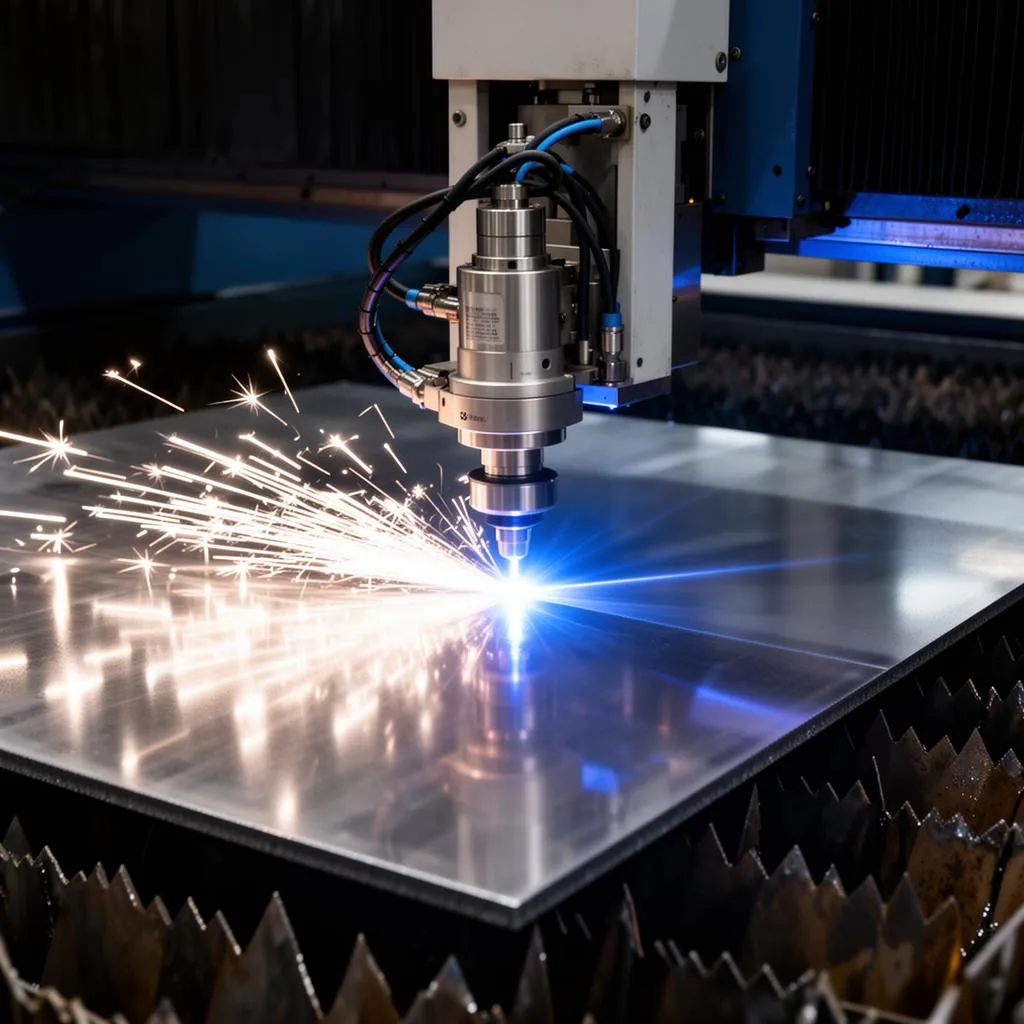
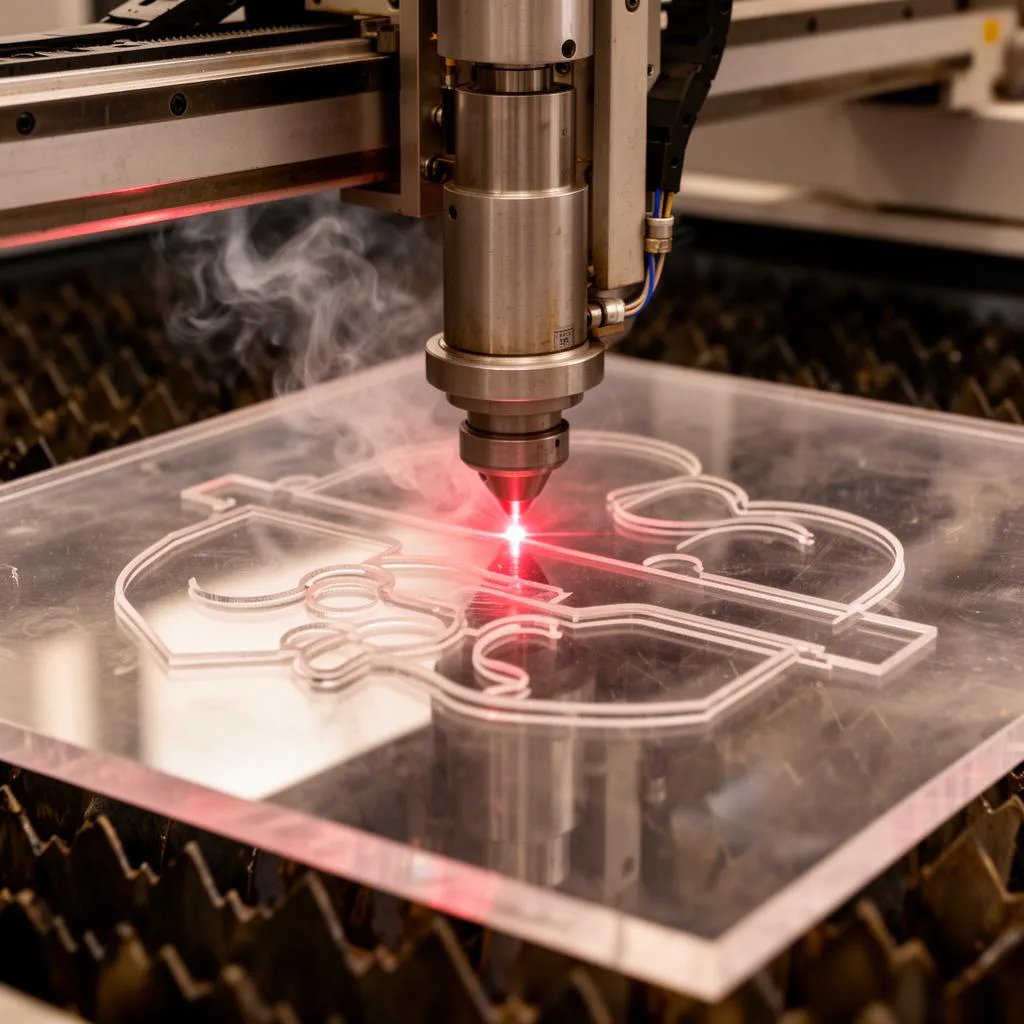
The key difference isn't power. It's wavelength. Fiber's 1064 nm reflects off acrylic and absorbs into metal. CO2's 10,600 nm does the opposite. That single fact decides 90% of buying decisions.
The comparison that actually matters
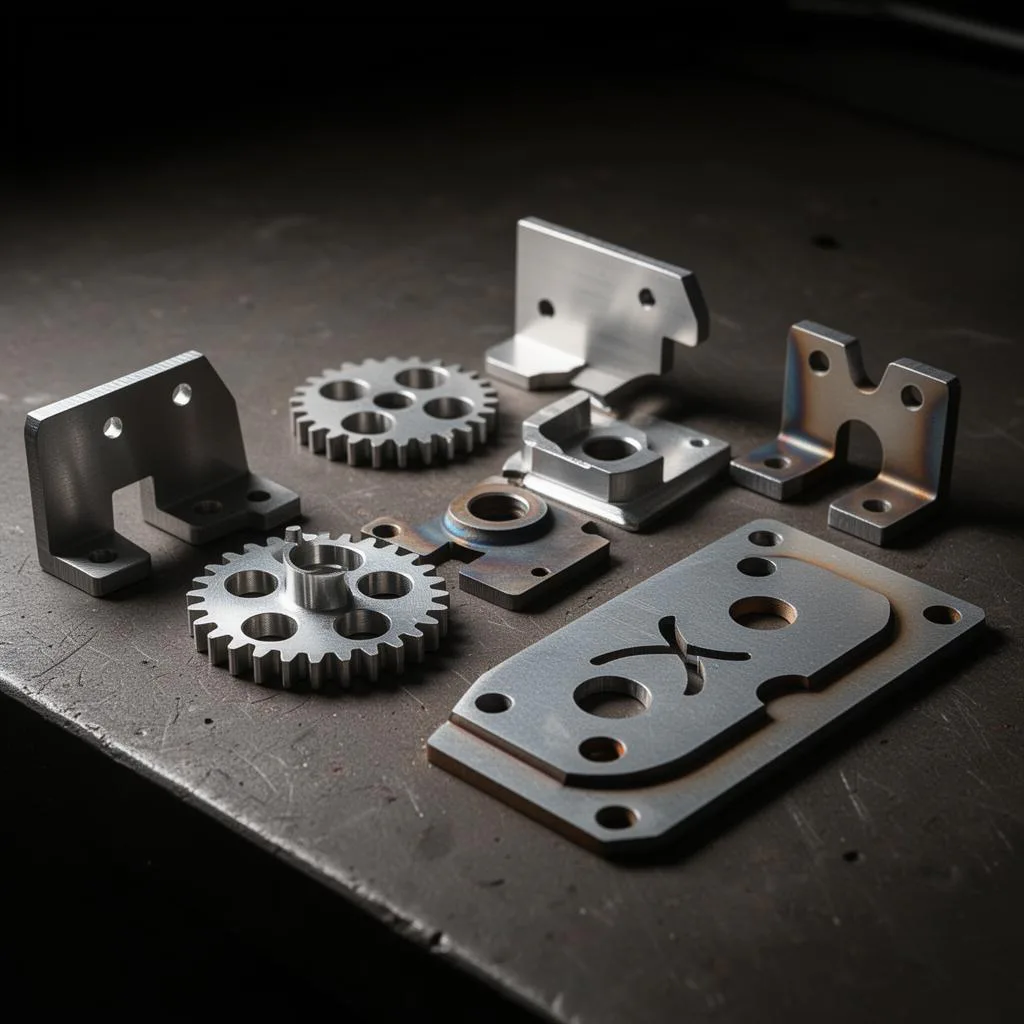
Why fiber dominates metal fabrication
This is the detail most buyers miss. Fiber lasers don't just cut metal faster — they cut reflective metals that CO2 simply cannot handle: copper, brass, aluminum, galvanized steel.
A CO2 beam bounces off a polished aluminum surface like a mirror. That's not a tuning issue — it's physics. The 10,600 nm wavelength is wrong for the material. Fiber's 1064 nm wavelength is absorbed cleanly, which is why every modern sheet metal job shop runs fiber today.
The second factor: edge quality on thin material. Fiber produces a narrower kerf (0.1–0.3 mm) versus CO2 (0.3–0.5 mm), which means tighter tolerances, less waste, and parts that drop into assembly without secondary deburring.
For prototyping plastic enclosures or engraving wood, CO2 is meaningfully better. For anything metal, fiber isn't marginally better — it's a different category. See our full review of the HN heavy-metal fiber laser cutter for a real-world spec walkthrough.
Which one is right for your shop?
When metal is the job.
- You cut sheet steel, stainless, or aluminum daily
- You need tight tolerances on thin gauge (under 6 mm)
- Production runs are repeatable — not one-off prototypes
- You want the lowest cost-per-part over a 10-year horizon
- You handle reflective metals (copper, brass, galvanized)
When versatility wins.
- You cut wood, acrylic, leather, fabric, or rubber
- Engraving and rastering are core to your business
- Budget is under $40K and metal isn't the focus
- You make signs, awards, packaging, or prototypes
- You need flame-polished acrylic edges out-of-the-box
The 5-year total cost of ownership
Sticker price tells you almost nothing. What matters is total cost over the life of the machine — power, gas, consumables, maintenance, and source replacement. Here's the math for a typical job shop running 40 hours a week.
Fiber's higher upfront cost gets repaid by lower power, no tube replacement, faster cycles, and higher resale. For a shop cutting 200+ hours of metal per month, fiber breaks even against CO2 in roughly 18–28 months. To pressure-test these numbers against your own jobs, run your stock through our sheet metal weight calculator and cross-check thicknesses with the sheet metal gauge chart.
If you cut mostly non-metals, the math reverses. CO2's lower upfront cost wins, and the speed advantage of fiber is irrelevant on materials it can't process. And if you're importing the machine, factor duties early — see our breakdown of US import duties on machinery from China and Taiwan and how to calculate landed cost before you compare quotes.
Wall-plug efficiency and operating-cost ranges cross-checked against published industry data from FSM Direct and Bodor Laser.
Common questions from buyers
Can a fiber laser cut wood or acrylic?
What thickness can a 1.5 kW fiber actually cut?
How long does a fiber laser source actually last?
Is a Chinese fiber laser as good as a German one?
Do I need a separate chiller and gas supply?
What about hybrid fiber-CO2 machines?
The bottom line.
If you cut metal — even occasionally — buy fiber. The speed, the lower running cost, the ability to handle reflective metals, and the maintenance-free source all compound over a 10-year ownership window. Modern entry-level fiber machines start under $40K, which puts them in reach of any serious job shop.
If your work is wood, acrylic, leather, fabric, signage, or engraving, buy CO2. Don't be tempted by the fiber spec sheet. The right tool for the material always beats the more powerful tool for the wrong material.
And if you're cutting heavy plate (over 25 mm) or structural steel, neither laser is your best answer — look at CNC plasma cutting or punch & shear systems instead.
Either way, request sample cuts on your actual material before you sign. Spec sheets lie. Sample cuts don't.
This guide is published by TWC Industrial. We may earn a referral fee from partner manufacturers when you request a quote, at no extra cost to you. We only feature equipment we'd specify for our own clients.
Shop Ball Nose End Mills
Long-shank carbide cutters for 3D contouring, die finishing, and sign carving.
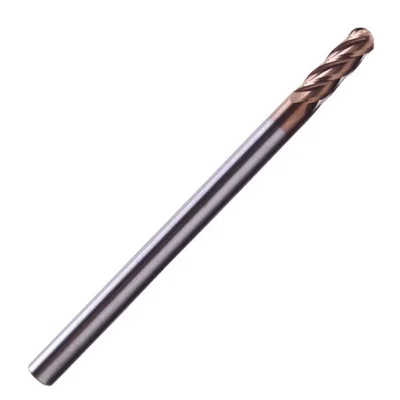
Ball Nose End Mill
R0.25–R8mm, 2/4 flutes, multiple coatings
View on Alibaba →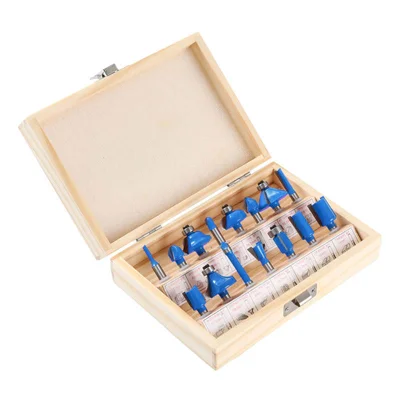
15-Piece Router Bit Set
Multi-size starter kit
View on Alibaba →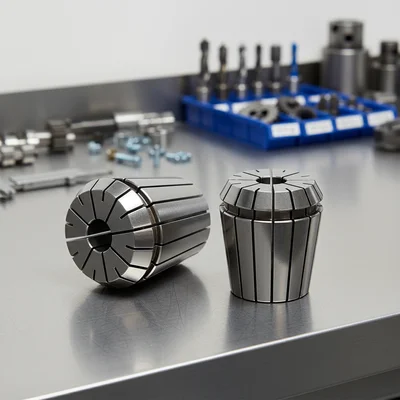
ER Collet Set
Precision tool holding
View on Alibaba →As an Alibaba affiliate partner, we earn from qualifying purchases at no cost to you.