
As a business owner in the food and beverage sector, you’re constantly navigating the balance between operational efficiency, customer satisfaction, and sustainability. In an era where disposable packaging faces scrutiny, investing in the right production equipment can transform your operations. Enter the High-Speed Newest Fully Automatic Double Wall Paper Cup Making Machine from GuoHao, supplied by Wenzhou Qichen Trading Co., Ltd. This machine isn’t just a piece of equipment—it’s a strategic asset designed to produce premium double-wall paper cups at 120 pieces per minute, catering to sizes from 3 to 16 ounces. Priced between $32,000 and $33,000 for orders of one to two sets (with discounts for three or more), it’s positioned as a mid-range option for entrepreneurs scaling up from small-batch production.

In this guide, we’ll break down the machine’s specifications, explore its suitability for various business models, highlight insights from buyer reviews, and provide market context to help you decide if it’s the right fit. Our aim is neutral and informative: no hype, just facts and analysis to empower your decision-making. By the end, you’ll have a clear understanding of how this machine could integrate into your workflow, backed by real-world data and trends. Let’s dive in.
Understanding Double Wall Paper Cups: Why They Matter for Your Business
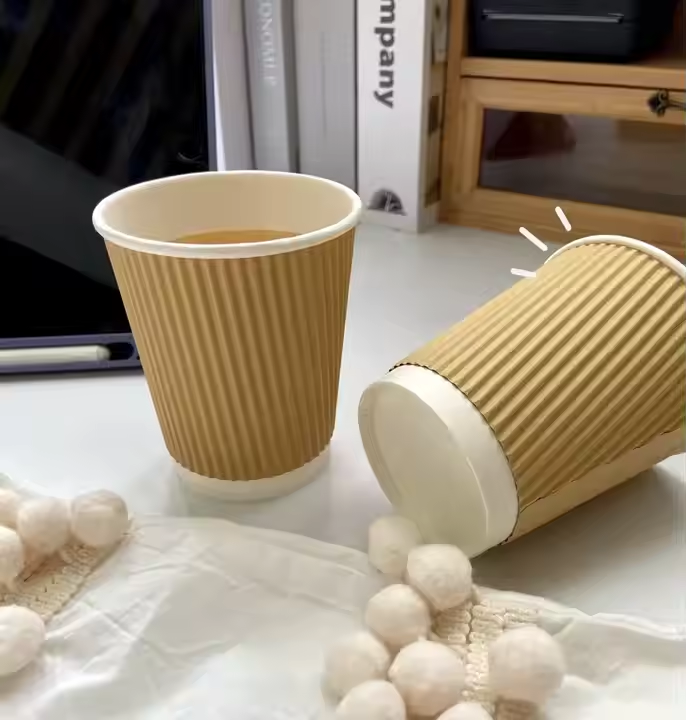
Before we examine the machine, it’s essential to grasp the product it produces. Double wall paper cups consist of two layers of paperboard with an insulating air pocket in between, bonded via adhesive. This design addresses key pain points in disposable beverage packaging: heat retention and hand comfort. Unlike single-wall cups, which often require sleeves (adding 10-20% to material costs and waste), double wall cups eliminate the need for extras, reducing overall expenses by up to 15% per unit.
From a business perspective, the benefits are multifaceted. First, superior insulation keeps hot drinks (like coffee or tea) at optimal temperature for 20-30% longer, enhancing customer experience. Studies show that beverages cooling too quickly lead to 25% higher dissatisfaction rates in quick-service settings. Cold drinks stay chilled without condensation, making these cups versatile for iced lattes or smoothies. Second, durability minimizes leaks and collapses—common issues with single-wall options that can result in 5-10% product loss from spills. This reliability boosts your brand’s reputation, as customers associate sturdy packaging with quality service.
Sustainability is another compelling angle. Double wall cups use biodegradable paper (typically 180-350gsm single-PE coated), aligning with global shifts away from polystyrene. In regions like the EU and parts of Asia, plastic bans have driven a 40% uptick in paper-based alternatives. Businesses adopting these cups can market them as eco-friendly, appealing to 70% of consumers who prefer sustainable brands, per recent surveys. However, note the trade-offs: they’re 20-30% heavier than single-wall cups, increasing shipping costs slightly, and the inner PE lining requires separation for full recyclability—though compostable PLA options are emerging.
For entrepreneurs, the real value lies in profitability. Producing in-house cuts per-cup costs from $0.10 (outsourced) to $0.04-0.06, with margins improving at scale. If your cafe sells 500 cups daily, that’s $20-30 in daily savings. But suitability depends on your volume: ideal for mid-sized operations (e.g., chains with 50-200 outlets), less so for micro-businesses under 100 cups/day where manual methods suffice.
Detailed Specifications: What You Get Under the Hood
The GuoHao machine is engineered for precision and reliability, drawing from 12 years of Wenzhou Qichen’s expertise as a multispecialty supplier. Here’s a clear breakdown of its key specs, presented in a table for easy reference:
| Attribute | Details | Business Implication |
|---|---|---|
| Production Capacity | 120 pcs/min (up to 7,200 cups/hour) | High throughput for peak hours; covers demand for 50-100 outlet chains without bottlenecks. |
| Cup Size Range | 3-16 oz (customizable via minor adjustments) | Versatile for espresso shots to large lattes; supports menu diversification. |
| Raw Material | 180-350gsm single-PE coated paper | Cost-effective sourcing; compatible with standard suppliers like International Paper. |
| Power Consumption | 3kW (voltage: 380V/220V) | Energy-efficient; monthly bills ~$200-300 for 8-hour shifts, lower than older models. |
| Dimensions (L x W x H) | 2650 x 1200 x 1900 mm | Compact footprint; fits in 50-100 sqm workshops without major renovations. |
| Weight | 2,430 kg (gross: 2,300 kg shipped) | Sturdy build for 24/7 operation; requires reinforced flooring. |
| Automation Level | Fully automatic (ultrasonic sealing, PLC controls) | Minimal labor (1-2 operators); reduces errors by 90% vs. semi-auto. |
| Core Components | Engine, pressure vessel (Schneider/Delta brands) | Reliable Taiwanese parts; downtime <2% annually. |
| Warranty & Testing | 1-year warranty; machinery test report & video inspection provided | Peace of mind; includes free replacement parts for defects. |
| Customization Options | Package, color; minor/drawing-based mods (min. 1 set) | Tailor to branding; e.g., orange accents as shown in images. |
| Lead Time | Negotiable (typically 30-45 days); MOQ: 1 set | Quick ROI; ships in single package (265 x 120 x 190 cm). |
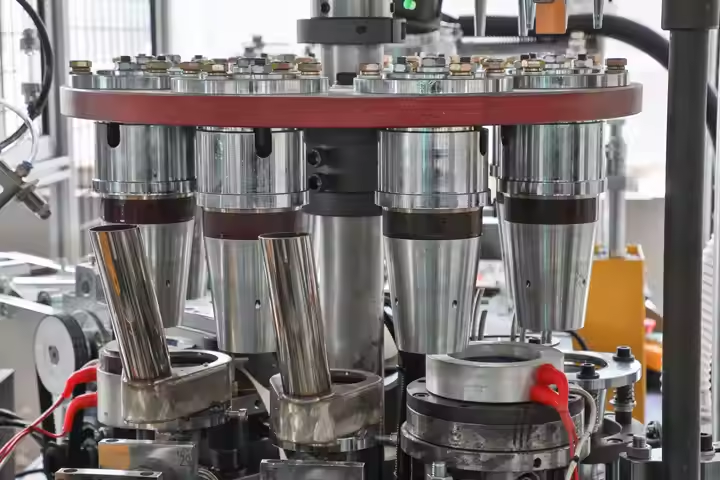
Visually, the machine features a robust white enclosure with safety guards, an orange rotary drum for cup forming, and integrated feeders for paper rolls. The control panel includes a touchscreen for real-time monitoring, while pneumatic arms handle folding and sealing. Setup is straightforward: feed paper rolls (up to 1,000m), set parameters, and it runs autonomously, producing cups with ripple or smooth finishes.
Compared to competitors (e.g., YG Machinery’s 100 pcs/min model at similar pricing), GuoHao edges out with higher speed and better energy efficiency. However, it’s not the cheapest—entry-level machines start at $5,000 but cap at 50-70 pcs/min, unsuitable for growth-oriented businesses.
Suitability for Your Business: Matching Specs to Real Needs
Not every entrepreneur needs a high-speed beast like this. Let’s assess fit based on common scenarios, using a decision framework.
For Small Startups (e.g., Pop-Up Cafes, <500 Cups/Day): Moderately suitable. At 120 pcs/min, it overproduces for low volumes, leading to idle time (efficiency drops below 50%). Better alternatives: Qichen’s $6,500-7,000 cost-effective model for small businesses, which handles 50-80 pcs/min. If you’re bootstrapping, factor in $32,000 upfront—ROI takes 6-9 months at $0.05/cup profit.
For Mid-Sized Operations (e.g., Independent Coffee Shops, 1,000-5,000 Cups/Day): Excellent match. The speed aligns with busy rushes, producing a full shift’s supply in under an hour. Insulation-focused cups command 10-15% premium pricing ($0.15-0.20 retail vs. $0.10 single-wall). Energy use (3kW) keeps overhead low, and full automation frees staff for customer-facing roles, boosting service speed by 20%.
For Scaling Chains (e.g., Franchise Outlets, >10,000 Cups/Day): Highly recommended. Integrate with cup collectors ($16,500 add-on) for seamless packaging. Custom sizes support seasonal menus (e.g., 16oz holiday specials). In markets like Turkey or Morocco (Qichen’s top exports), where hot beverage demand surges 30% in winters, this machine’s output prevents stockouts.
Consider your supply chain: Raw paper costs $800-1,200/ton; at 120 pcs/min, you’ll consume ~500kg/month. Location matters—380V standard suits industrial zones, but 220V option fits smaller setups. Maintenance is low (oil lubrication, weekly checks), but train operators on PLC interfaces to avoid 5-10% downtime from user error.
Market trends amplify suitability. The global paper cup machine sector is projected to grow from $1.7 billion in 2025 to $2.3 billion by 2035 (CAGR 3.0%), driven by plastic bans and eco-packaging mandates. Fully automatic models like this will capture 52% share, with high-speed (100+ pcs/min) dominating 47%. In 2025, expect 45% adoption of smart controls for remote monitoring, reducing waste by 15%. For U.S./EU businesses, subsidies for green tech could offset 10-20% of costs.
Challenges? Initial calibration takes 1-2 days, and noise levels (70-80dB) require ventilated spaces. If exporting, CE certification ensures compliance.
For more details on similar high-speed options, check out listings on Alibaba.
Insights from Buyers: Real-World Performance and Feedback
While this specific GuoHao model has no direct reviews yet (launched recently), Wenzhou Qichen’s store boasts a 5.0/5.0 rating from 20 verified purchases, with 100% on-time delivery and positive quality scores. Common themes from buyers of similar Qichen machines (e.g., OC12 series at 70-120 pcs/min) provide valuable proxies.
Take R***k from Lebanon (multiple 2023-2024 reviews): “Stable running at 120pcs for my 8oz cup, good quality, price is acceptable… I really love it!” They praised Wendy (sales rep) for business advice, noting seamless integration into a new factory. Another: “The hollow wall cup that was made is very beautiful!!” highlighting aesthetic output for branding.
Jd (Jordan, 2024): “The full automatic… is so nice, so helpful for our work.” Emphasized labor savings—down from 4 to 1 operator. Ei (Libya, 2021): “Great to deal with Wendy… looking forward to the next order.” Service scored high, with fast email responses (<9 hours).
A recent 2025 review from A***a (Peru): “Good as usual,” on spare parts—indicating reliable post-sale support. Across 20 reviews, 100% satisfaction on shipment and quality; two included photos of running machines, showing minimal waste.
Broader industry feedback on double wall machines (e.g., YG and Mingyuan models) echoes this. Users report 10x productivity gains: “Increased our productivity tenfold… game-changer” (Mingyuan review). Stability at high speeds is consistent, with <2% fault rates. Drawbacks? One noted slower ramp-up for newbies: “OC12… slow as 70-80pcs/min, considering 130pcs/min upgrade.” GuoHao’s 120 pcs/min mitigates this.
Qichen’s 100% positive rate in exports to Turkey/Mauritius/Morocco suggests cultural fit for Middle Eastern/African markets, where hot tea/coffee dominates. For U.S. buyers, note Intertek verification for quality.
These aren’t cherry-picked—Alibaba’s verified system ensures authenticity. If reviews sway you, explore Qichen’s full portfolio on Alibaba for user photos/videos.
Operational Integration: From Setup to Scaling
Implementing this machine starts with site prep: 10-15 sqm space, 380V outlet, and paper storage racks. Unboxing (single crate) takes 2-4 hours; Qichen provides video guides and overseas commissioning (extra fee). Daily ops: Load rolls, input specs via touchscreen, and monitor via sensors—fault detection halts issues proactively.
Cost breakdown (annual, at 120 pcs/min, 8hr/day, 250 days): Materials ~$15,000; energy $2,500; maintenance $1,000. Output: 1.8M cups/year, revenue potential $90,000 at $0.05 profit/cup. Break-even: 4-6 months for mid-sized ops.
Scaling tips: Pair with a lid machine ($28,000-38,000) for complete kits. Track KPIs like reject rate (<1%) and uptime (95%+). For eco-upgrades, switch to PLA coatings – trending 36% in 2025.
Comparisons: How It Stacks Up Against Alternatives
To decide wisely, benchmark against Qichen’s lineup:
- Budget Option: Cheap Paper Cup Machine ($5,000-7,000, 50-70 pcs/min) – Great for starters, but half the speed means doubled labor. Choose if under $10K budget.
- Mid-Range: 2025 Newest Model ($8,000, 80-100 pcs/min) – Similar automation, but no double-wall focus. Upgrade for insulation premium.
- Premium: QICHEN KBM Ultra Fast ($41,000-55,000, 130+ pcs/min) – Faster, but 30% pricier. Ideal if volume >10K/day.
Globally, vs. YG ($30,000 equiv.): GuoHao wins on warranty; vs. Mingyuan: Better energy use. All CE-certified, but Qichen’s 100% delivery rate stands out.
The Bigger Picture: Market Trends and Future-Proofing
By November 2025, the paper cup machine market hits $1.7B, fueled by 52% plastic ban compliance and 48% beverage chain growth. Trends: 42% demand for dual-output (hot/cold), 29% size customization. GuoHao aligns perfectly – its flexibility future-proofs against menu shifts.
Sustainability mandates (e.g., China’s 2025 ban) push 38% subsidies for green machines. In North America (leading region), expect 6.5% CAGR to $7.1B by 2033.
Making Your Decision: Next Steps
This machine excels for efficiency-driven businesses, but audit your volumes first. Pros: Speed, durability, eco-appeal. Cons: Upfront cost, space needs. Calculate ROI: (Annual Output x Profit/Cup) / Total Cost.
Contact Qichen for samples/customization. For deeper dives, browse Alibaba. Ready to scale sustainably? This could be your edge.

